How Much Water Do Plants Really Need? The Ultimate Watering Guide
“How often should I water?” is the question every plant owner asks, and it’s also the wrong question. Watering isn’t about a fixed schedule — it’s about responding to what a specific plant, in a specific pot, in specific conditions, actually needs at that moment. Here’s how to figure that out reliably.
The Finger Test
The simplest and most reliable check costs nothing: push a finger an inch or two into the soil. For most houseplants, wait until this depth feels dry before watering again. Succulents and cacti want the soil to dry out almost completely between waterings, while moisture-loving plants like ferns, calatheas, and peace lilies prefer the surface to stay lightly moist and shouldn’t be allowed to dry out fully. This single habit prevents more plant deaths than any other single piece of advice, because it replaces guesswork and calendar-watering with an actual reading of the plant’s needs.
Pot Weight as a Shortcut
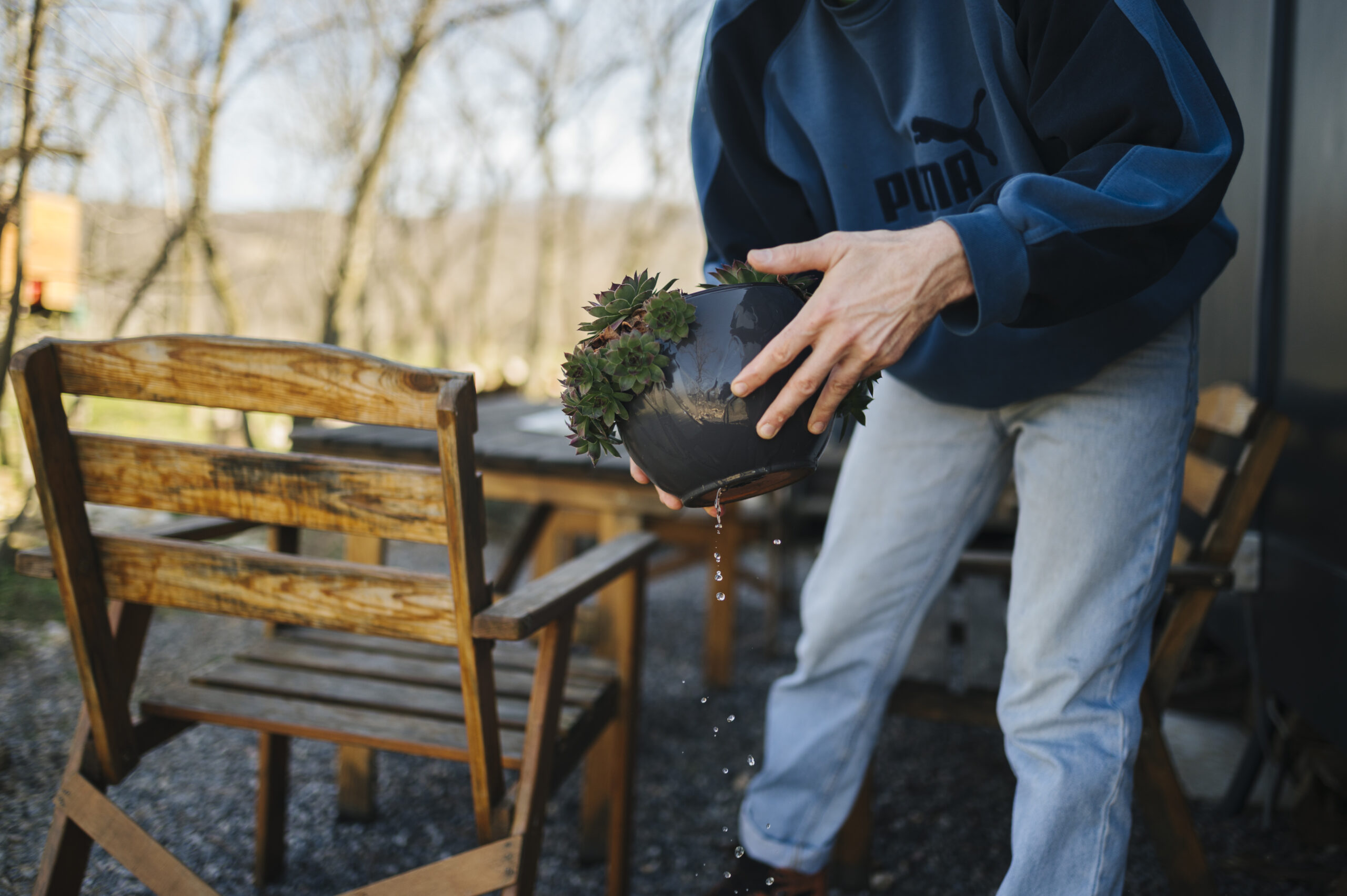
Once you’re familiar with a plant, lifting the pot becomes a fast way to judge moisture without touching the soil at all. A pot that feels notably lighter than usual has dried out; a heavy pot still has plenty of water in the root zone. This is especially useful for plants in opaque pots or hanging baskets where a finger check is awkward, and it becomes second nature after watering the same plant a few times.
Drainage Holes Are Non-Negotiable
A pot without drainage holes makes it almost impossible to water correctly, because excess water has nowhere to go and simply pools at the bottom around the roots, leading to root rot even if you’re careful about frequency. Always plant in a container with drainage, or keep the plant in its nursery pot and set that inside a decorative outer pot, remembering to empty any water that collects at the bottom after watering. When you do water, water thoroughly until it runs from the drainage holes — this flushes out accumulated mineral salts and ensures the whole root ball gets moisture, rather than just the top layer.
Adjusting for the Seasons
Water needs drop significantly in autumn and winter as light levels fall and most plants slow or stop active growth. A plant that needed water weekly in summer might only need it every two to three weeks in winter. Conversely, spring and summer growth, combined with higher temperatures and lower indoor humidity from air conditioning, increase water demand. Always let the plant and soil condition guide you rather than a fixed schedule — the same plant’s needs can shift noticeably between seasons even without you changing anything else.
Reading the Symptoms
Overwatering and underwatering can look surprisingly similar at first glance — both often cause wilting and yellowing leaves — so it helps to know the distinguishing details:
- Overwatering: yellowing leaves that feel soft or mushy, soil that stays wet for a long time, a sour or musty smell from the pot, and dark, mushy roots on inspection. Leaf drop can happen even while soil is visibly wet.
- Underwatering: dry, crispy leaf edges or tips, leaves that wilt but perk back up soon after watering, soil pulling away from the pot’s edges, and a pot that feels very light.
If you’re unsure which is happening, gently slide the plant out of its pot and look at the roots: healthy roots are firm and pale, while rotting roots are dark, soft, and may smell unpleasant. When in doubt, err toward underwatering — most houseplants recover from a dry spell far more easily than from root rot.