Christmas Cactus (Schlumbergera): Spectacular Blooms in Winter
The Christmas cactus (Schlumbergera) breaks nearly every rule associated with cacti: rather than a sun-scorched desert, it is native to the humid, shaded rainforests of Brazil, where it grows as an epiphyte tucked into the crooks of tree branches. This origin explains why its care – and its stunning winter blooms – look so different from a typical desert cactus.
Light Requirements
Bright, indirect light suits Christmas cactus best; direct sun, especially through glass, can scorch its flattened, segmented stems. An east-facing window or a spot a little back from a brighter window works well year-round.
Watering
Unlike desert cacti, Christmas cactus prefers its soil to stay lightly, evenly moist rather than drying out completely between waterings, though it should never sit in standing water. Allow the top couple of centimetres to dry before watering again, and reduce watering somewhat during its post-bloom winter rest period.
Humidity
Coming from a humid forest environment, this plant appreciates above-average humidity. A pebble tray or occasional misting can help, especially in dry winter indoor air, though it is generally more forgiving of average home humidity than many other tropical epiphytes.
Triggering Winter Blooms
Christmas cactus is a short-day plant, meaning it sets flower buds in response to long uninterrupted nights and cooler autumn temperatures, typically starting six to eight weeks before the desired bloom time. To encourage flowering, provide 12 to 14 hours of darkness nightly (keeping it away from artificial light at night, including household lamps) along with slightly cooler temperatures of around 15°C (59°F) for several weeks in autumn.
Avoiding Bud Drop
Once flower buds have formed, avoid moving the plant, exposing it to drafts, or letting the soil dry out excessively, all of which can cause developing buds to drop before opening. Keep conditions as stable as possible from bud set through flowering.
Soil and Potting
A well-draining potting mix, such as a cactus mix blended with some regular potting soil for extra moisture retention, works well. Christmas cactus actually blooms best when slightly root-bound, so repot only every few years, ideally shortly after flowering finishes.
Feeding
Feed with a balanced liquid fertilizer every three to four weeks during spring and summer growth, switching to a fertilizer with a bit more phosphorus in early autumn to support bud development, then stopping once flowering begins.
Propagation
Christmas cactus roots very easily from stem cuttings. Twist off a section of two or three connected segments, let the cut end callus for a day, then insert it into slightly moist potting mix; roots typically form within a few weeks, and new plants can begin flowering within a couple of years.
Care Through the Bloom Cycle
Christmas cactus care naturally divides into phases tied to its bloom cycle. Spring and summer bring active vegetative growth, the right time for feeding, light pruning to shape the plant, and taking cuttings for propagation, ideally done shortly after the previous bloom cycle finishes. Early autumn is when the plant needs its period of long, uninterrupted darkness and cooler temperatures to set flower buds, so this is the season to be most careful about stable placement and avoiding artificial light at night. Once buds set and through the winter bloom period, minimize any disturbance, keep watering steady, and avoid moving the plant. After flowering finishes in late winter, the plant enters a brief rest period with reduced watering before spring growth resumes and the cycle begins again.
Encouraging Reliable Blooms
For growers who want precise control over the autumn dark period that triggers Christmas cactus flowering, a simple timer on any nearby light source ensures the plant isn’t accidentally exposed to light during its required uninterrupted dark hours, which can otherwise delay or prevent bud formation. This is especially useful in households where lamps or overhead lights might otherwise switch on near the plant during the critical bud-setting weeks.
Frequently Asked Questions
Why is my Christmas cactus dropping flower buds?
Bud drop is usually caused by a sudden change in light, temperature, or position after buds have formed; keeping the plant in a stable spot away from drafts and heating vents from the time buds appear until they open helps prevent this.
Can Christmas cactus and Thanksgiving cactus be told apart?
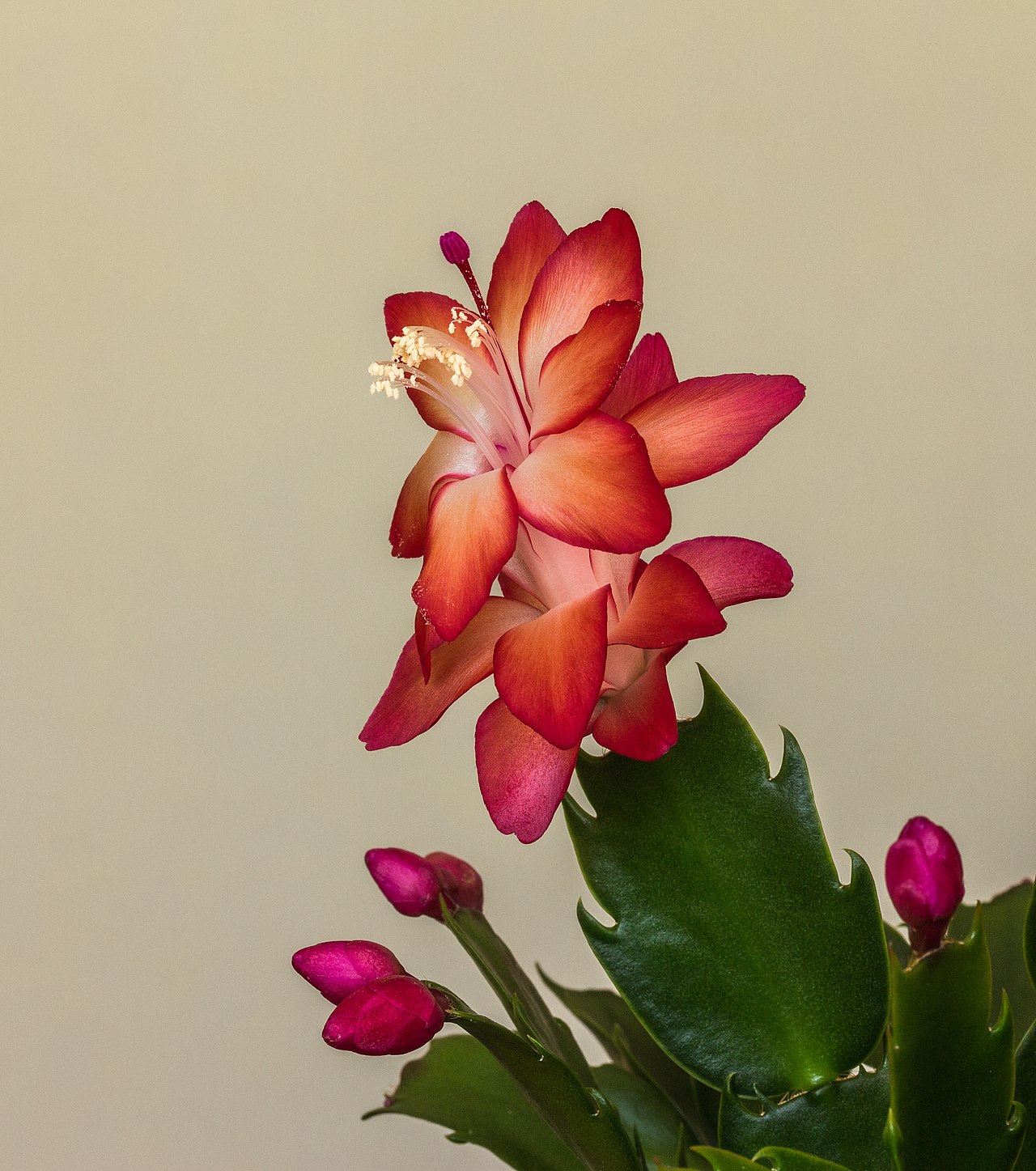
Yes, by their leaf segment edges: Christmas cactus (Schlumbergera x buckleyi) has smooth, rounded segment edges, while Thanksgiving cactus (Schlumbergera truncata) has pointed, claw-like projections along the segment edges; care for both is nearly identical.
How often should Christmas cactus be repotted?
Only every three to four years, or when clearly root-bound, since this plant actually flowers more reliably when its roots are somewhat snug in the pot rather than freshly repotted into a much larger container.
Can I force my Christmas cactus to bloom at a different time?
Yes, by manually controlling its light exposure to simulate short autumn days (12 to 14 hours of uninterrupted darkness) roughly eight to ten weeks before the desired bloom date, growers can shift flowering earlier or later than the natural season.