Jade Plant Care – Crassula ovata, the Good-Luck Charm
Jade Plant (Crassula ovata) – The Easy-Care Good-Luck Charm
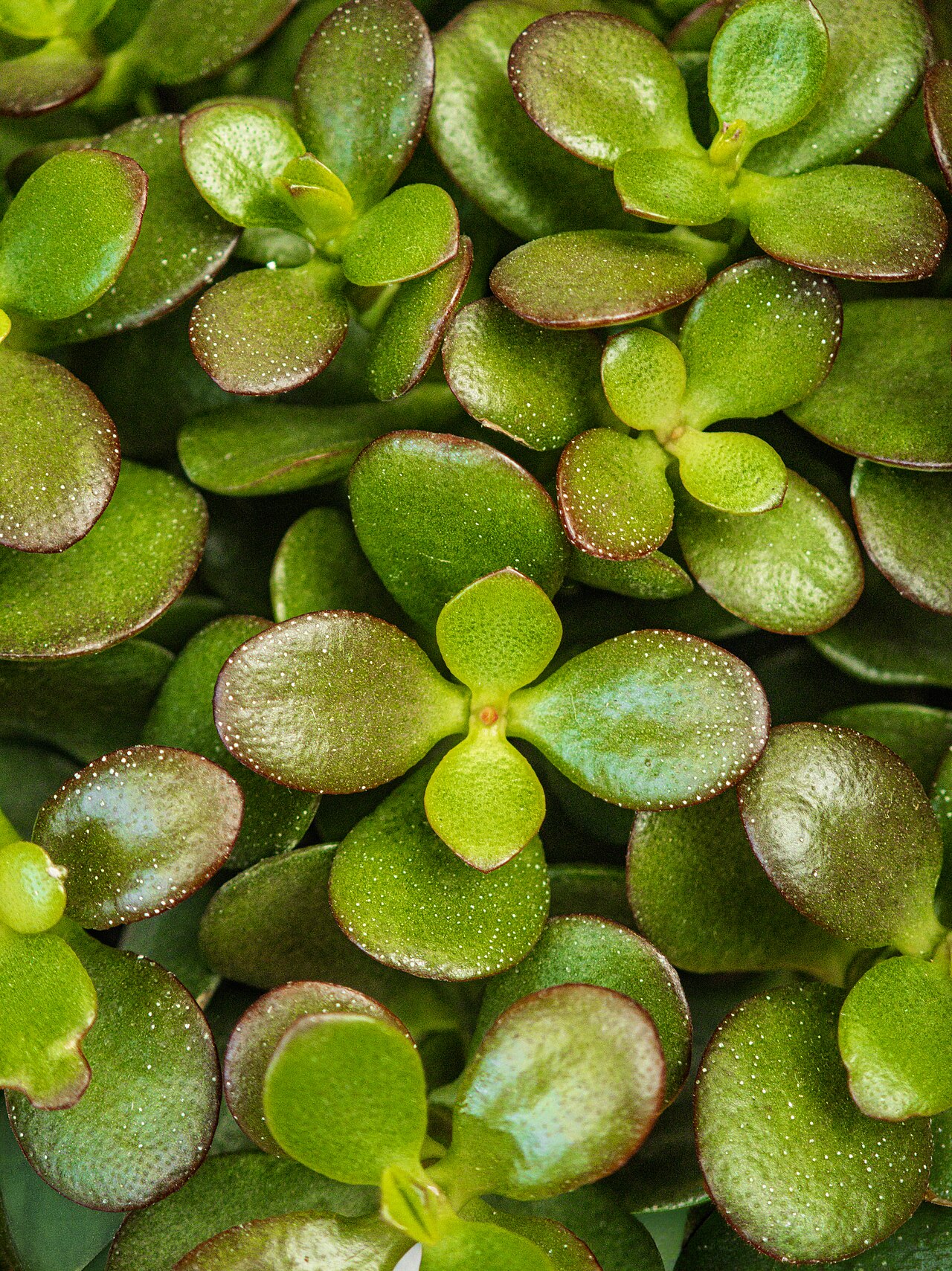
The jade plant, botanically known as Crassula ovata, is one of the most popular and long-lived succulents grown indoors. Its thick, oval, glossy green leaves resemble coins – hence its common names “money tree” and “dollar plant.” In feng shui, the jade plant is considered a symbol of prosperity and financial luck, which is why it is often given as a gift or placed in offices. With optimal care, a jade plant can live for several decades, develop a woody trunk, and reach a height of over a meter. Its bonsai-like appearance makes it a decorative addition to any home.
Location and Light Requirements
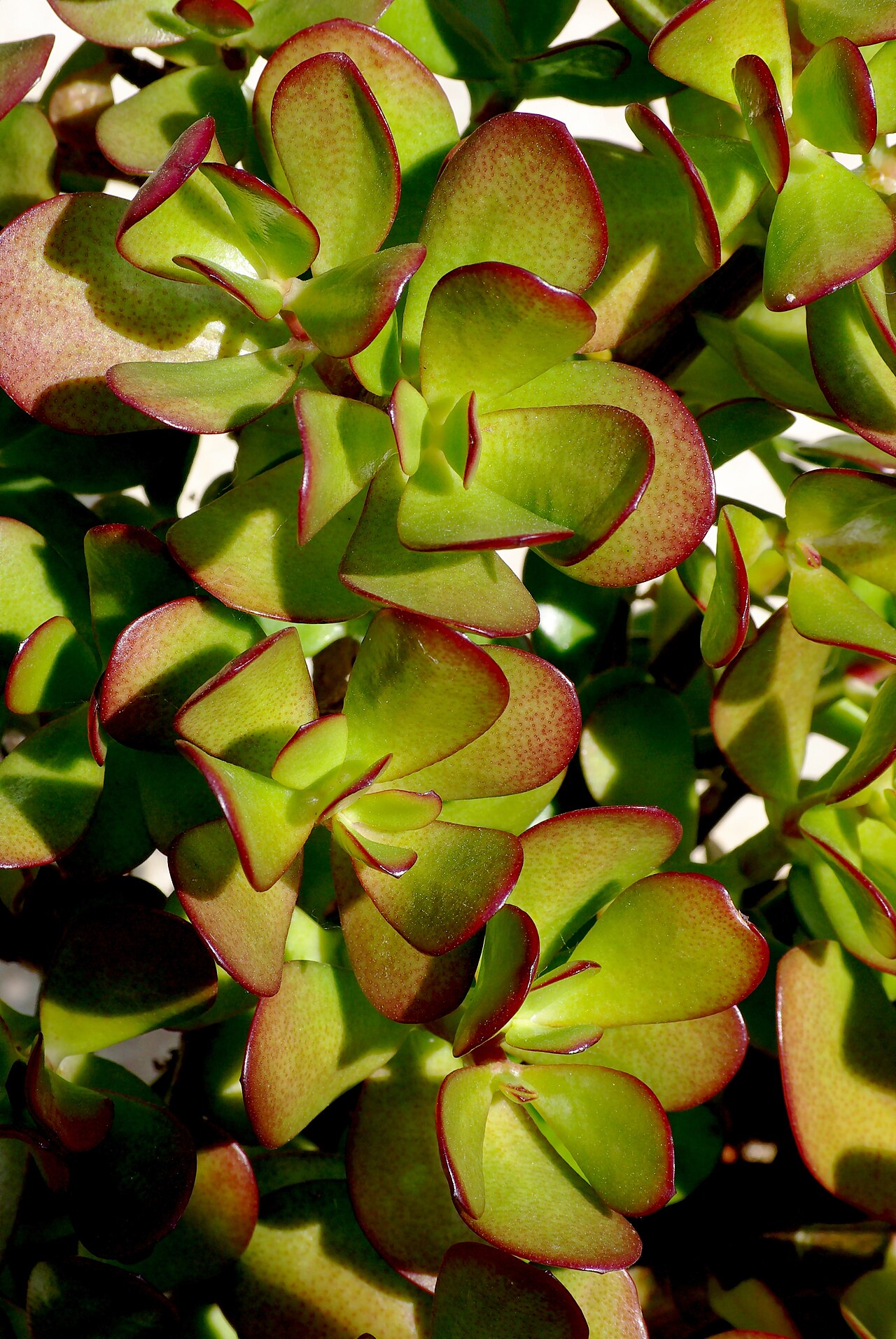
The jade plant loves bright light and direct sun. A south-facing window is the ideal spot, but a bright east- or west-facing window will also work. With enough light, the leaves develop an attractive reddish edge – a sign that the plant is getting exactly what it needs. In low light, the shoots become long and thin, the leaves stay small, and the plant loses its compact shape.
In summer, you can move the Crassula ovata to the balcony or patio. Acclimate it gradually to direct sun and protect it from prolonged rain. The plant easily tolerates temperatures up to 30 °C. In winter, it should be kept cool at 10–15 °C – this winter rest period is important for healthy growth and possible flowering the following year.
Watering: Less Than You Think
As a succulent, the jade plant stores water in its fleshy leaves and is extremely drought-tolerant. Water only once the soil has dried out completely. In summer, this may be roughly every 10–14 days; in winter, only every four to six weeks. A reliable indicator: the leaves feel plump and firm when the plant has enough water. If they become soft and start to wrinkle, it’s time to water.
The most common mistake is overwatering. Too much water leads to root rot, which shows up as soft, mushy leaves and a foul smell. Once this happens, only a drastic pruning and repotting into dry substrate – plus a bit of luck – can help. The pot should have an adequate drainage hole, and any excess water must be emptied from the saucer after watering.
Substrate, Fertilizing, and Repotting
The jade plant needs a well-draining, mineral-based substrate. Cactus soil enriched with coarse sand and fine gravel is ideal. Regular potting soil is too heavy and retains too much moisture. Waterlogging must absolutely be avoided – a drainage layer of expanded clay at the bottom of the pot is essential.
For fertilizing, the simple rule applies: only during the growing season, and very sparingly. From April to August, a monthly application is enough. Use a cactus fertilizer or a general liquid houseplant fertilizer at half strength. From September onward, stop fertilizing to prepare the plant for its winter rest. Repotting is only needed every two to three years, ideally in spring before new growth begins.
Pruning and Shaping
Regular pruning in spring keeps the jade plant compact and encourages branching. Cut long, bare shoots back just above a pair of leaves – two new shoots will soon sprout from the cut point. Over time, the jade plant develops a thick, woody trunk and an attractive, tree-like crown. Anyone wanting to create a particularly striking specimen can even train the jade plant as a bonsai. Regularly remove the lower leaves along the trunk to emphasize its tree shape.
Propagation – A Piece of Cake
Propagating the jade plant is remarkably easy. Individual leaves can be placed directly on moist cactus soil – within a few weeks, tiny roots and a new young plant will form. Stem cuttings also root reliably. Let the cut end dry for two to three days before placing the cutting in soil. Water only minimally during the first few weeks, until roots have formed. Few other plants forgive as many beginner mistakes during propagation.
Flowering in Jade Plants
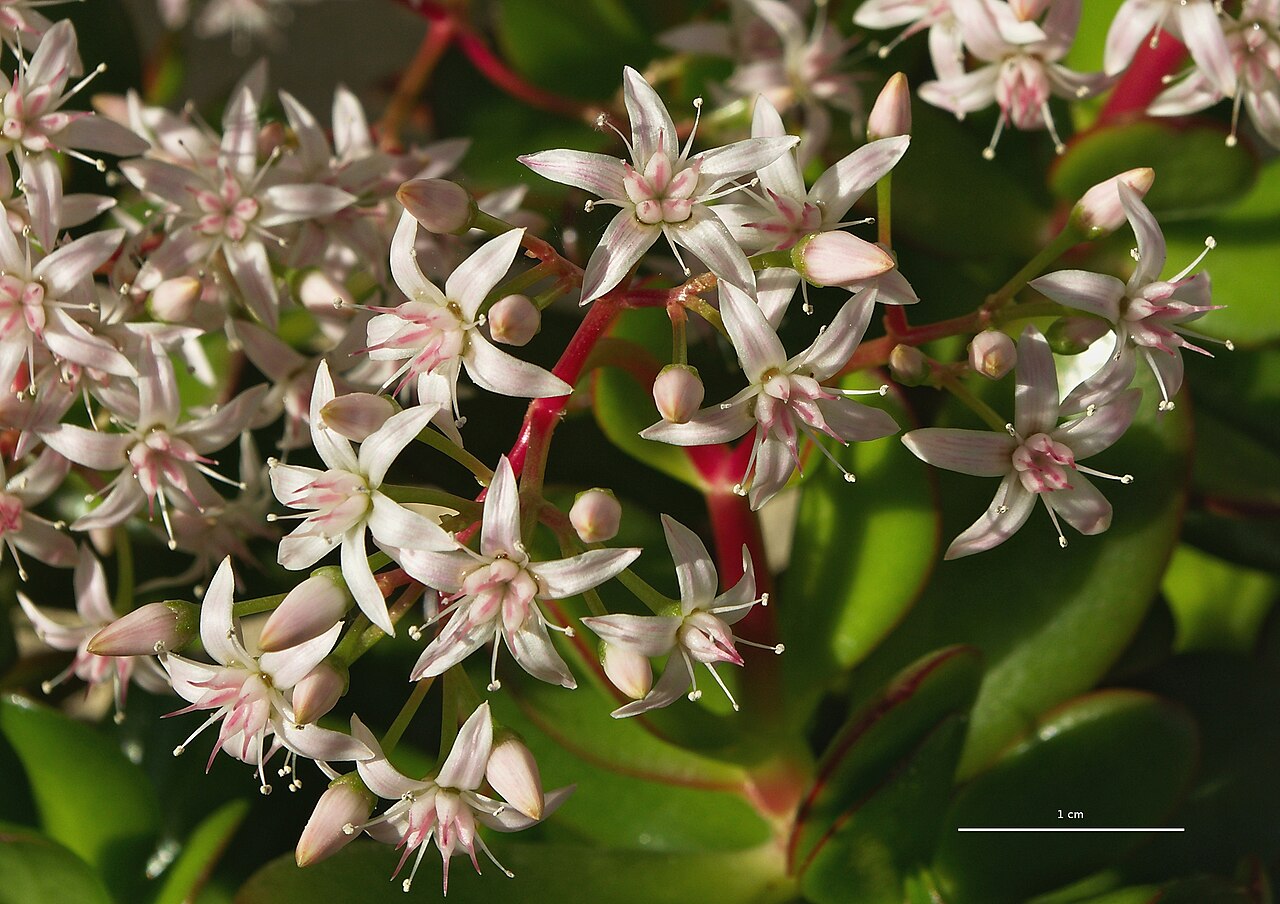
Many people don’t realize that jade plants can flower. Under optimal conditions – especially after a cool winter rest at 10–15 °C with very little water – the Crassula ovata produces delicate, star-shaped flowers in white or soft pink in late winter or early spring. The fine blossoms appear in dense clusters and give off a light, sweet fragrance. A flowering jade plant is a rare sight and a sign that its care conditions are just right.
Common Problems
| Problem | Cause | Solution |
|---|---|---|
| Leaf drop | Overwatering or cold shock | Water less; protect from cold |
| Soft, mushy leaves | Root rot | Repot immediately; remove rotten roots |
| Long, thin shoots | Insufficient light | Move to a sunnier spot; prune |
| Mealybugs | White, cottony deposits | Dab with rubbing alcohol; isolate the plant |
| Black spots | Sunburn from sudden sun exposure | Acclimate gradually to sunlight |
Conclusion: A Generational Plant With Character
The jade plant is one of the most rewarding houseplants there is. It can live for decades, grows slowly but steadily, and becomes more beautiful with age. Its care is minimal: plenty of sun, little water, a cool winter rest, and sparing fertilization. For nutrient support, a general liquid houseplant fertilizer at half strength works well. A jade plant is not only a decorative feature but also, as the saying goes, a symbol of stability and financial good fortune.