Trumpet Vine (Campsis radicans) – The Exotic Climbing Plant for Warm Walls
Trumpet Vine (Campsis radicans) – The Exotic Climbing Plant for Warm Walls
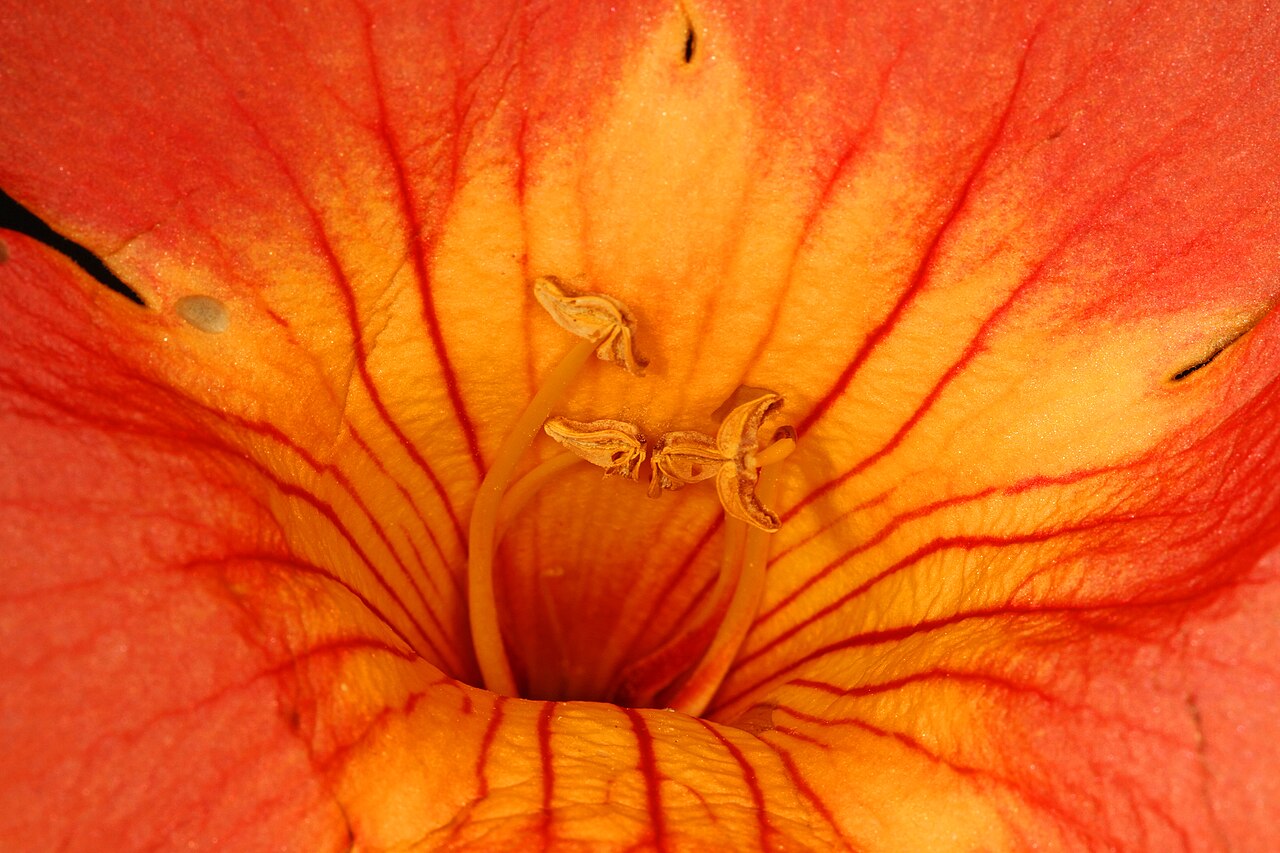
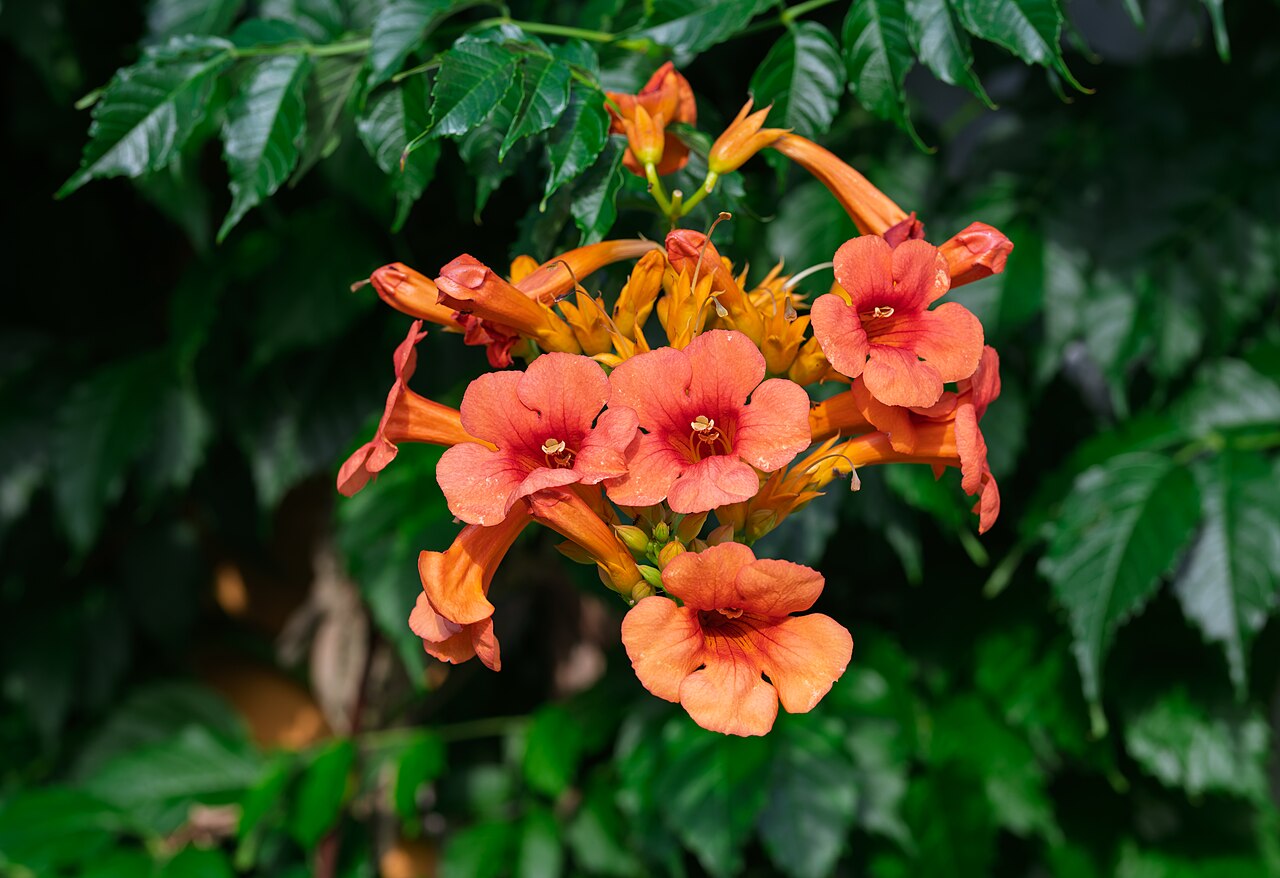
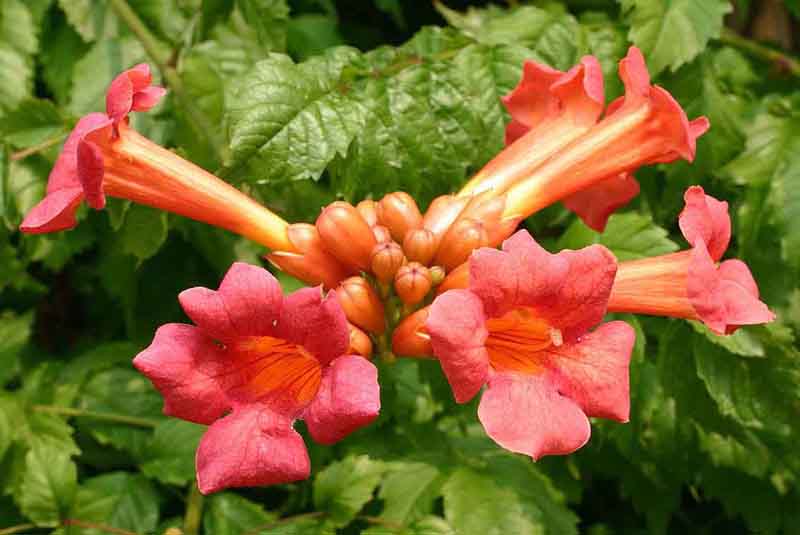
The trumpet vine (Campsis radicans) is one of the most spectacular climbing plants for sunny, warm gardens. From July to September, it produces countless large, trumpet-shaped flowers in brilliant orange and red tones that glow like little flames against its lush green foliage. With this exotic look, it inevitably conjures up holiday vibes and calls to mind Mediterranean gardens.
The trumpet vine is native to the southeastern United States, where it grows along riverbanks and at the edges of woodlands. In Central Europe it has established itself as a surprisingly hardy climber, provided it gets a warm, sheltered spot. It is one of the few climbing plants that clings with aerial roots while also flowering spectacularly.
Location and Soil
For abundant flowering, the trumpet vine needs a full-sun, warm, and sheltered location. A south- or west-facing wall that stores heat during the day is ideal. In partial shade, flowering will be sparser, and in shady spots it will not flower at all.
The soil should be humus-rich, fertile, and well-draining. It cannot tolerate waterlogging. The ideal pH is neutral to slightly acidic. Heavy soils should be loosened with sand and compost before planting.
Planting and Climbing Support
Planting is best done in spring after the last frost (May). The planting hole should be about 50 centimeters from the wall so the root ball is protected from drying out. A wind-sheltered spot is important, since strong wind can damage the shoots.
The trumpet vine is a self-clinging climber with aerial roots, similar to ivy. It attaches to rough surfaces such as masonry, plaster, and wood. It is also advisable to install a sturdy trellis or wire cable system, since the plant can become quite heavy over the years.
Growth Rate and Pruning
The trumpet vine is vigorous and can reach heights of six to ten meters. As with many climbers, growth is slow for the first two to three years before accelerating noticeably.
Pruning is essential for abundant flowering. The trumpet vine blooms on new wood, so hard pruning in early spring (February/March) is necessary. All side shoots are cut back to two to four buds. Without this pruning, long, whip-like shoots form that produce few or no flowers.
The Most Beautiful Varieties
- Campsis radicans ‘Flava’: Pure yellow flowers in great abundance. Somewhat less vigorous than the red varieties. Very elegant.
- Campsis radicans ‘Madame Galen’: The most popular variety, with large, orange-red flowers. Especially hardy and free-flowering.
- Campsis x tagliabuana ‘Indian Summer’: Bright orange-red flowers with a yellow throat. Compact growth, ideal for small gardens.
Care, Feeding, and Overwintering
The trumpet vine is a heavy feeder. An annual application of compost and a potassium-rich fertilizer in early summer promote flowering. Water regularly during dry spells. A layer of mulch protects the root zone from drying out.
Cold-hardiness is good (down to about -20°C/-4°F) once the plant is well established. In the first two to three years, winter protection with leaves and brushwood over the root zone is recommended. In harsh locations, covering the base with garden fleece can also be worthwhile.
Patience Required for Flowering
Important note: the trumpet vine requires patience. It often does not flower for the first time until it is three to five years old. The reason: it must reach a certain size and maturity before it sets flowers. However, this wait is rewarded ever more generously as the plant ages – a ten-year-old trumpet vine in full bloom is an unforgettable sight.
Conclusion: An Exotic Touch Worth the Wait
The trumpet vine is not a plant for the impatient, but it is one of the most rewarding climbers for warm, sunny spots. With its fiery flowers, dense foliage, and good cold-hardiness, it brings a touch of the exotic into our gardens. The right, bold pruning and a sunny location are the keys to success.
This article may contain affiliate links. If you purchase a product through one of these links, Plantgecko may earn a commission at no extra cost to you. This never influences our editorial independence or which products we recommend.