Thyme as Ground Cover – Fragrant Flower Carpets for Sunny Spots
Thyme as Ground Cover – Fragrant Flower Carpets for Sunny Spots
Thyme as ground cover is one of the most rewarding and fragrant solutions for sunny, dry locations. The low, carpet-forming thyme species transform bare areas, rock gardens, dry stone walls, and border edges into dense, evergreen cushions of fragrance, over which countless bees and butterflies dance in summer.
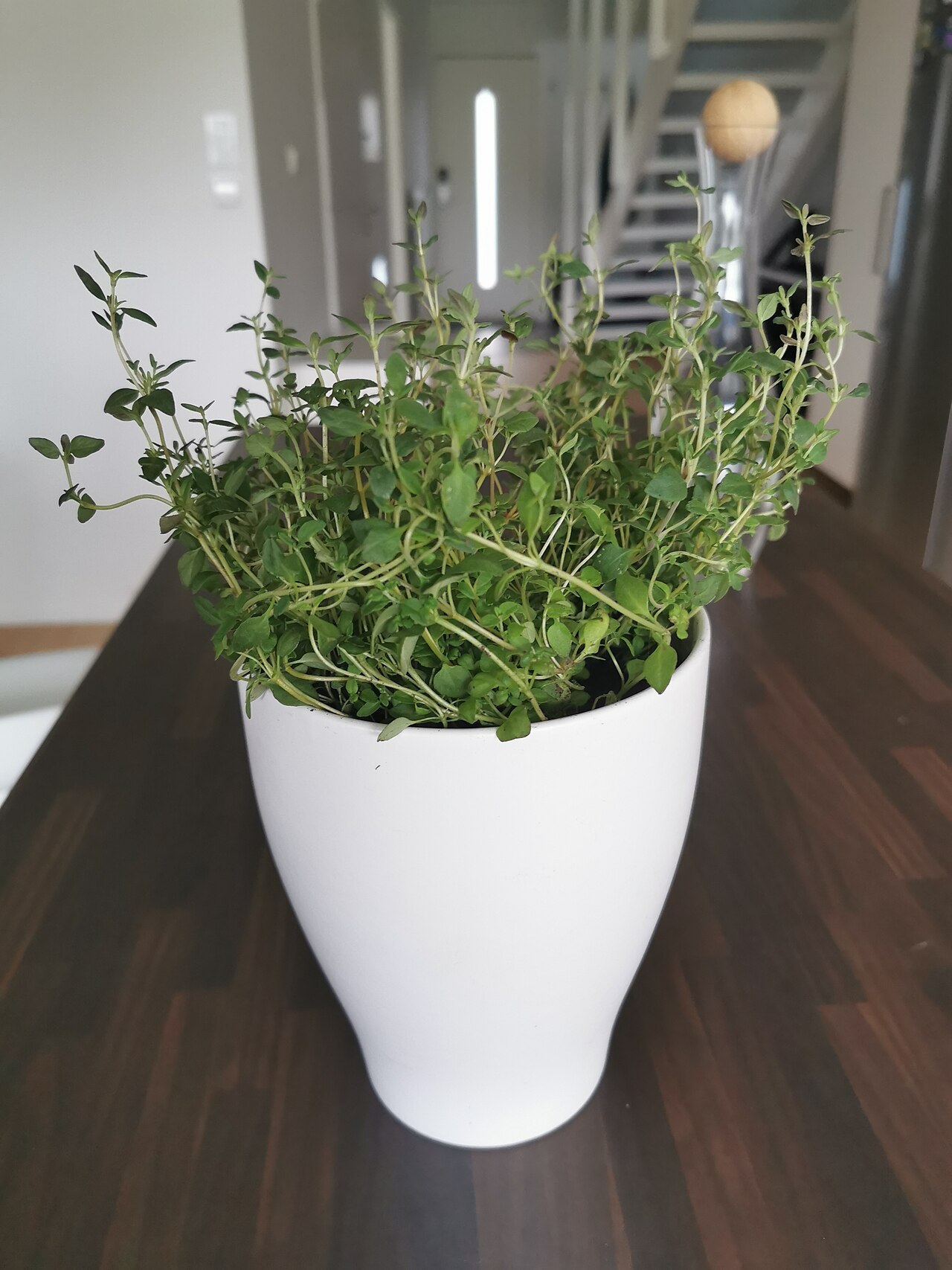
Unlike upright culinary thyme (Thymus vulgaris), which grows more like a small shrub, ground-cover thymes stay low, at heights of two to ten centimeters, and spread out in a carpet-like fashion. They are extremely drought-tolerant and count among the easiest-care ground covers of all.
The Best Thyme Species for Ground Cover
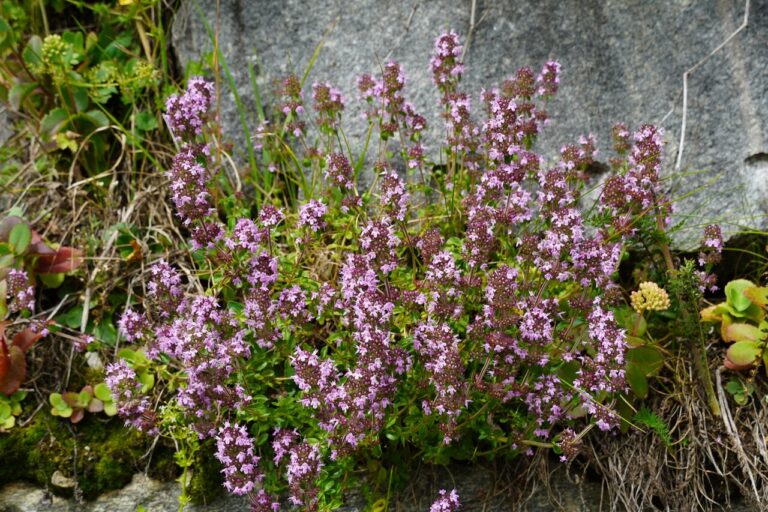
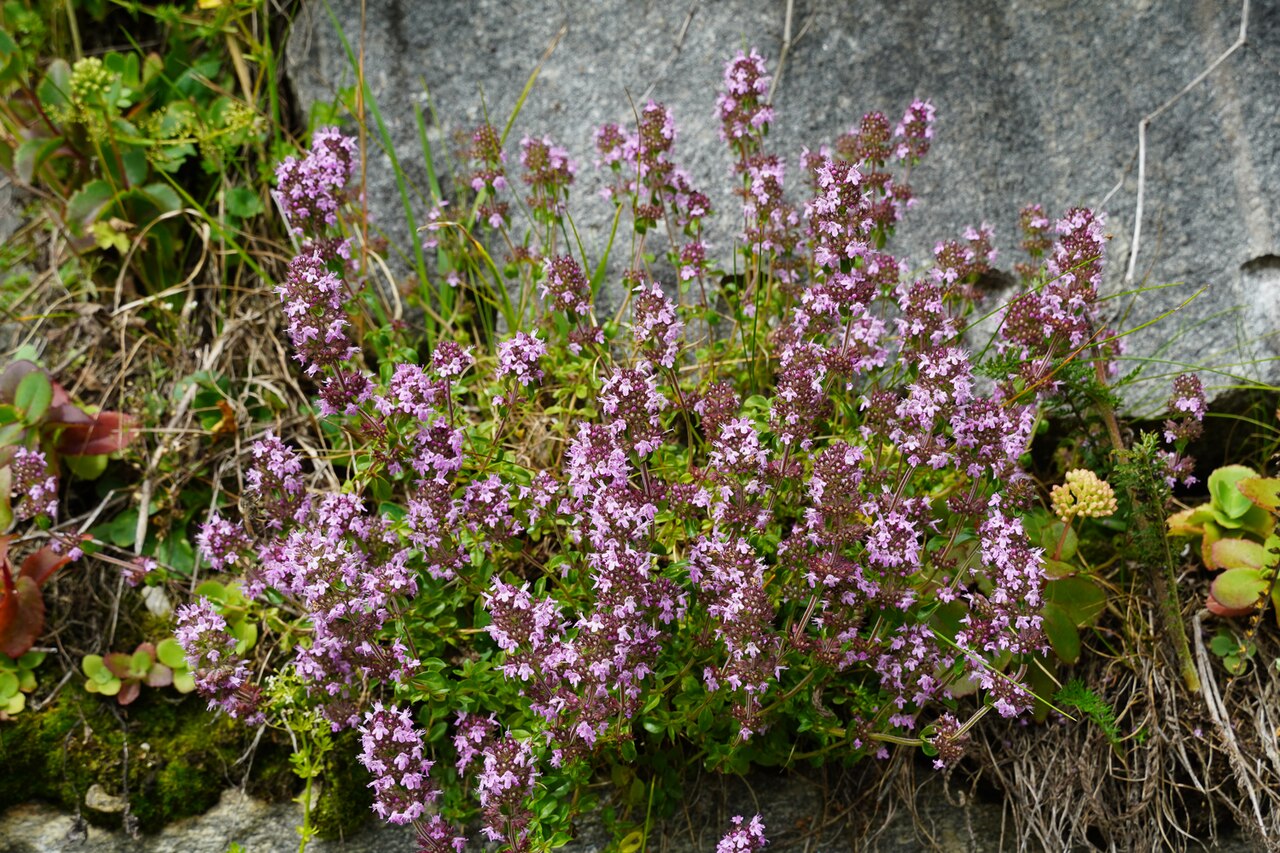
- Thymus praecox (Mother-of-Thyme): The classic among cushion thymes. Forms dense, evergreen mats with countless purplish-pink flowers in June/July. Various cultivars such as ‘Coccineus’ (crimson) or ‘Albus’ (white). Height: 3–5 cm (1–2 in).
- Thymus serpyllum (Wild Thyme): A native wild species with soft pink to violet flowers. Especially tough and absolutely hardy. A paradise for wild bees. Height: 5–10 cm (2–4 in).
- Thymus citriodorus (Lemon Thyme): With its lemon-scented leaves, an especially refreshing variety. Pale violet flowers. Height: 10–15 cm (4–6 in). Can also be used as a culinary herb.
- Thymus doerfleri (Cushion Thyme): An extremely dense-growing species with gray-green leaves and vivid pink flowers. Perfect for paving joints and dry stone walls. Height: 5–8 cm (2–3 in).
Location and Soil
Thyme loves the sun and copes beautifully with extreme drought. A full-sun spot with at least six hours of direct sun daily is a must – thyme struggles in shade. The soil must above all be well-draining. Heavy, clay-rich soils are unsuitable unless they are generously improved with sand and gravel. The ideal pH is neutral to alkaline.
For planting, allow roughly 10 to 15 plants per square meter, depending on the vigor of the variety. In dry stone walls and paving joints, individual plants quickly merge into larger cushions.
Care – Less Is More
Caring for ground-cover thyme is minimal:
- No feeding! Nutrient-rich soil leads to lush, soft growth and reduced winter hardiness.
- Water only during extreme, prolonged drought.
- After flowering in July/August, trim lightly to encourage compact growth. Hedge shears or a sharp knife work well – simply shorten the shoots by about a third.
- In winter, most thyme species are reliably hardy. Winter wet is more dangerous than frost – well-draining soil is the best winter protection.
Design Ideas with Thyme
Thyme as ground cover shows off its charm especially in the following settings: as a groundcover planting in rock gardens and gravel beds, in the joints of dry stone walls, as a fragrant border edge and path edging, as a tread-tolerant planting between stepping stones, as underplanting for roses, and on sunny slopes for erosion control.
Conclusion: The Perfect Ground Cover for Sun-Lovers
For sunny, dry, and lean sites, thyme is the top choice among ground covers. It is evergreen, blooms profusely, smells wonderful, is utterly low-maintenance, and offers bees and butterflies a valuable food source. It does not get much better than that in a ground cover.