Peace Lily (Spathiphyllum): The Low-Maintenance Plant for Your Home
The Peace Lily: Elegance and Air-Purifying Power in One Plant
The peace lily, botanically Spathiphyllum, is one of the most versatile flowering houseplants around. Its elegant white spathes, resembling delicate sails, paired with deep green foliage bring a calming presence to any room. It’s easy to see why it’s also known simply as the “peace plant.” But the peace lily offers more than good looks: it’s among the most effective air-purifying plants, filtering pollutants such as benzene, formaldehyde, and trichloroethylene from indoor air — a benefit confirmed in NASA’s well-known Clean Air Study. Here’s everything you need to know to keep this striking tropical plant thriving.
Choosing the Right Spot
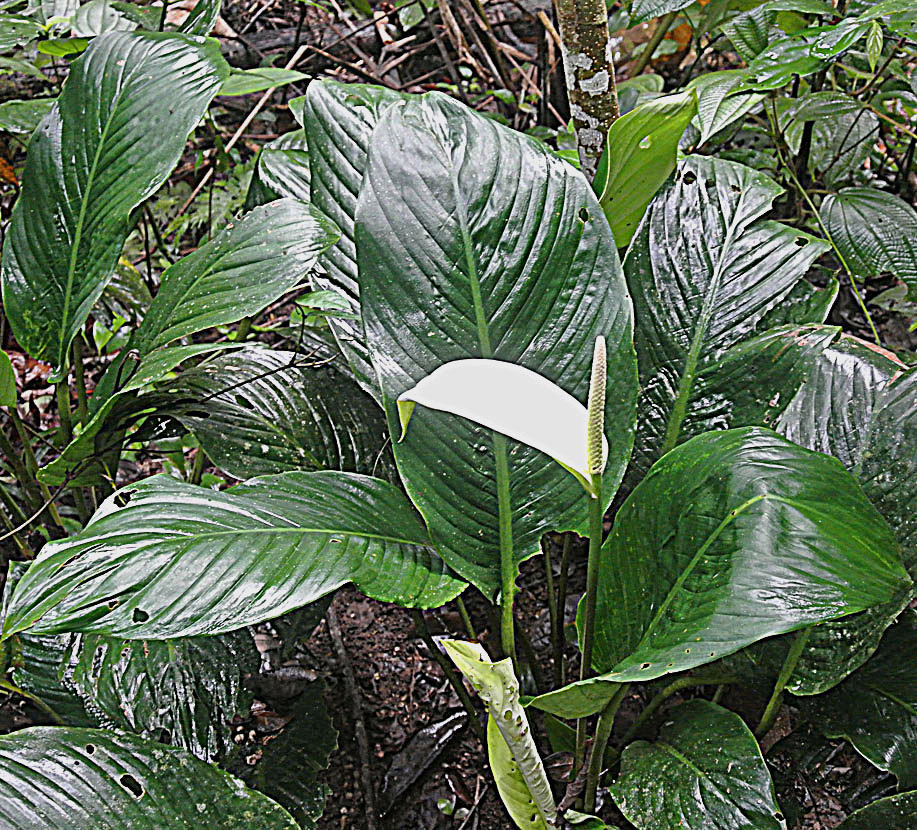
Spathiphyllum is native to the shaded understory of South American rainforests, so it naturally prefers a partly shaded to shaded location. It’s one of the few flowering houseplants that still performs well at north-facing windows or in dimmer corners. Direct sun quickly scorches the leaves, leaving brown, dry patches.
The ideal temperature range is 64-77°F (18-25°C). Peace lilies don’t tolerate temperatures below 59°F (15°C) well and will respond by letting their leaves droop. Cold drafts and sudden temperature swings should also be avoided, since they can interfere with flowering.
Watering and Humidity
The peace lily is a thirsty plant that likes its root ball kept evenly moist, though it won’t tolerate sitting in water. A handy visual cue: once the leaves start to droop slightly, it’s time to water. In summer that typically means watering two to three times a week; once a week is usually enough in winter.
Use room-temperature, low-lime water — rainwater or tap water left to stand overnight works well. Peace lilies also love high humidity, and misting the leaves regularly with soft water supports healthy growth and helps prevent the brown leaf tips that often signal air that’s too dry.
Feeding for Lush Growth and Abundant Blooms
During the main growing season, from March through September, feed roughly every two weeks with a liquid fertilizer formulated for houseplants — this supports strong foliage and regular flowering. In winter, once a month is enough, or you can skip feeding altogether while the plant rests.
Overfeeding is a common mistake and usually shows up as brown leaf edges. Stick to the dosage on the label — less is often more. Organic fertilizers have an advantage here, releasing nutrients more slowly and evenly.
Encouraging the Peace Lily to Bloom
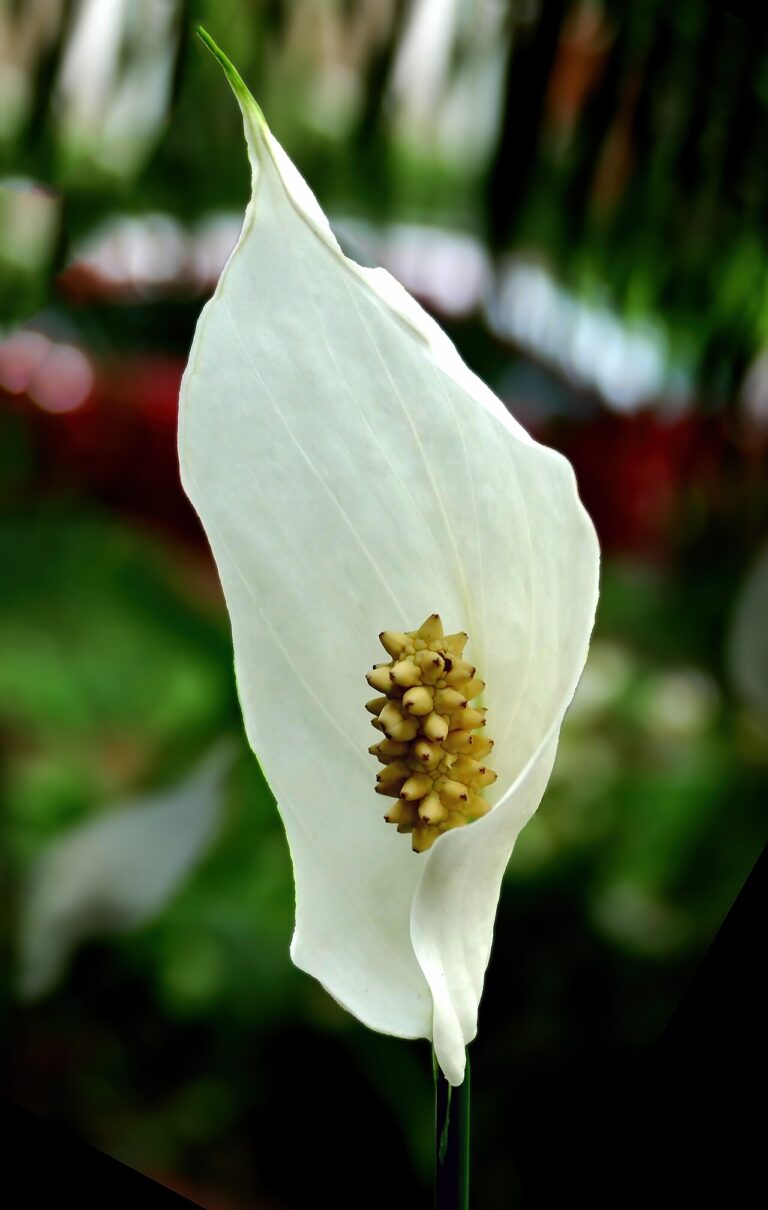
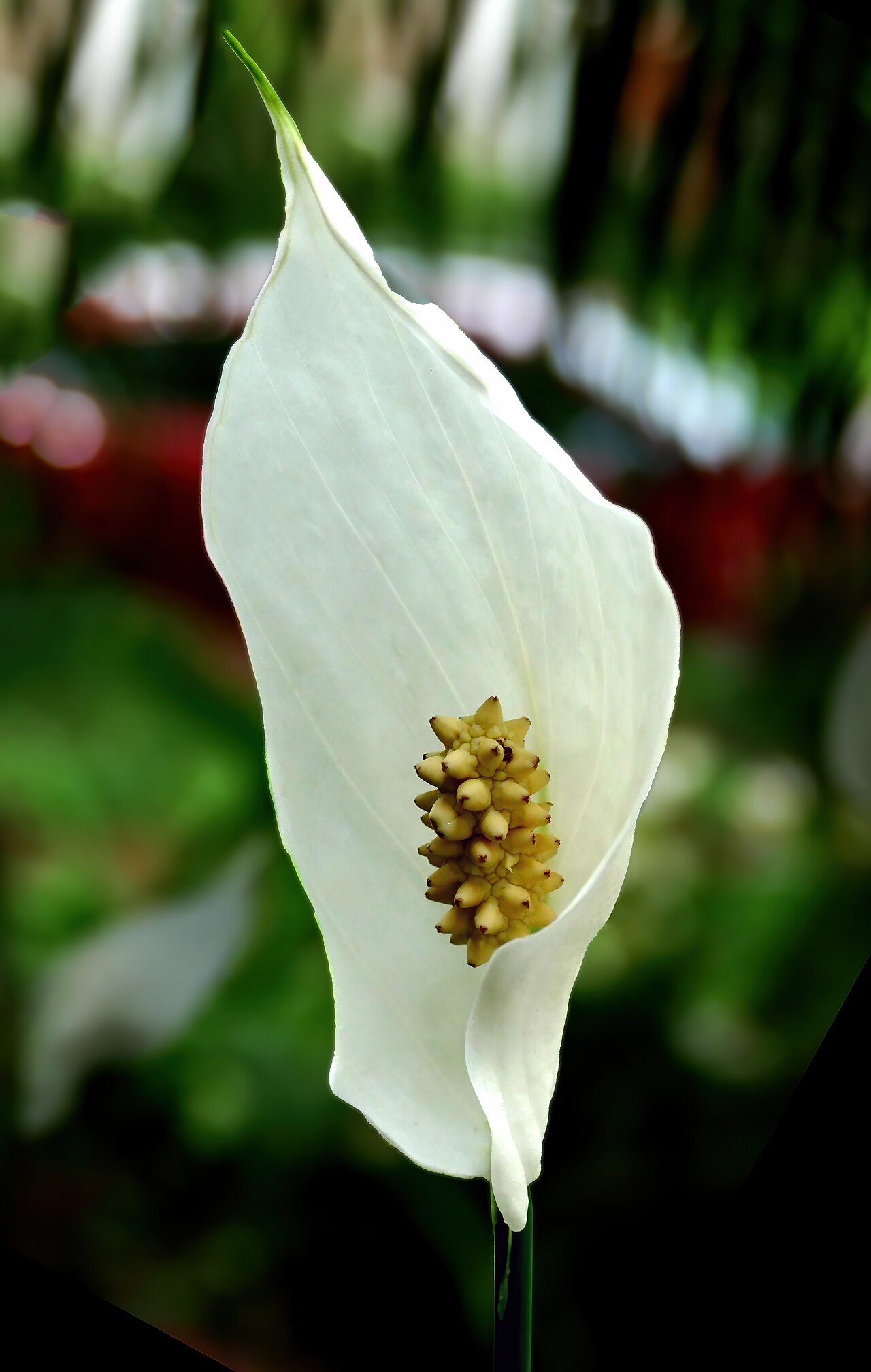
The plant’s signature white “flower” — the spathe — is actually a modified leaf that surrounds the true flowers, which are the small, inconspicuous bumps clustered on the central spike. Under good conditions, a peace lily can bloom twice a year, in spring and again in autumn, with each individual bloom lasting several weeks.
If your peace lily won’t flower, the most common causes are too little light (even though it tolerates shade), insufficient feeding, or a pot that’s too large — in an oversized pot, the plant channels its energy into root growth instead of flowers. One useful trick: keep the plant slightly cooler (around 61-64°F / 16-18°C) for a few weeks and water a little less; this mild stress often triggers flowering.
Repotting and Propagation
Peace lilies grow at a decent pace and generally need repotting every one to two years, ideally in spring. Use a good-quality, loose potting mix and a pot only about an inch or two larger than the current one — as noted above, a pot that’s too big can suppress flowering.
Propagation is straightforward: when repotting, gently divide the root ball into sections, making sure each division has at least three leaves and healthy roots attached. Pot the divisions into fresh soil and keep them a little warmer and more humid for the first few weeks so they establish quickly.
Common Problems
| Symptom | Likely Cause | Solution |
|---|---|---|
| Brown leaf tips | Air too dry, or water too high in lime | Raise humidity; use low-lime water |
| Yellow leaves | Waterlogging or nutrient deficiency | Water less; check drainage; feed |
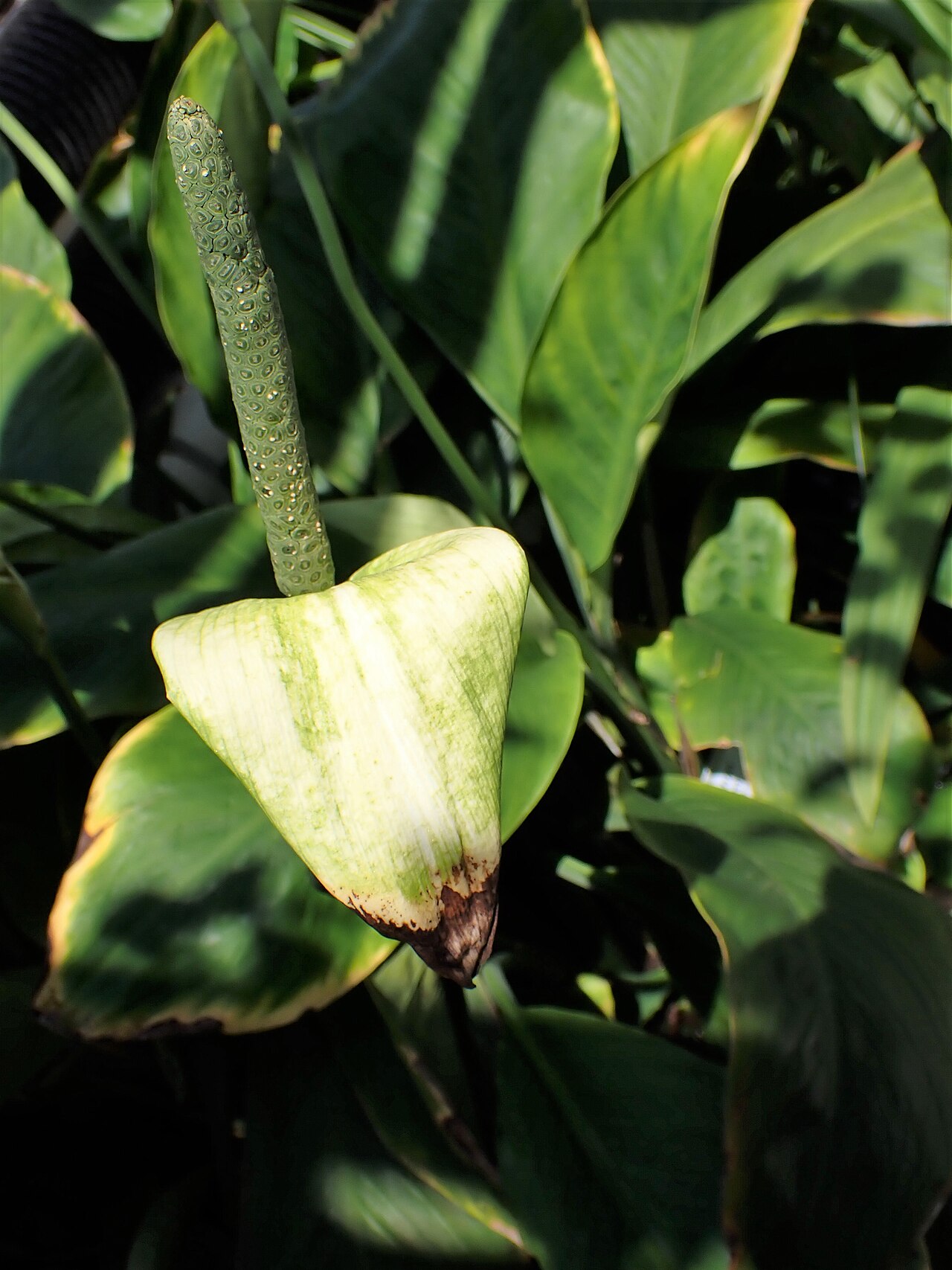
| Green flowers | Natural aging process | Normal — blooms turn green over time |
| Drooping leaves | Underwatering | Water thoroughly; the plant recovers quickly |
| No flowers | Too little light or feed | Improve location; feed regularly |
Toxicity: Keep Away from Pets and Children
Worth noting: the peace lily is mildly toxic. All parts of the plant contain calcium oxalate crystals, which can cause mouth and throat irritation, swelling, and gastrointestinal upset if chewed or swallowed. Keep it out of reach of curious pets and small children, and wash your hands after repotting or pruning, since the sap can also irritate skin.
Final Thoughts: A Great Choice for Beginners
The peace lily combines elegance, resilience, and genuine practical value in one plant. It forgives the occasional care mistake and lets you know exactly when it needs water by drooping its leaves. With the right care, your Spathiphyllum will become a long-lived companion that rewards you with beauty for years to come.
This article may contain affiliate links. If you purchase a product through one of these links, Plantgecko may earn a commission at no extra cost to you. This never influences our editorial independence or which products we recommend.