Peace Lily (Spathiphyllum): Elegance With Air-Purifying Power
The peace lily (Spathiphyllum) is one of the most forgiving and popular houseplants, valued for its glossy, deep green leaves and elegant white blooms that can appear on and off throughout the year. It is also famous for being one of the most communicative houseplants around – it tells you exactly when it needs water by drooping dramatically, then perking back up within hours of a good drink.
Light Requirements
Peace lilies tolerate low light better than most flowering houseplants, making them a popular choice for offices and interior rooms away from windows. That said, they bloom far more reliably with bright, indirect light; a spot a few feet from an east- or north-facing window is ideal. Direct sun can scorch the leaves, so avoid unfiltered south- or west-facing exposure.
Watering
Keep the soil consistently moist but never soggy. The plant’s dramatic wilting when thirsty is actually a useful built-in indicator – water as soon as you notice drooping, and the leaves will typically recover within a few hours. That said, it is better to develop a regular watering rhythm than to rely on wilting as your only cue, since repeated severe wilting stresses the plant over time.
Humidity and Water Quality
Peace lilies appreciate higher humidity and will develop brown leaf tips in very dry indoor air, particularly during winter heating season. They are also sensitive to the chlorine, fluoride, and salts found in some tap water, which can cause brown tipping; using filtered, distilled, or rainwater, or simply letting tap water sit out overnight before use, often reduces this issue.
Soil and Repotting
A well-draining, peat-based potting mix suits peace lilies well. They actually prefer to be slightly root-bound and bloom more reliably in a snug pot, so repot only every couple of years, or when roots are visibly circling the pot and growth has clearly slowed.
Feeding
Feed lightly with a balanced liquid houseplant fertilizer diluted to half strength once a month during spring and summer. Peace lilies are light feeders, and over-fertilizing tends to cause brown leaf tips and salt buildup rather than more flowers.
Understanding the Blooms
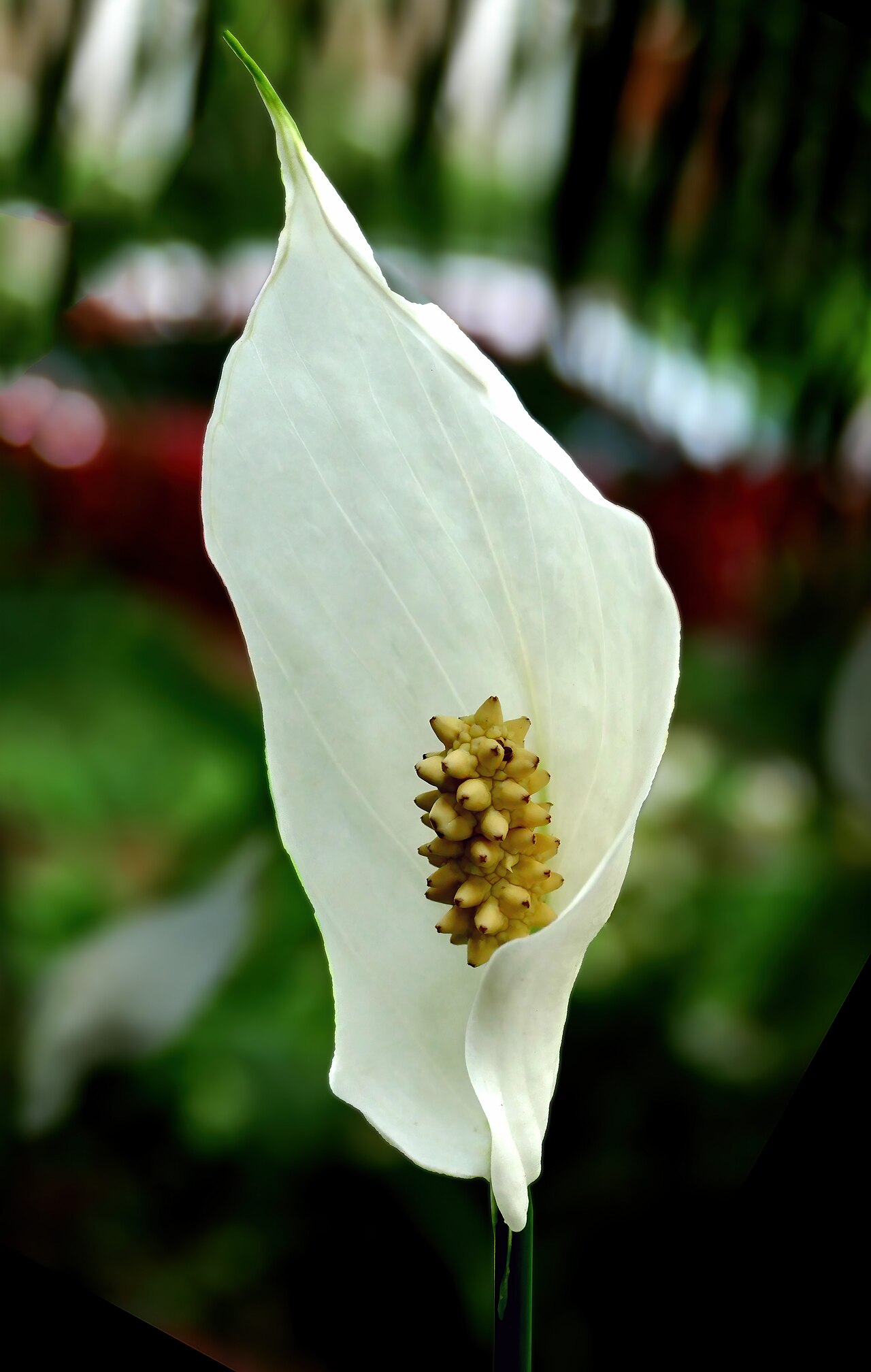
The white ‘flower’ is technically a modified leaf called a spathe surrounding a small central spike, the spadix, which bears the true tiny flowers. Blooms typically last several weeks before fading to green and eventually brown; snip spent spathes at the base to keep the plant looking tidy.
Toxicity and Air Quality
Peace lilies contain calcium oxalate crystals that are mildly toxic to pets and children if chewed, causing mouth and throat irritation, so place them out of reach of curious pets. They were also part of NASA’s well-known Clean Air Study, which found they can help filter certain indoor air pollutants, though real-world impact in an average room is modest.
Propagation
Peace lilies are easily propagated by division. When repotting, gently separate the root ball into two or more sections, each with its own leaves and roots, and pot them individually – a simple way to multiply your collection or share with friends.
Seasonal Care Notes
Peace lilies grow most actively in spring and summer, which is the right time for feeding, repotting if needed, and dividing an overcrowded plant. Growth slows considerably in autumn and winter as light levels drop, so reduce watering frequency slightly to match, since a dormant or slow-growing plant uses less water and is more susceptible to root rot if kept as consistently moist as during peak summer growth. Indoor heating in winter often drops humidity significantly, which is when brown leaf tips are most likely to appear; running a humidifier nearby or grouping the plant with other houseplants can help buffer this seasonal dry spell. If your peace lily spends summer on a shaded porch or balcony, bring it back indoors well before the first cool autumn nights, since it has no cold tolerance and can be damaged by even mild chill.
Frequently Asked Questions
Why is my peace lily not flowering?
Insufficient light is the most common cause; peace lilies tolerate low light for foliage survival but need brighter, indirect light to produce blooms reliably. A pot-bound plant with mature roots also tends to flower more than a recently repotted one.
Are peace lilies safe for homes with cats?
Peace lilies contain calcium oxalate crystals that are mildly toxic to cats and dogs if chewed, causing mouth irritation, drooling, and digestive upset, so it’s best to place them somewhere pets can’t easily reach.
How do I fix brown tips on my peace lily?
Brown tips are usually linked to tap water sensitivity, low humidity, or fertilizer salt buildup. Switching to filtered or rested tap water, raising humidity, and flushing the soil occasionally with plain water typically resolves the issue over a few growing cycles.
Can peace lilies live in low light permanently?
They can survive for extended periods in low light, but growth will be slow and blooming rare; for a genuinely thriving, flowering plant, bright indirect light is recommended rather than deep shade long-term.