Identifying and Treating Rose Diseases
Roses are magnificent garden performers, but their lush foliage and dense growth habit make them a magnet for a handful of common fungal diseases. Catching these problems early — and knowing exactly what you’re looking at — is the difference between a minor setback and a defoliated, struggling shrub. Here’s how to identify the three most common rose diseases and what to do about each one.
Black Spot (Diplocarpon rosae)
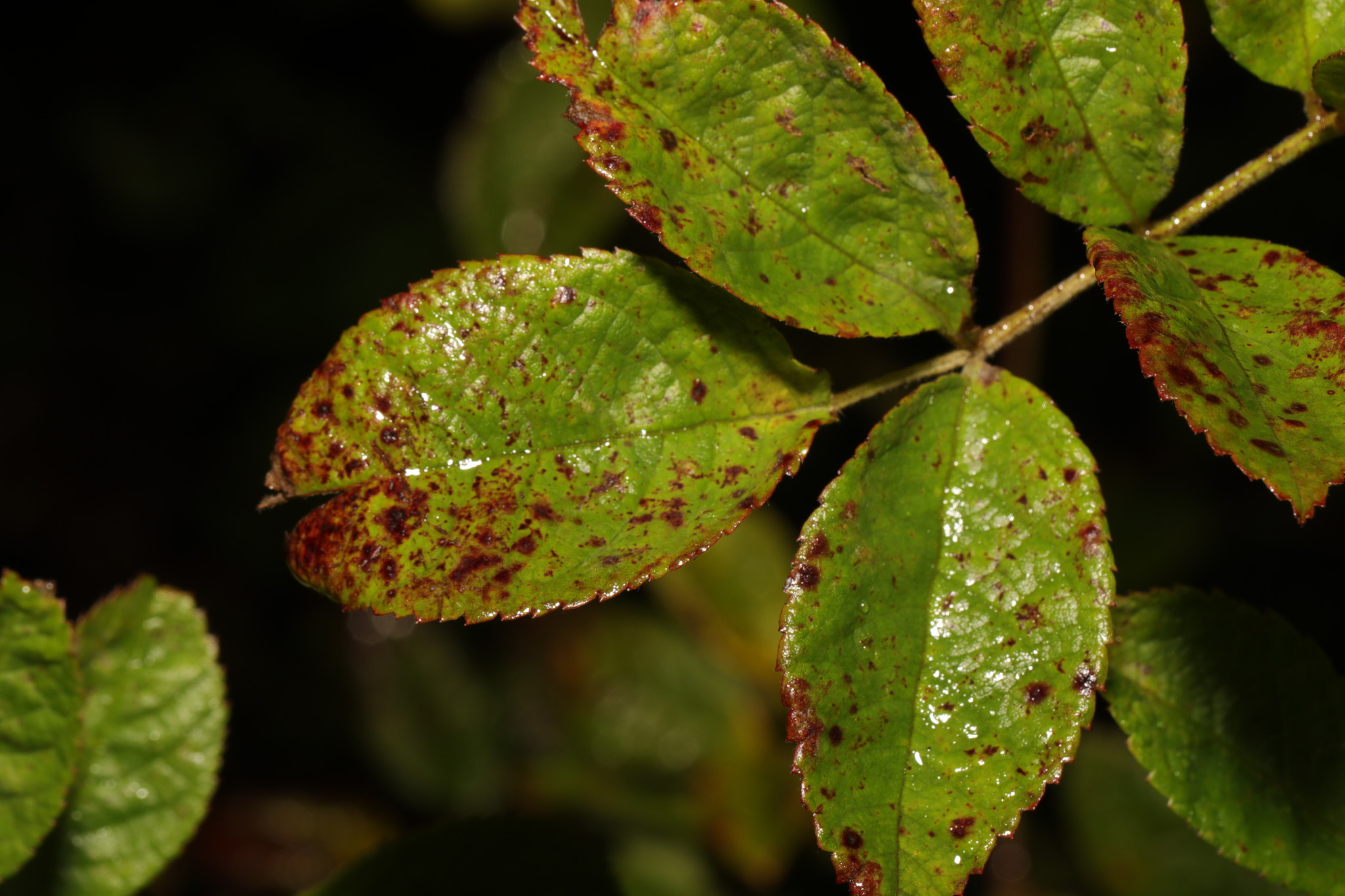
Black spot is the most widespread rose disease, and it’s usually the first thing gardeners notice. Look for circular, dark brown to black blotches on the upper surface of the leaves, often with a feathery or fringed edge. As the infection progresses, the tissue around each spot turns yellow, and heavily affected leaves drop from the plant entirely — sometimes stripping a bush bare by late summer. Black spot spreads through water splashing spores from infected leaves onto healthy ones, so it thrives in humid climates and during stretches of wet weather, especially when foliage stays damp overnight.
Powdery Mildew
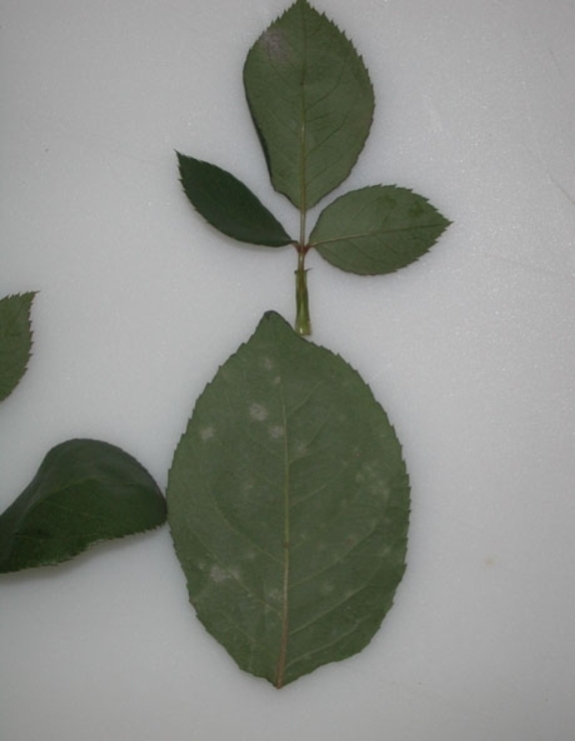
Powdery mildew announces itself with a dusty, talcum-like white coating on leaves, stems, and flower buds. New growth is often the hardest hit, curling, puckering, or emerging stunted and distorted. Unlike black spot, powdery mildew doesn’t need free-standing water to spread — it actually favors warm, dry days paired with cool, humid nights, which is why it tends to flare up in spring and fall when temperatures swing widely between day and night.
Rose Rust
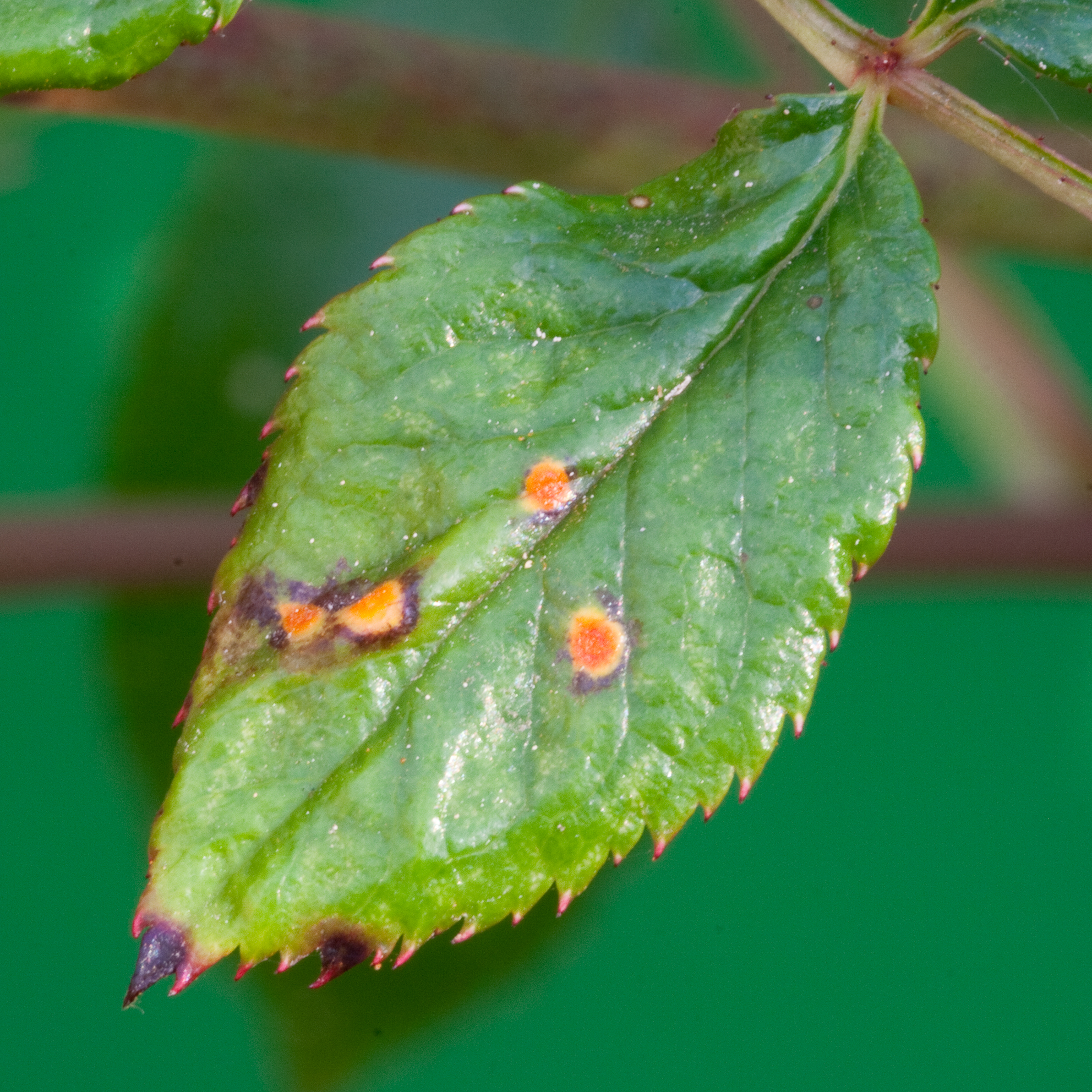
Rust is less common but unmistakable once you spot it. Small orange pustules erupt on the undersides of leaves, and if you run a finger across them, a rusty orange powder rubs off. The upper leaf surface typically shows corresponding yellow-orange spots. Left unchecked, rust can cause significant leaf drop and weaken the plant heading into winter. It favors cool, moist conditions and is more common in coastal or spring-wet regions.
Preventing Rose Diseases
Good cultural practices prevent far more disease than any spray ever will:
- Improve air circulation. Space plants generously and prune out crowded interior canes so foliage dries quickly after rain or dew.
- Water at the base, not overhead. Wet leaves are an open invitation for fungal spores to germinate. Water early in the day with a soaker hose or drip line.
- Clean up fallen debris. Rake up and discard infected leaves rather than composting them — spores overwinter in leaf litter and reinfect the plant the following spring.
- Choose resistant varieties. Many modern shrub and landscape roses, including Knock Out and rugosa hybrids, carry strong genetic resistance to black spot and mildew.
Treating an Active Infection
If disease has already taken hold, start by pruning out and disposing of infected leaves and canes to reduce the spore load and open up airflow. Fungicides work best as a preventive measure rather than a cure, so the ideal time to start spraying is in early spring, before symptoms appear, if your garden has a history of trouble. Products containing neem oil, sulfur, or copper are good organic options, while synthetic fungicides such as myclobutanil offer stronger control for persistent outbreaks. Whatever you choose, reapply according to the label — typically every seven to fourteen days during active disease pressure — and rotate between different active ingredients over the season to prevent resistant fungal strains from building up. With consistent airflow, smart watering habits, and prompt cleanup, most rose diseases can be kept to a cosmetic nuisance rather than a serious threat to the plant’s health.