Houseplant Pests: How to Identify and Fight Fungus Gnats, Spider Mites, and More
Few things are more frustrating than watching a carefully tended plant suddenly fall victim to tiny pests. Within just a few weeks, pests can ruin an otherwise healthy plant. Here are the most common houseplant pests, and how to identify and fight them.
Fungus Gnats: The Annoying Mini-Flies
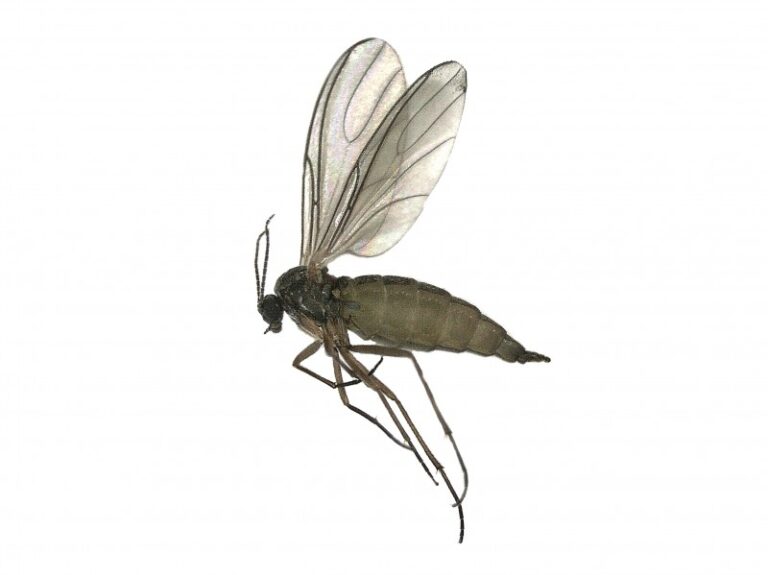
Fungus gnats are by far the most common houseplant pests. The small black flies buzzing around your pots are harmless in themselves — they don’t bite and don’t eat leaves. The problem is their larvae, which live in damp substrate and feed on roots and organic matter.
A heavy infestation weakens the plant, and young plants and seedlings in particular can die from it. In mature plants, the damage is usually manageable, but the swarming flies are extremely annoying.
Control takes several steps and patience:
- Stick yellow sticky traps into the pots: they catch the adult flies and interrupt the breeding cycle
- Water less: fungus gnats love moist soil, so let the top layer dry out between waterings
- Beneficial nematodes (Steinernema feltiae): tiny roundworms applied with the watering water that parasitize the larvae, the most effective biological method
- A layer of sand or fine gravel on top of the soil stops the gnats from laying their eggs
- Stick matches head-down into the soil: the sulfur poisons the substrate for the larvae
Spider Mites: Tiny Sap Suckers
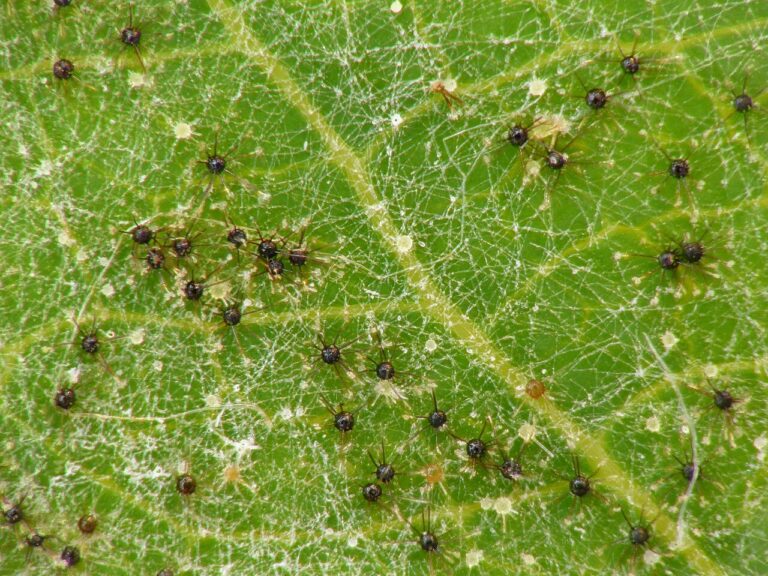
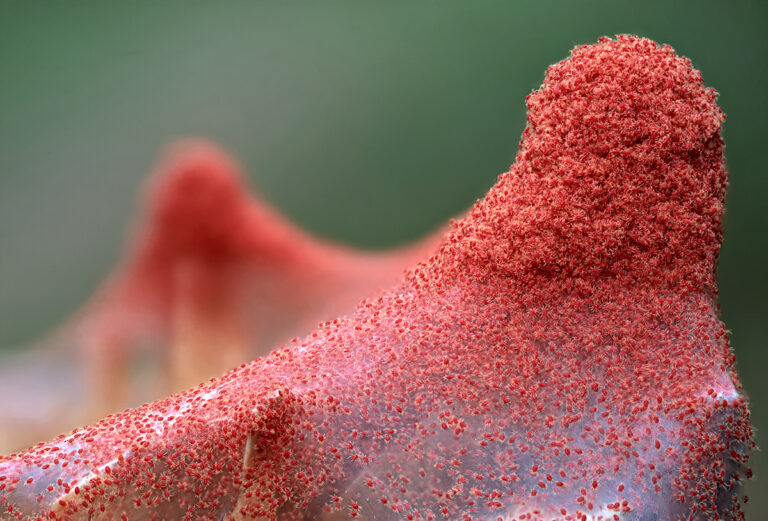
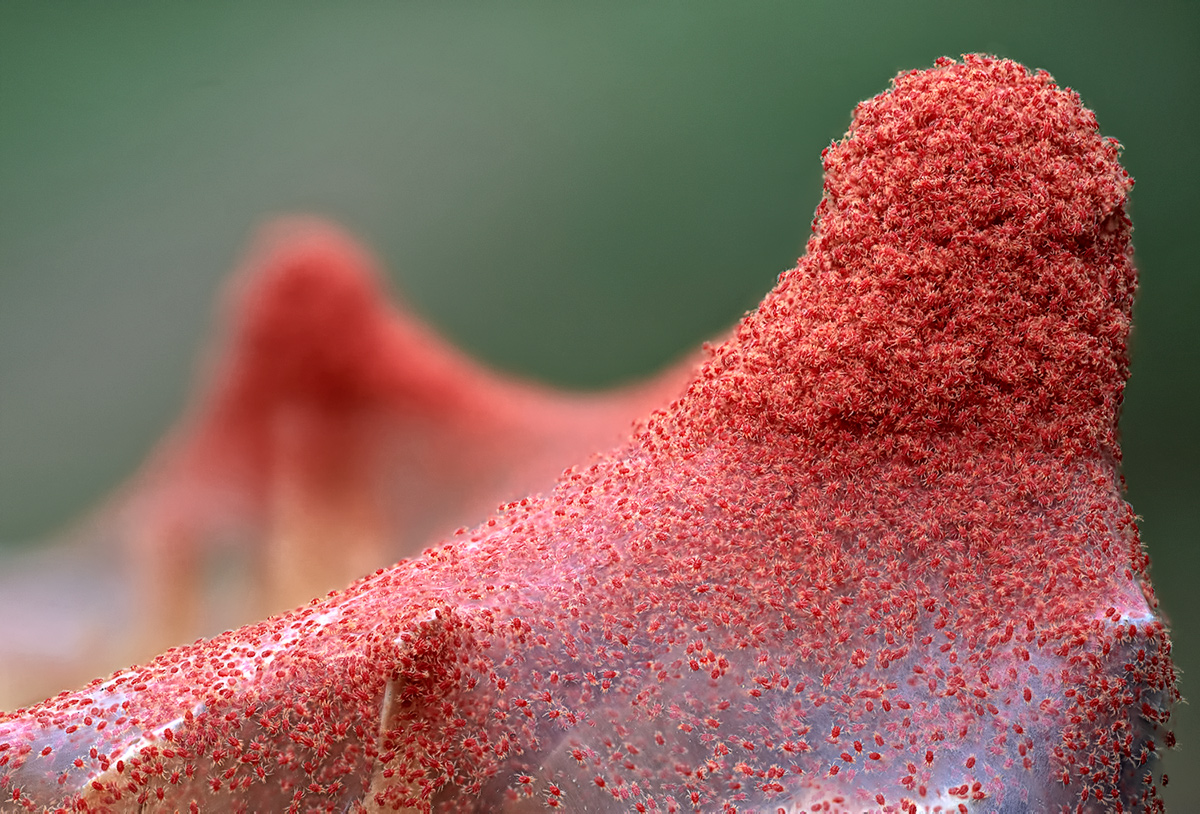
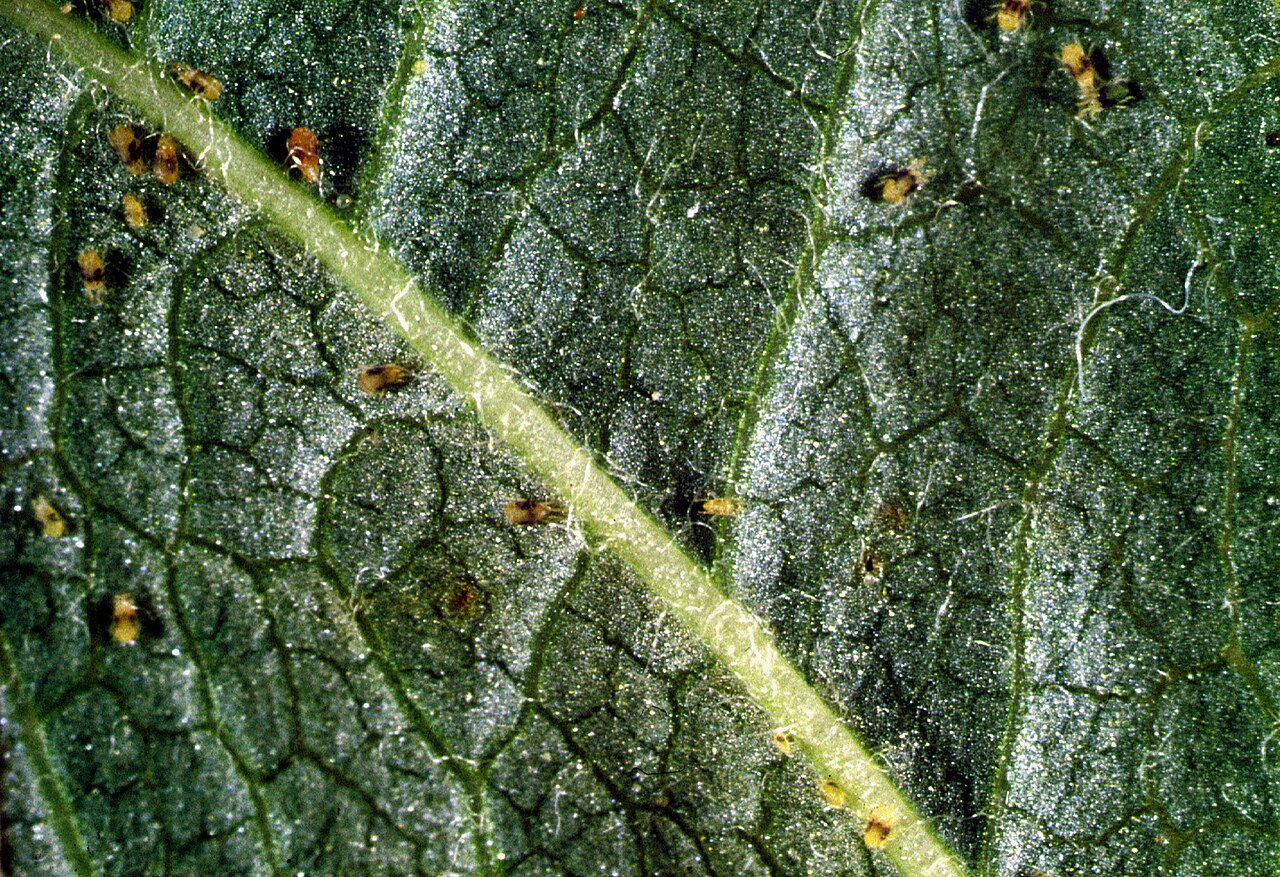
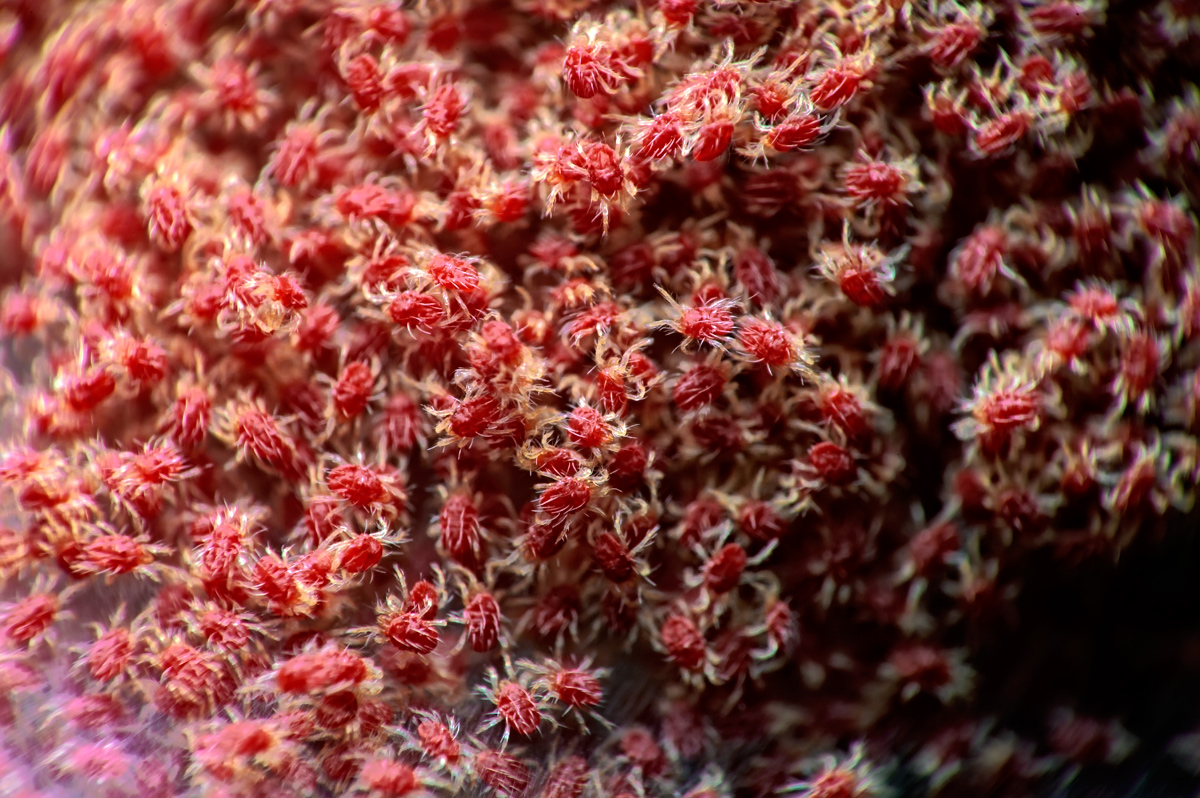
Spider mites are barely visible to the naked eye, but the damage is unmistakable: fine, pale speckling on the leaves, a silvery sheen, and in heavy infestations, fine webbing between leaves and stems.
Spider mites love dry, warm air — heated indoor air in winter is paradise for them. They multiply explosively: under ideal conditions, an egg develops into a sexually mature mite in just one week.
Control:
- Increase humidity: regularly mist the leaves, especially the undersides
- Shower the plant: rinse off the mites with a strong jet of water in the shower or outdoors
- Predatory mites (Phytoseiulus persimilis): natural enemies that specifically hunt spider mites, especially effective indoors and in greenhouses
- Neem oil: a biological plant oil that disrupts the mites’ molting and reproduction, applied as a spray on the leaves
- For stubborn infestations: miticides from a garden center. Chemical treatments are the last resort and should only be used for severe infestations
Mealybugs: The White Cotton Tufts
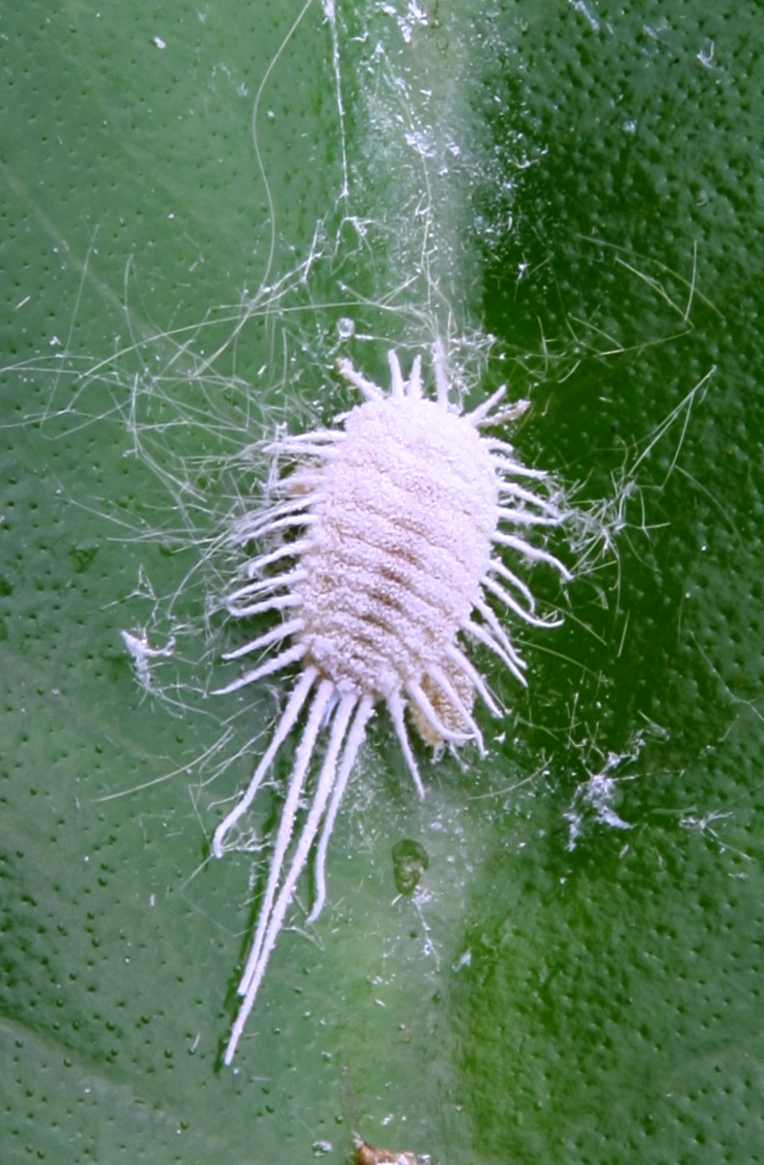
Mealybugs are easy to spot by their white, cottony coating. They prefer to settle in leaf axils, on stems, and in other protected spots, where they use their piercing mouthparts to feed on plant sap.
The damage is significant: leaves turn yellow and drop, the plant loses vigor and becomes susceptible to fungal diseases. Mealybugs also excrete honeydew, on which sooty mold can grow.
Control:
- Dab affected plant parts with a cotton swab soaked in rubbing alcohol: the alcohol dissolves the bugs’ waxy coating and kills them
- For heavy infestations, spray the whole plant with a mixture of water, soft soap, and rubbing alcohol (1 liter water, 15 ml soft soap, 15 ml rubbing alcohol)
- Isolate the plant, since mealybugs migrate readily to neighboring plants
- Systemic insecticides as sticks or granules are absorbed by the plant and kill sap-sucking insects from the inside
Scale Insects: Armored Pests
Scale insects look like small brown scales or bumps on leaves and stems. They sit firmly under their hard shell and suck plant sap. The shell makes them resistant to many contact pesticides, which makes them tricky to control.
Symptoms include sticky leaves from honeydew secretions, yellow spots at feeding sites, and a general loss of vigor.
Control:
- Remove scale insects mechanically: gently scrape them off with a blunt knife or fingernail
- Oil-based preparations such as paraffin oil or rapeseed oil smother the insects under their shell
- Systemic insecticides absorbed by the plant are often the only effective chemical method
- Cut back heavily affected plant parts generously
Thrips: The Invisible Threat
Thrips are tiny, elongated insects often noticed only by their damage: silvery-gray patches and streaks on leaves, tiny black droppings, and deformed young leaves.
Thrips are extremely mobile and jump or fly away at the slightest disturbance. They prefer to attack flowers and young shoots and can transmit viral diseases.
Control:
- Blue sticky traps attract and catch thrips
- Regularly spray with neem oil solution
- Predatory mites (Amblyseius cucumeris) as natural enemies
- For severe infestations, systemic insecticides are often the only remedy that works
Prevention Is the Best Protection
Healthy, vigorous plants are less susceptible to pests. The best prevention is good care: the right location, appropriate watering, and regular fertilizing.
Quarantine new plants: every newly purchased plant should be kept isolated for two to three weeks before joining the others. Many pests hitch a ride with new plants and only become visible after a few days.
Regular inspection: take a close look at the undersides of leaves, leaf axils, and young shoots once a week. The earlier you spot an infestation, the easier it is to control.
Humidity: many pests, such as spider mites and thrips, love dry air, so higher humidity helps prevent them.
Conclusion
Pests are simply part of plant life. What matters isn’t never having them, but recognizing them early and acting consistently. With the right methods — biological where possible, chemical where necessary — you can get any infestation under control.