Growing and Caring for Zucchini: From Seed to Record Harvest
Growing and Caring for Zucchini: From Seed to Record Harvest
Zucchini (Cucurbita pepo subsp. pepo) are the most rewarding summer vegetable you can grow. A single, well-tended plant can produce 20 to 30 fruits in a season — enough to share with the whole neighborhood. Zucchini grow quickly, need little care, and succeed almost every time, even for beginners. The biggest challenge in growing zucchini isn’t the growing itself, but using up the bountiful harvest! This guide covers everything about varieties, sowing, care, and even a few tasty recipe ideas.
Zucchini varieties: green, yellow, or striped?
Beyond the classic green zucchini, there are exciting alternatives for more variety on the plate:
- Green zucchini: The all-rounder. Varieties like ‘Diamant’, ‘Black Beauty’, or ‘Defender’ are productive, tough, and resistant to powdery mildew. Great for beginners.
- Yellow zucchini: Sunny yellow fruits with a mild, slightly buttery flavor. Varieties: ‘Gold Rush’, ‘Goldena’, ‘Soleil’. Less watery than green varieties, so they’re excellent for grilling.
- Round zucchini: Perfect for stuffing and baking. Varieties: ‘Eight Ball’, ‘Tondo di Piacenza’, ‘Floridor’.
- Striped zucchini: Decorative, with light and dark green stripes. Varieties: ‘Cocozelle’, ‘Striata d’Italia’.
Sowing and Planting Out
Zucchini love warmth — without enough of it, they simply won’t grow. Sowing is straightforward:
- Starting indoors (recommended): Sow individually in 9 cm pots in mid-April, about 1-2 cm deep. Germination temperature 20-25°C (68-77°F), taking 5-10 days. Transplant outdoors after the last frost, around mid-May.
- Direct sowing: Not before mid-May, once soil temperature is above 15°C (59°F). Sow 2-3 seeds per spot, then thin to the strongest seedling.
- Spacing: Zucchini need room — at least 100 x 100 cm (about 3 x 3 feet) per plant. In a tight raised bed, 80 cm can work, but don’t go any closer.
Important: Just one or two zucchini plants are plenty for a household — any more and you’ll be drowning in zucchini, with the neighbors soon hiding from you. A single plant can feed a family of four all summer long.
Location and Soil
Zucchini love full sun and deep, nutrient-rich soil. The ideal spot is a sunny bed with plenty of compost worked in — they’ll even grow happily directly on a compost pile. Zucchini are heavy feeders and thrive on well-rotted compost. Before planting, work in generous amounts of compost, bonemeal, and a little rock dust.
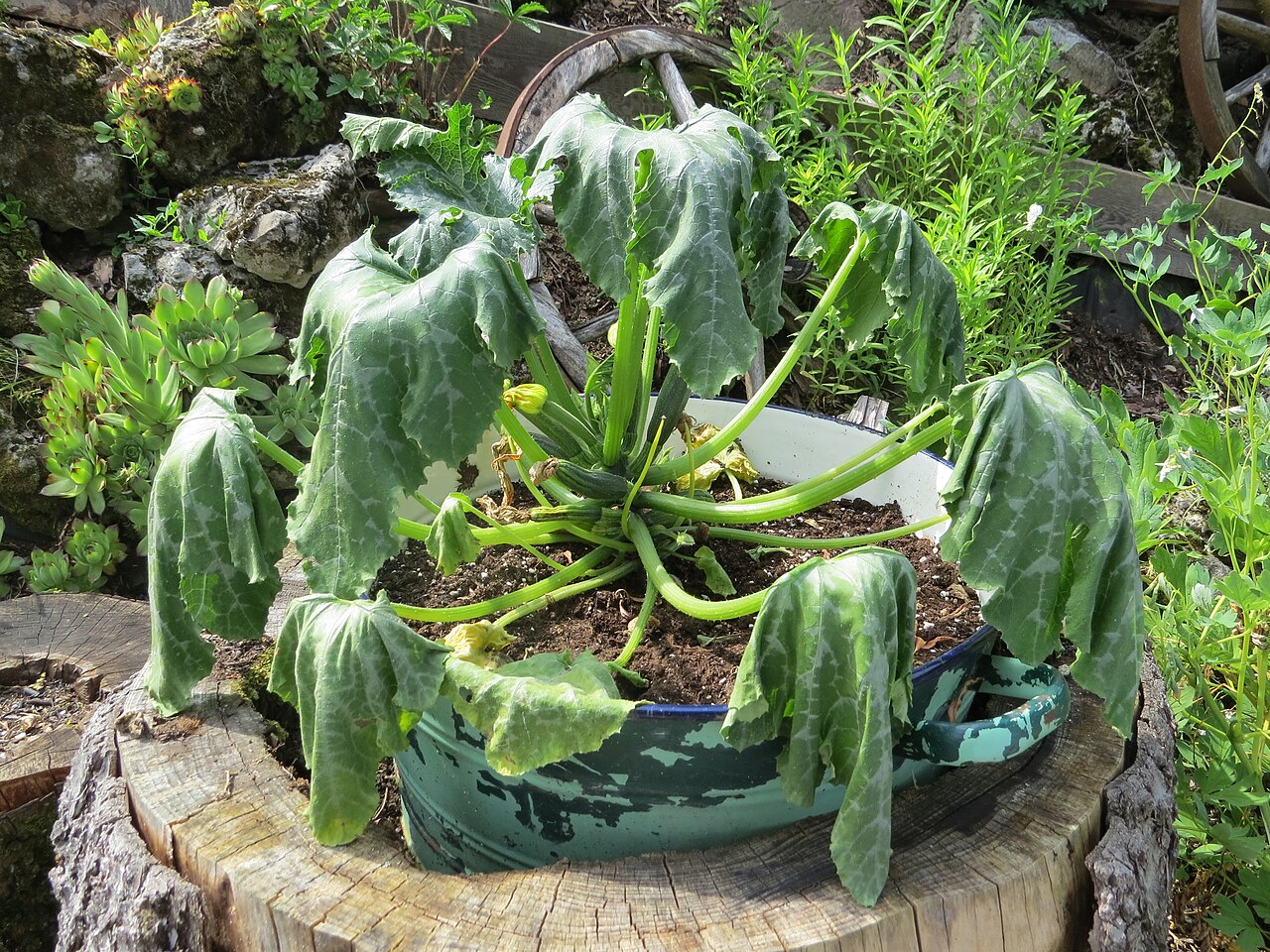
Container growing: Can zucchini be grown in pots? Yes, but only in a genuinely large container: at least 40 liters (about 10 gallons) and 40 cm (16 inches) deep. Mix quality vegetable soil with compost and fertilize regularly. The space requirements on a balcony are considerable, so this works best on a large patio.
Care: Watering and Feeding for Maximum Yield
Watering: Zucchini are thirsty plants. Their huge leaves lose liters of water through evaporation on hot days. In peak summer, water 3-5 liters per plant daily, twice a day during heat waves. Water in the morning and close to the base of the plant. A shallow watering ring around the base prevents water from running off uselessly. Mulching with grass clippings or straw retains moisture and suppresses weeds.
Feeding: Feed every two weeks with nettle manure, diluted compost tea, or liquid vegetable fertilizer. Zucchini take up whatever they need, and that’s a lot. Yellowing leaves are a sign of nutrient deficiency.
Pollination: Zucchini produce both male and female flowers. The first flowers are usually male only (with long, thin stems) — this is completely normal. Female flowers can be recognized by the swollen ovary beneath the bloom. Bees and bumblebees handle pollination naturally. During prolonged rainy weather or when insects are scarce, you can hand-pollinate with a small brush, transferring pollen from the male flower to the female flower’s stigma.
Harvest: Smaller Is Better
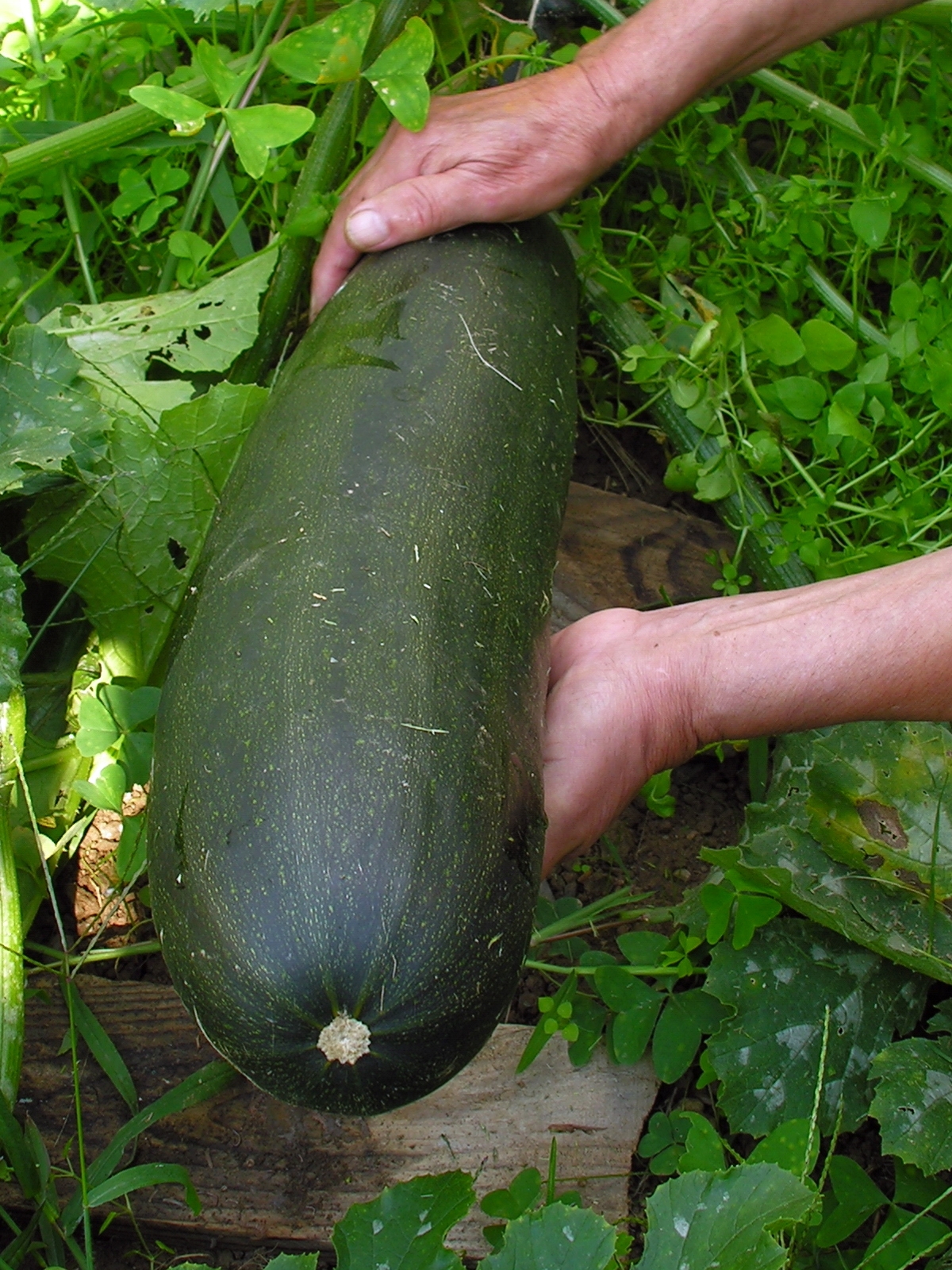
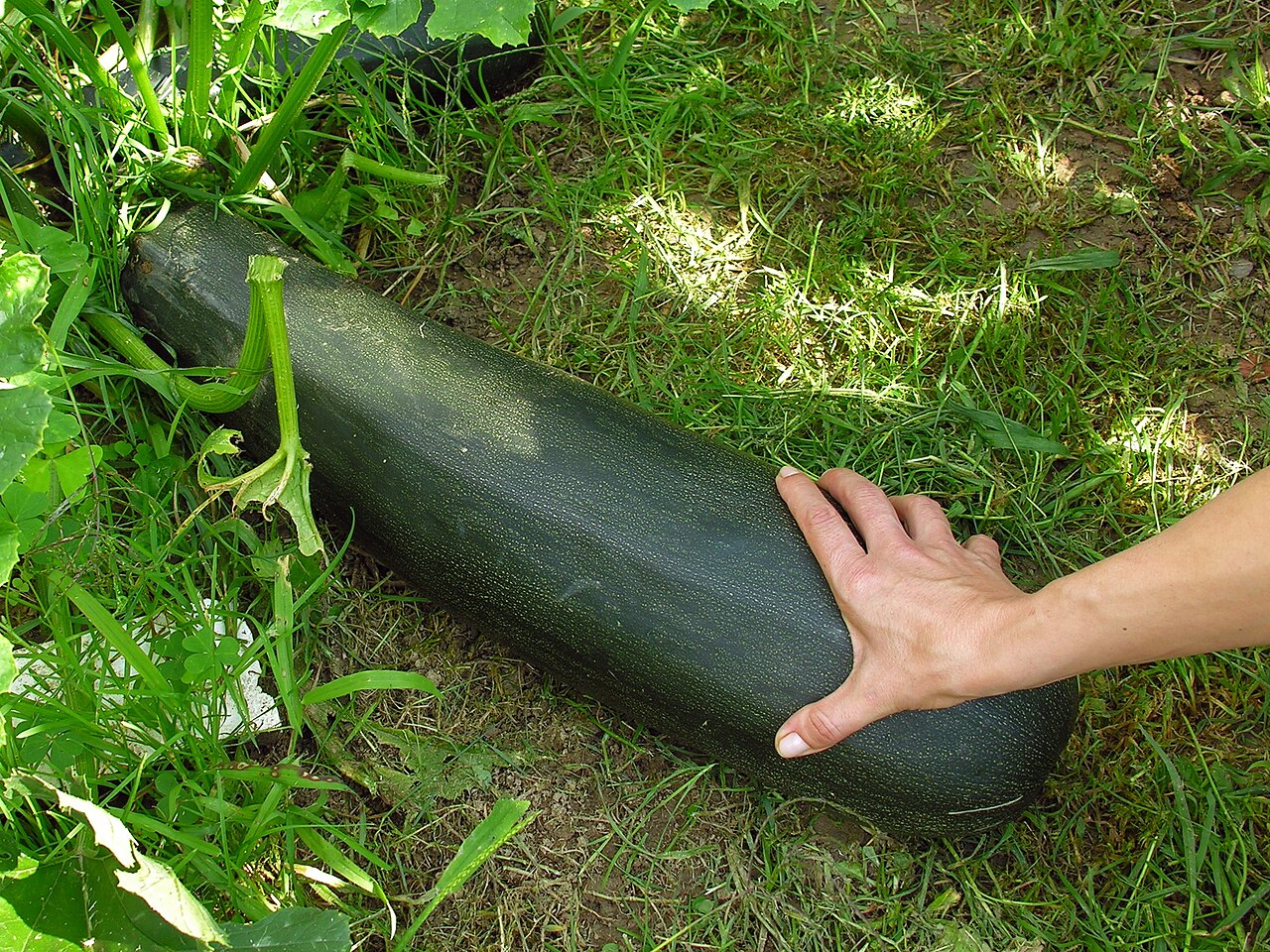
The most common zucchini mistake is harvesting too late. Zucchini taste best when they’re 15-20 cm (6-8 inches) long and still young. Overripe, oversized fruits become watery, the seeds turn hard, and the skin toughens. Harvest every 2-3 days: the more you pick, the more new fruit the plant sets. Cut fruits off with a sharp knife rather than twisting them off; leaving a small stub of stem attached extends shelf life.
Zucchini blossoms: A culinary secret! The large yellow flowers are edible and a real delicacy, stuffed with ricotta or cream cheese and deep-fried in tempura batter — a restaurant-quality dish straight from your own garden. Harvest only the male flowers (without a developing fruit attached) so the harvest itself isn’t affected.
Common Problems
| Problem | Cause | Solution |
|---|---|---|
| Powdery mildew | Warm, dry weather | Spray with diluted milk (1:5), grow resistant varieties |
| Young fruit rots from the tip | Not pollinated (female flower) | Hand-pollinate, attract more bees |
| Bitter fruit | Stress (drought, heat) | Water more consistently; discard — contains toxic cucurbitacin |
| Plant produces only male flowers | Young plant or stress | Be patient, ease up on fertilizer |
| Slugs | Young plants are especially vulnerable | Slug collars, beer traps, water in the morning |
Zucchini are the perfect plant for gardeners who want a big harvest for little effort. One plant, some water, and compost, and you’ll be rewarded with delicious, fresh zucchini all summer long.