Cranesbill (Geranium) as Ground Cover – A Long-Blooming Perennial for Every Location
Cranesbill (Geranium) as Ground Cover – A Long-Blooming Perennial for Every Location
Cranesbill (Geranium) is one of the most versatile genera among garden perennials. Unlike the annual pelargoniums that are often colloquially – and incorrectly – called “geraniums,” the hardy cranesbill species are true perennial, fully winter-hardy plants. For use as ground cover, the vigorous, spreading species are especially well suited, reliably covering large areas with minimal care.
The genus includes more than 400 species worldwide. Particularly relevant for the garden as ground cover are the vigorous, rhizome-forming species that form dense carpets of attractive foliage and countless flowers.
The Best Cranesbill Species for Ground Cover
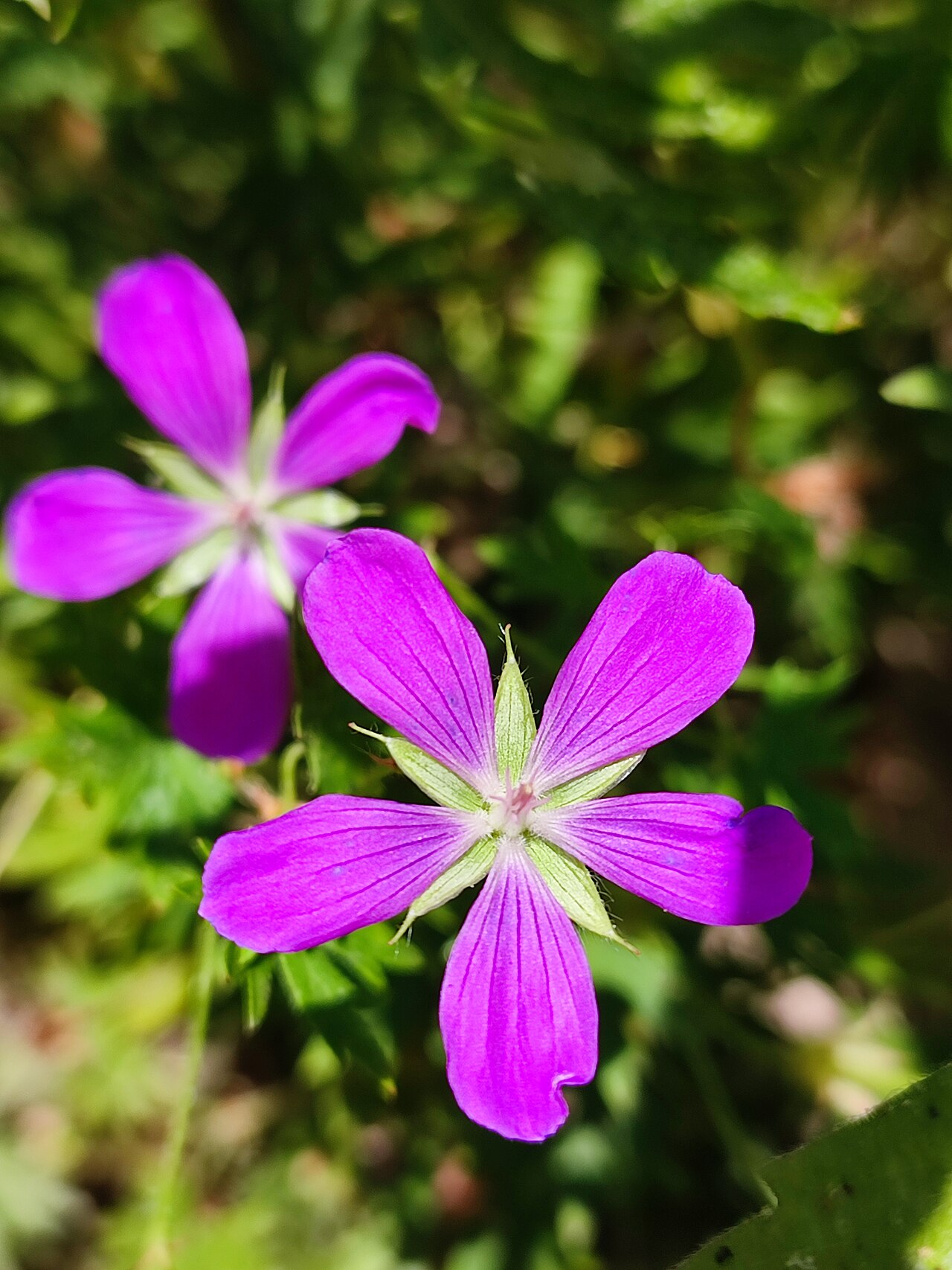
- Geranium macrorrhizum (Bigroot Cranesbill): The undisputed king among ground-cover cranesbills. Evergreen, aromatically scented foliage, magenta-pink flowers from May to July. Extremely tough, tolerates sun and shade, drought and root competition. Height: 25–30 cm (10–12 in).
- Geranium x cantabrigiense: A hybrid with flat, carpet-like growth. Soft pink flowers, aromatic foliage with attractive autumn color. Perfect for the front of a border. Height: 15–20 cm (6–8 in).
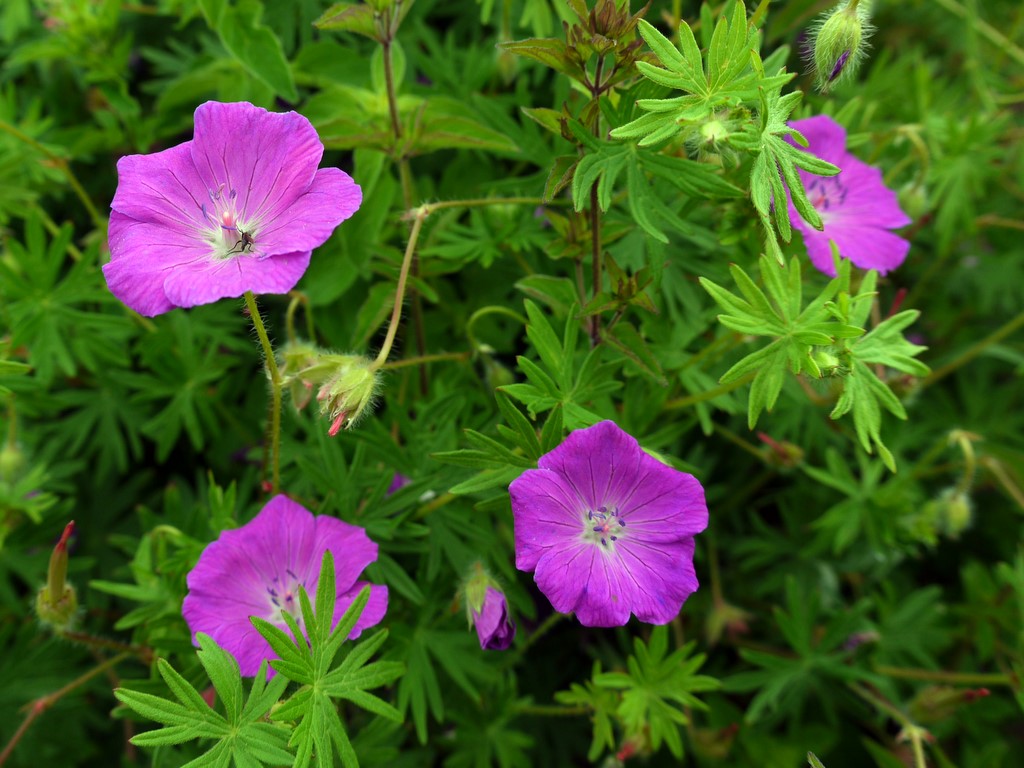
- Geranium sanguineum (Bloody Cranesbill): Deep crimson flowers from June to September. The foliage turns brilliant red in autumn. Ideal for sunny, dry spots. Height: 20–30 cm (8–12 in).
- Geranium endressii (Pyrenean Cranesbill): Soft pink flowers from June to October – one of the longest-blooming species. Fresh green foliage, good for partly shaded spots. Height: 30–40 cm (12–16 in).
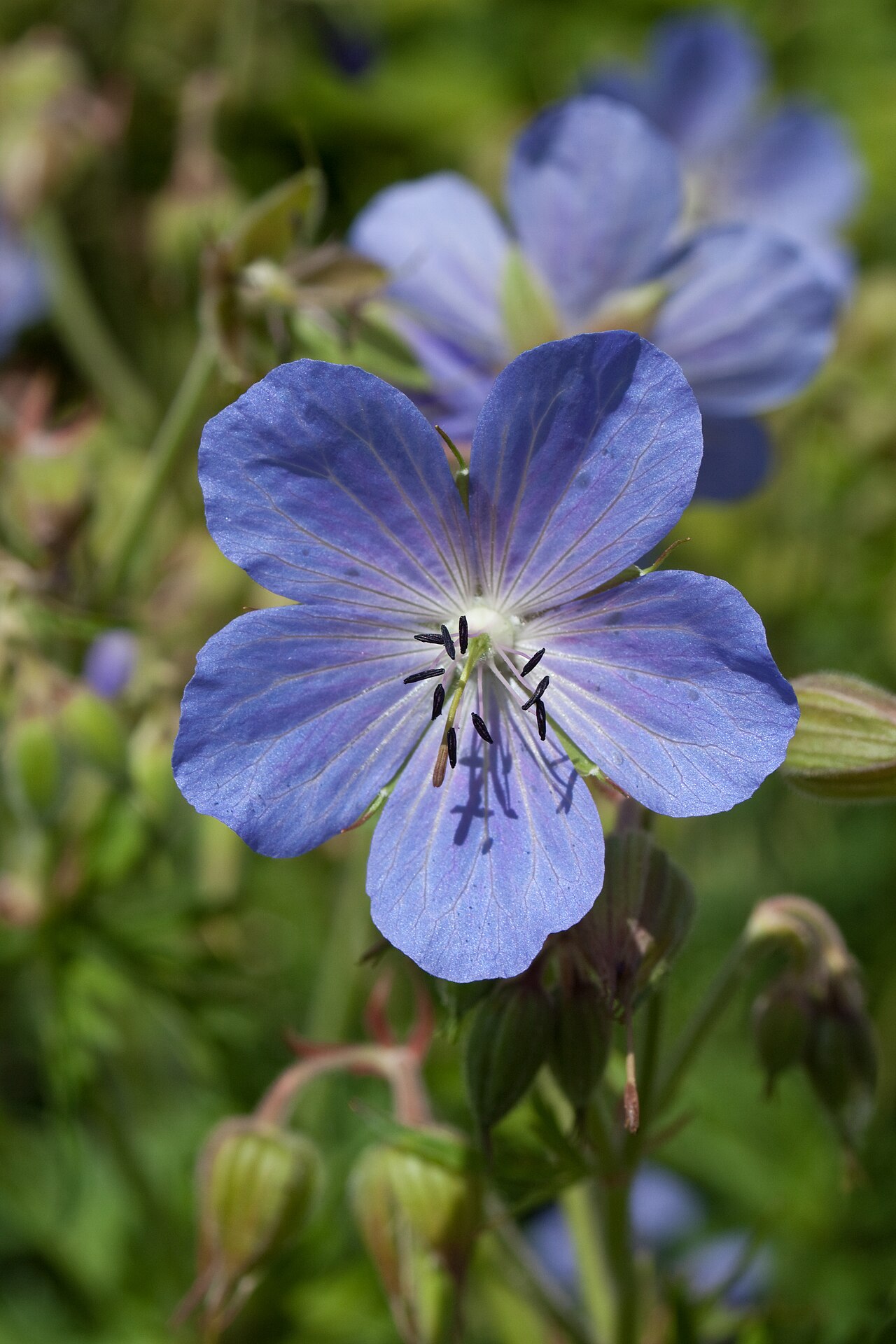
- Geranium ‘Rozanne’: Probably the most famous cranesbill cultivar, with brilliant blue flowers from June until frost. Very vigorous, covers large areas. Height: 40–50 cm (16–20 in).
Location and Planting
Site requirements vary by species, but most ground-cover cranesbills thrive in sun to partial shade. Bigroot cranesbill (G. macrorrhizum) is the most versatile species and copes with sun, shade, drought, and even root competition beneath trees.
The soil should be humus-rich and well-draining. Before planting, thoroughly clear the soil of weeds – this is the single most important step in preparing a cranesbill planting that will stay attractive for years. Plant about five to eight plants per square meter.
Care and Pruning
Cranesbill as ground cover is extremely low-maintenance:
- After the first flush of flowers (July), the plants can be cut back close to the ground. They resprout fresh growth within two weeks and bloom a second time in late summer.
- An annual application of compost in spring is all the feeding needed.
- During long dry spells, cranesbill appreciates extra water, but it also copes with moderate drought.
- In autumn, the plants can be cut back, or the foliage can be left standing as natural winter protection.
Conclusion: The Perfect Ground-Cover Perennial
Cranesbill combines everything you could want from a ground cover: dense, weed-suppressing growth, months of flowers, attractive foliage, and minimal care requirements. With the right choice of species, there is a cranesbill suited to every location – from blazing sun to dry shade.