Anthurium Care – How to Properly Care for the Flamingo Flower
Anthurium – Properly Caring for the Exotic Flamingo Flower
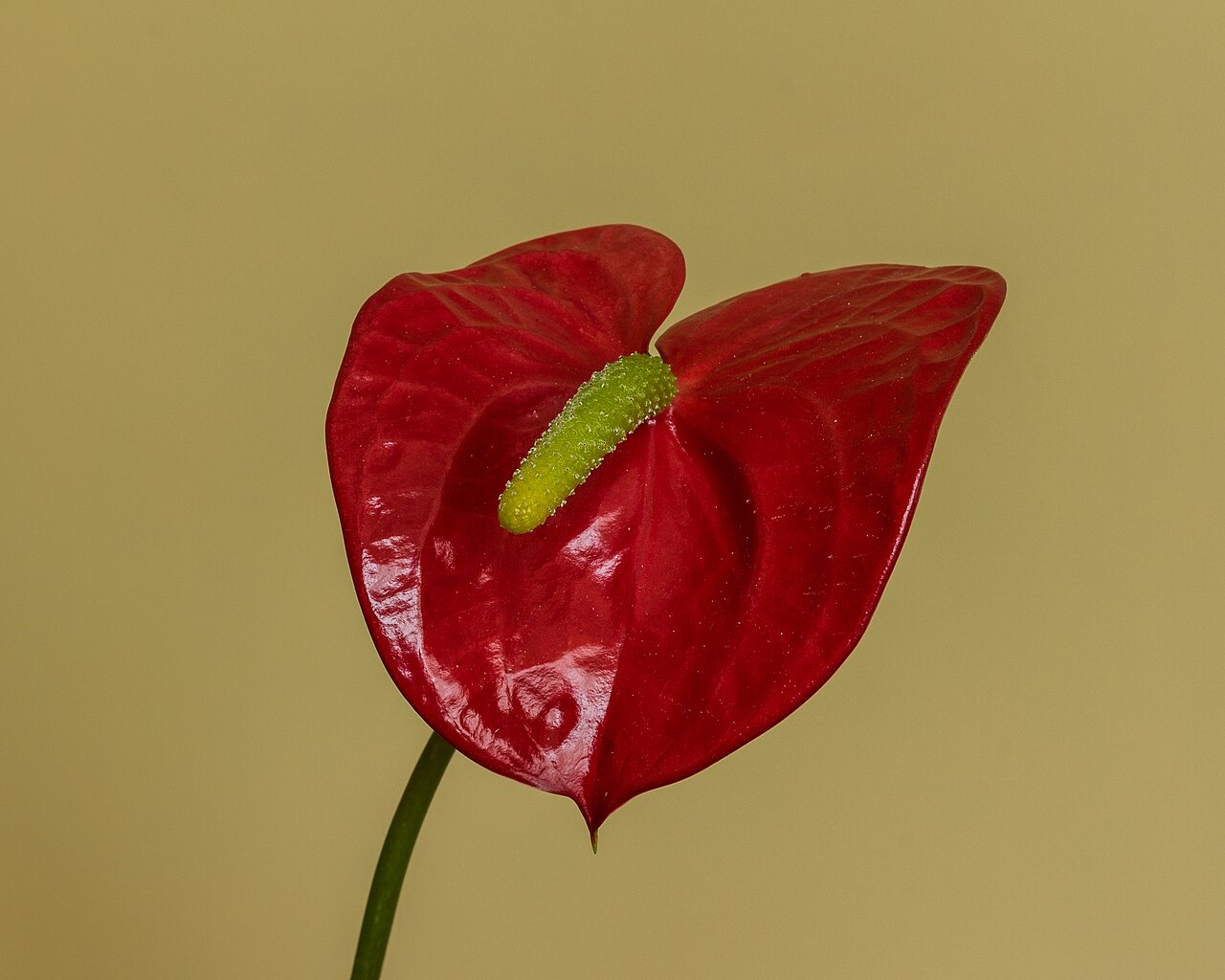
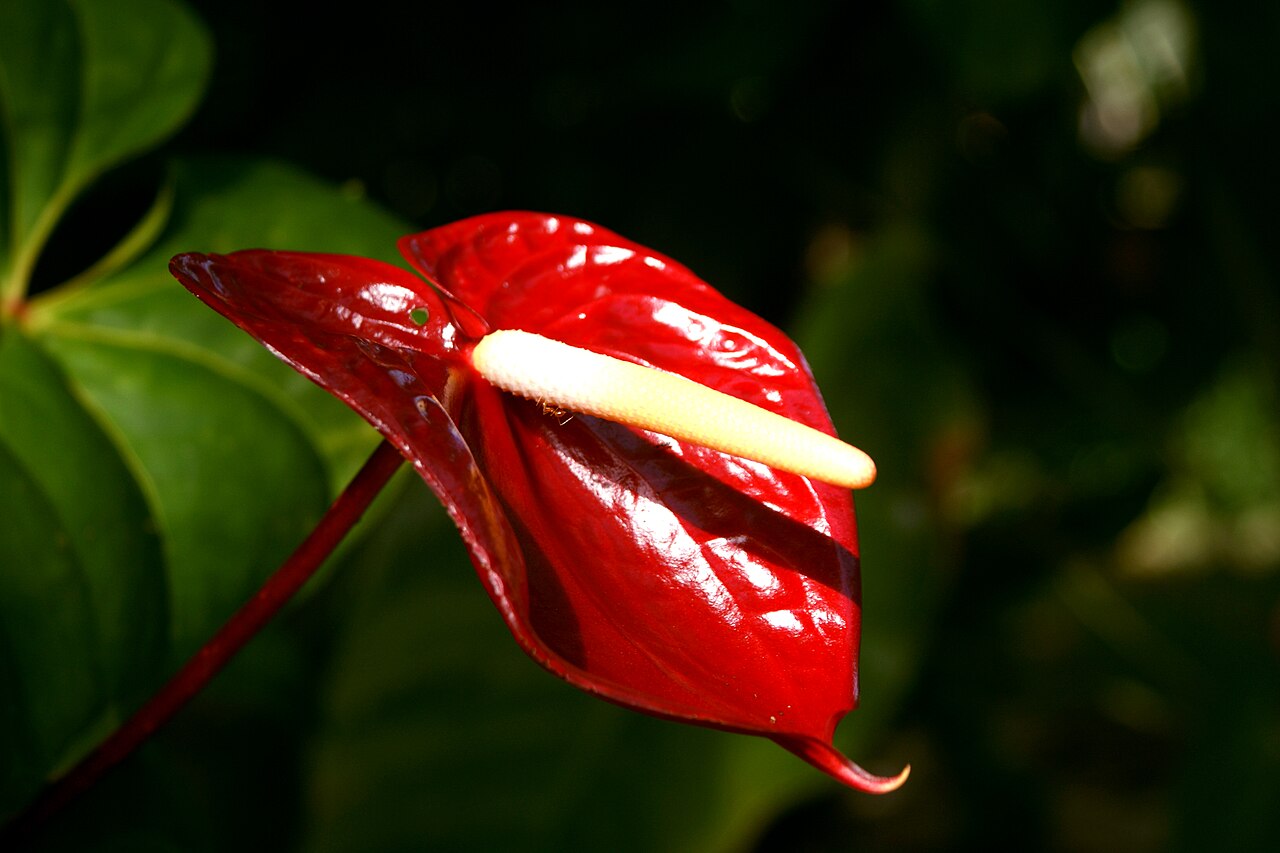
The anthurium, also known as the flamingo flower, is one of the most striking flowering houseplants. With its heart-shaped, brilliant red bracts and its distinctive yellow flower spike, it draws every eye. Originally native to the tropical rainforests of Central and South America, it has become a popular ornamental plant worldwide. Besides the classic red variety, there are numerous cultivars in pink, white, salmon, and even near-black. A well-cared-for anthurium can bloom all year round under optimal conditions – and each individual flower lasts an impressive six to eight weeks.
The Ideal Location for Your Flamingo Flower
The anthurium prefers a bright, warm location without direct sunlight. An east- or west-facing window is ideal. Direct midday sun should be avoided, as it can burn the sensitive leaves and bracts. The ideal temperature is 68-77°F (20-25°C) year-round. In winter, the temperature should not fall below 61°F (16°C) – this tropical plant cannot tolerate cold.
Especially important: the anthurium is sensitive to drafts and dry heating air. Avoid placing it near windows that are opened frequently, and don’t put the plant directly above a radiator. A spot in a bathroom with daylight is ideal, since the high humidity there closely resembles its natural tropical climate.
Watering Correctly
As a tropical plant, the anthurium needs an evenly moist root ball but cannot tolerate any waterlogging. Water with room-temperature, low-lime water – ideally rainwater or tap water that has been left to stand. The top layer of soil should dry out slightly between waterings. As a rule of thumb: water about twice a week in summer and once a week in winter.
Humidity is a crucial factor for the anthurium’s well-being. Misting the leaves daily with low-lime water from a spray bottle mimics its tropical environment and promotes healthy growth. However, be careful not to mist the flowers directly – water droplets on the colored bracts can leave unsightly spots. An alternative method is placing a dish filled with water and gravel near the plant.
Fertilizing and Nutrients
For continuous flower production, the anthurium needs regular feeding. During the growing season from March to October, use a liquid fertilizer high in potassium every two weeks. This provides balanced nutrition for both foliage and flowers. In winter, reduce feeding to once a month.
Caution: the anthurium is sensitive to excessive salt concentrations in the substrate caused by over-fertilizing. Use fertilizer at half strength if you’re unsure. A sign of over-fertilizing is brown leaf edges. If this happens, thoroughly flush the substrate several times with clear water.
Repotting and Substrate
The anthurium should be repotted about every two years, in spring. It prefers a loose, humus-rich substrate with good drainage. A mix of orchid bark and potting soil in a 1:1 ratio has proven effective, as it stores enough nutrients while remaining airy enough for the sensitive roots.
Important: anthuriums are mildly toxic – all parts of the plant contain calcium oxalate crystals and toxic saponins. Wear gloves when repotting and wash your hands thoroughly afterward. Keep the plant out of reach of children and pets.
Bloom Time and Flower Care
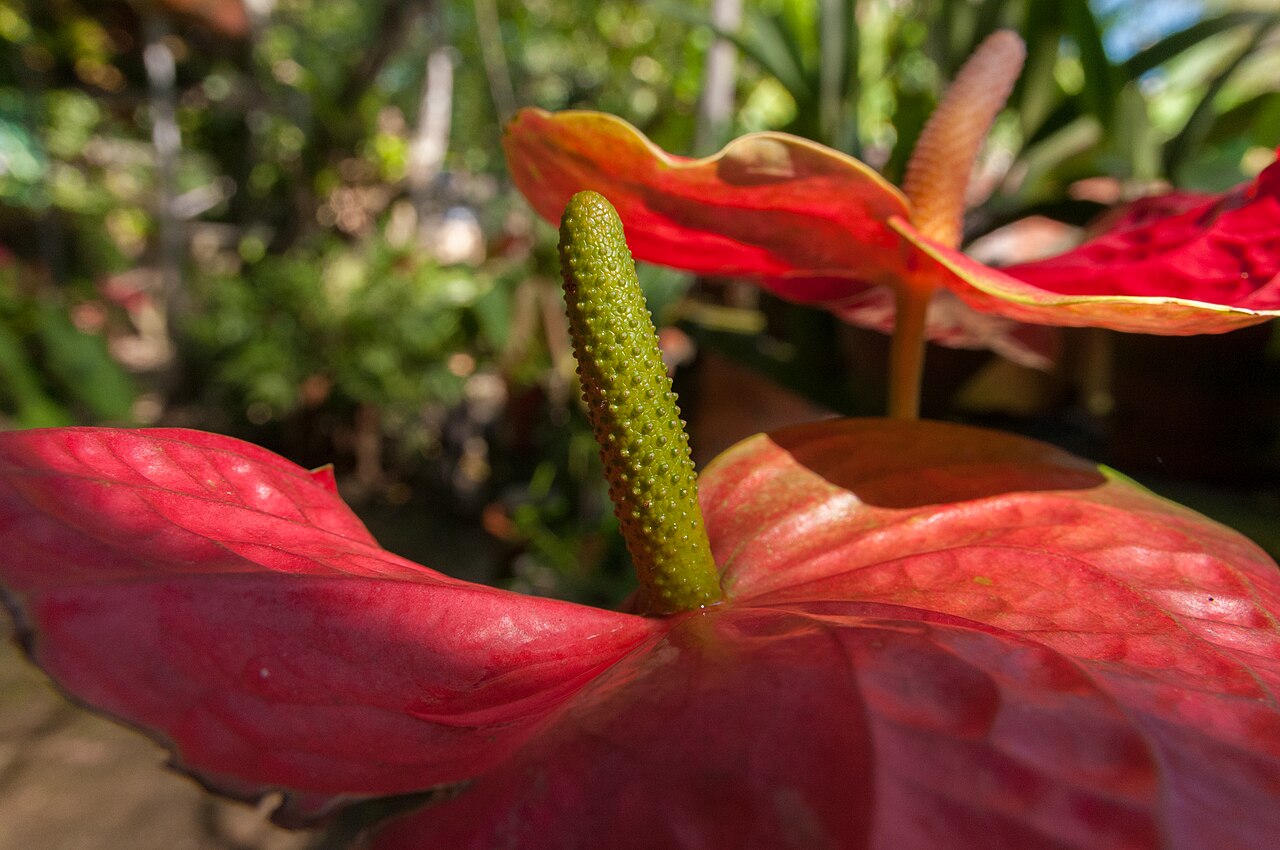
A distinctive feature of the anthurium: what we perceive as the flower is actually a colored bract (spathe) surrounding the inconspicuous flower spike (spadix). The actual tiny flowers sit on this spike. With good care, the anthurium can bloom continuously, producing new flower spikes throughout the year.
Cut off spent flowers along with their stem close to the base to encourage the formation of new blooms. Use sharp, clean scissors. Yellowed or damaged leaves can also be removed at any time. Leaf care also includes regularly wiping the leaves with a damp cloth to remove dust and optimize photosynthesis.
Common Problems with Anthurium Care
| Symptom | Cause | Treatment |
|---|---|---|
| Brown leaf edges | Too much fertilizer or air too dry | Reduce fertilizer amount; mist the plant |
| Yellow leaves | Waterlogging or cold | Water less; move to a warmer spot |
| Green instead of red flowers | Lack of light | Choose a brighter location |
| Wilting leaves despite moisture | Root rot from waterlogging | Repot; remove rotten roots |
| No new flowers | Nutrient deficiency | Feed regularly with flowering plant fertilizer |
Conclusion: Exotic Elegance for the More Experienced Grower
The anthurium is a somewhat more demanding houseplant, but it rewards good care with spectacular, long-lasting blooms. With the right balance of warmth, humidity, and nutrients, it becomes an exotic highlight in your plant collection. For the best results, use a balanced liquid fertilizer and a loose, well-draining orchid bark and potting soil mix as the ideal base substrate.