Wandering Jew (Tradescantia zebrina): Colorful Ground Cover for Hanging Baskets
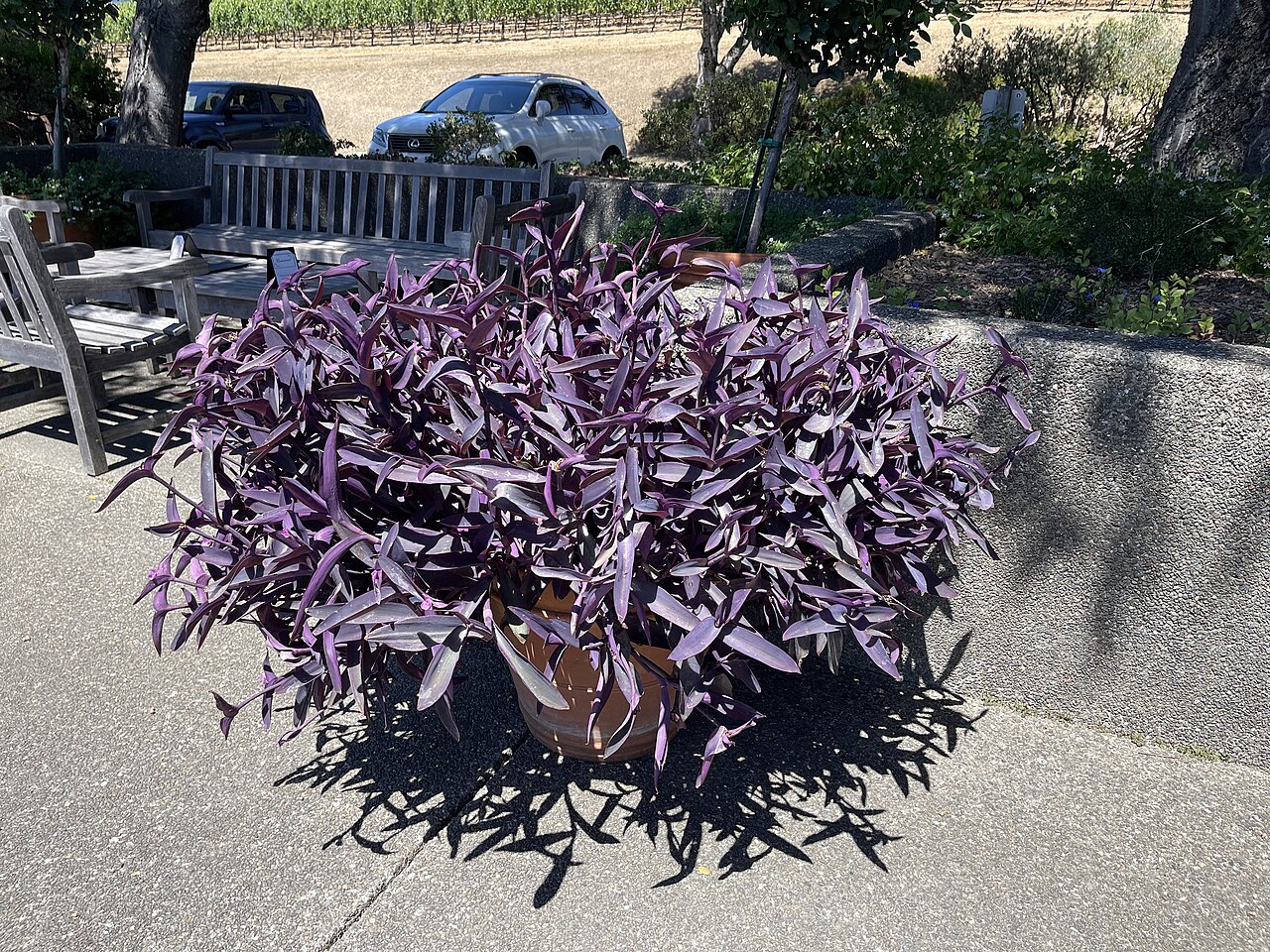
The Wandering Jew (Tradescantia zebrina) is a vividly colored trailing plant whose striped leaves in silver, green, and violet brighten up any plant shelf. Native to Mexico and Central America, it grows there as a creeping ground cover in the understory of tropical forests. In a hanging basket, it shows off its full beauty as the long trailing stems cascade down decoratively, and in a terrarium it fills space quickly thanks to its fast growth.
Leaf Colors and Popular Varieties
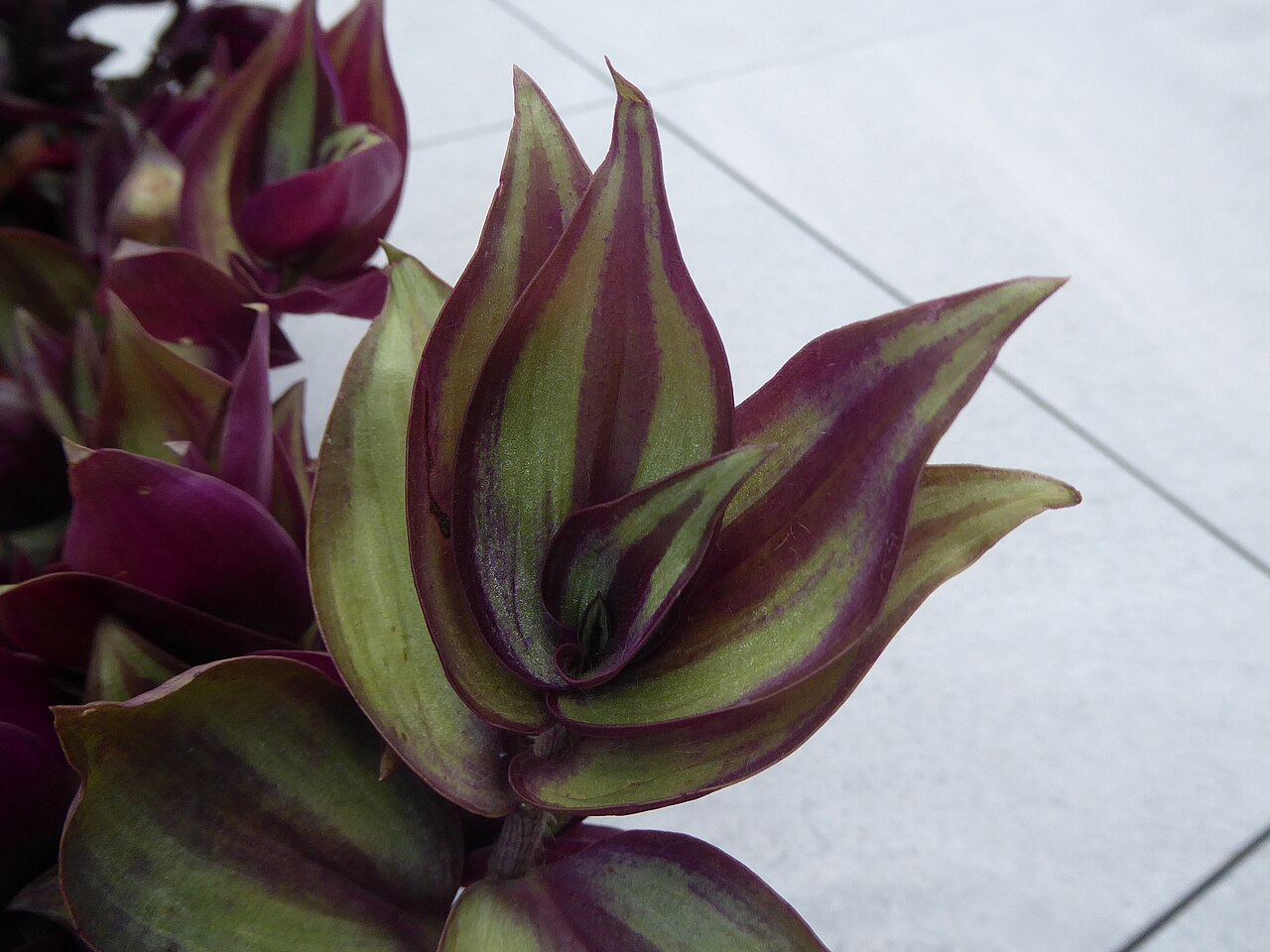
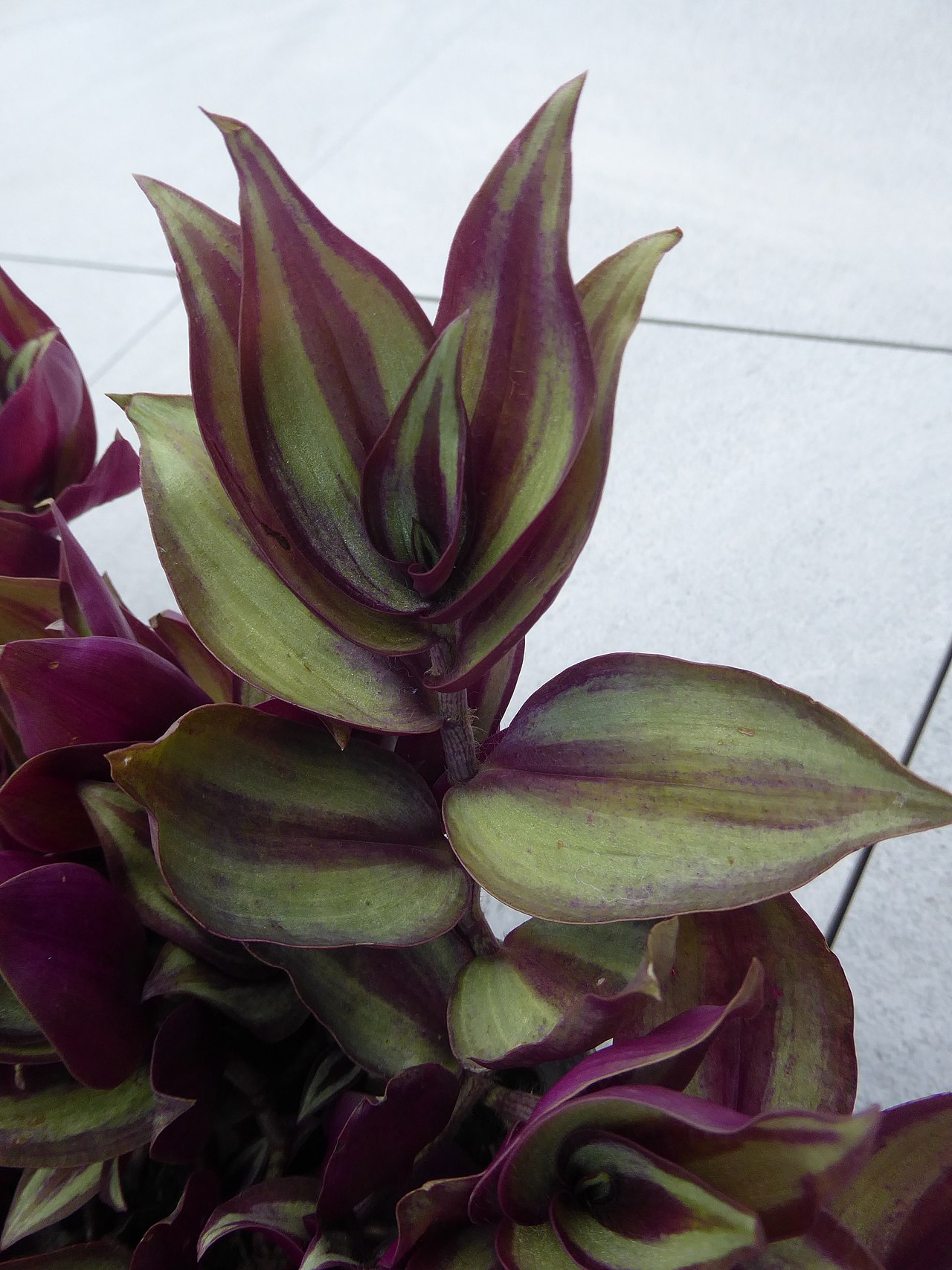
The leaves of Tradescantia zebrina are true works of art: the upper surface shows two silvery-green longitudinal stripes against a dark green-purple background, while the underside glows an intense violet. This two-tone effect is especially striking in hanging baskets, where the leaves twist toward the light and reveal both colors at once. Besides the classic species, there are cultivars such as ‘Quadricolor’ with pink-cream-green leaves, ‘Purpusii’ with an even more intense violet coloring, and the all-green relative Tradescantia fluminensis, which is smaller and more subdued. Growers also value Tradescantia pallida ‘Purple Heart’ for its solid deep-purple foliage, though it is technically a different species within the same genus.
Light, Temperature, and Placement
The Wandering Jew prefers a bright to partially shaded spot, ideally near an east- or west-facing window. In too little light, its distinctive stripes fade to plain green and the plant becomes leggy, with long bare stretches between leaves. A little direct morning or evening sun intensifies the leaf colors, but harsh midday summer sun through glass can scorch the foliage. Average room temperatures of 65-75°F suit it well; keep it away from cold drafts and radiators, and never let it experience temperatures below 50°F for extended periods, as chilly conditions cause leaf drop and blackened stem tips.
Watering and Feeding
Water regularly once the top inch of soil has dried out. Tradescantia likes to stay evenly moist, but not wet — waterlogging quickly leads to root rot and mushy, translucent stems. In winter, when growth slows, reduce watering to roughly every 10-14 days. Average household humidity is fine, though the plant appreciates an occasional misting or a pebble tray in very dry, heated rooms during winter when forced-air heating drops humidity substantially.
Feed every two weeks from April to September with a balanced liquid fertilizer for foliage plants diluted to half strength. Stop feeding in autumn and winter, since the plant’s growth naturally slows and excess nutrients can build up in the soil and burn the roots, showing up as browned, crispy leaf tips.
Pruning and Propagation
Regular pruning keeps the plant compact and bushy — without trimming, the trailing stems become straggly and bare at the base after a year or two. Pinch back the growing tips every few weeks during the growing season, and don’t be afraid to cut stems back hard in spring if the plant looks tired; it recovers quickly. Simply place the cut stems in a glass of water or push them straight into moist potting mix, and roots will form within a week or two. This makes Tradescantia one of the easiest houseplants to propagate, and ideal for beginners who want to see quick, rewarding results or fill out a hanging basket with minimal cost. Several cuttings potted together around the rim of a hanging basket will fill in and trail within a single season.
Common Problems
Two issues account for most Wandering Jew troubles. The first is fading color from insufficient light — move the plant closer to a window. The second is leggy, sparse growth, which is simply a sign the plant needs pinching back and, eventually, replacing with fresh cuttings, since older plants tend to lose vigor after two or three years. Spider mites can appear in dry indoor air, showing up as fine webbing and stippled leaves; a lukewarm shower and increased humidity usually solves this. Note that the sap can mildly irritate sensitive skin, so it’s wise to wear gloves when taking cuttings, and to keep the plant out of reach of pets and children that like to chew on foliage.
Repotting and Soil
Because Tradescantia grows quickly, repot young plants once a year in spring into a pot one size larger, using a well-draining, peat-free general houseplant mix. Older, leggier specimens are often better refreshed through propagation rather than repotting indefinitely — a small pot of new cuttings will out-perform an overgrown, woody parent plant within a season. A hanging basket lined with several rooted cuttings, rather than one mature plant, tends to give the fullest, most attractive display.
Outdoor Use in Summer
In warm climates, Wandering Jew also thrives outdoors as a fast, colorful ground cover in shaded beds or as trailing filler in mixed containers once frost danger has passed. Bring it back indoors well before the first autumn frost, since it has no cold tolerance and will collapse at the first real chill. Many gardeners simply treat outdoor plantings as an annual and take fresh cuttings indoors each autumn to overwinter for free plants the following spring.
This article may contain affiliate links. If you purchase a product through one of these links, Plantgecko may earn a commission at no extra cost to you. This never influences our editorial independence or which products we recommend.