Growing Cucumbers
Cucumbers are one of the most rewarding crops for a summer vegetable garden — fast-growing, prolific, and far tastier fresh off the vine than anything from a grocery store. Getting a heavy, crisp harvest comes down to a few key factors: sun, consistent moisture, and good airflow.
Sun and Soil
Cucumbers want full sun, ideally six to eight hours a day, and warm soil to get going — they’re frost-tender and germinate poorly in cold ground, so wait until soil temperatures reach at least 60°F (15°C) before direct sowing or transplanting. They thrive in rich, well-draining soil with plenty of organic matter; working aged compost into the bed before planting supports both fast growth and the plant’s high nutrient demands through fruiting.
Trellising vs. Ground Growing
Cucumbers can sprawl along the ground or be trained up a trellis, cage, or fence, and each approach has its advantages. Trellising saves significant garden space, keeps fruit clean and straighter, and dramatically improves air circulation around the leaves, which cuts down on fungal disease. Ground-grown vines need more room to ramble but require no extra structure. For most home gardens, especially in humid climates, vertical growing is the better choice — it makes fruit easier to spot and pick, too, since cucumbers hide easily under sprawling foliage.
Watering
Consistency is everything with cucumbers, which are roughly 95% water and size up quickly once fruiting begins. Aim for about 1 to 1.5 inches of water per week, delivered steadily rather than in occasional heavy soakings. Irregular watering — long dry spells followed by a flood — is the classic cause of bitter-tasting fruit, as the stress triggers the plant to produce higher levels of cucurbitacin, the bitter compound concentrated near the stem end. A layer of mulch around the base helps even out soil moisture and keeps roots cooler during hot spells.
Pollination
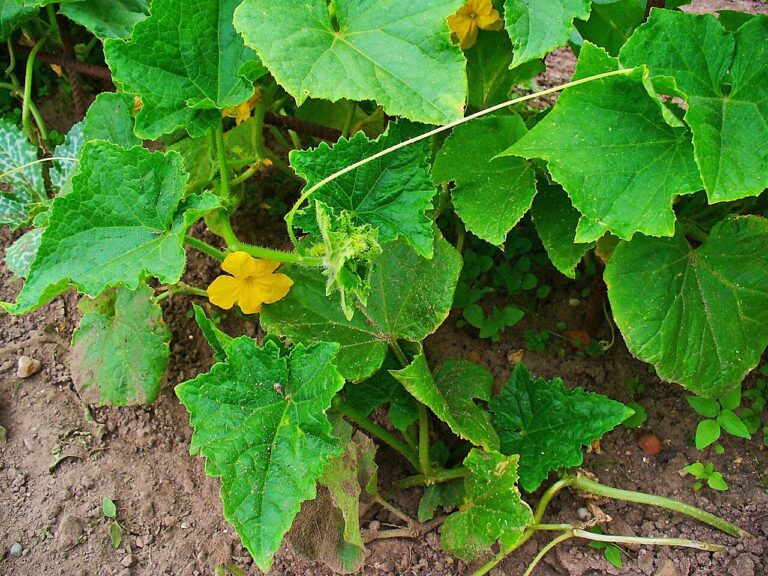
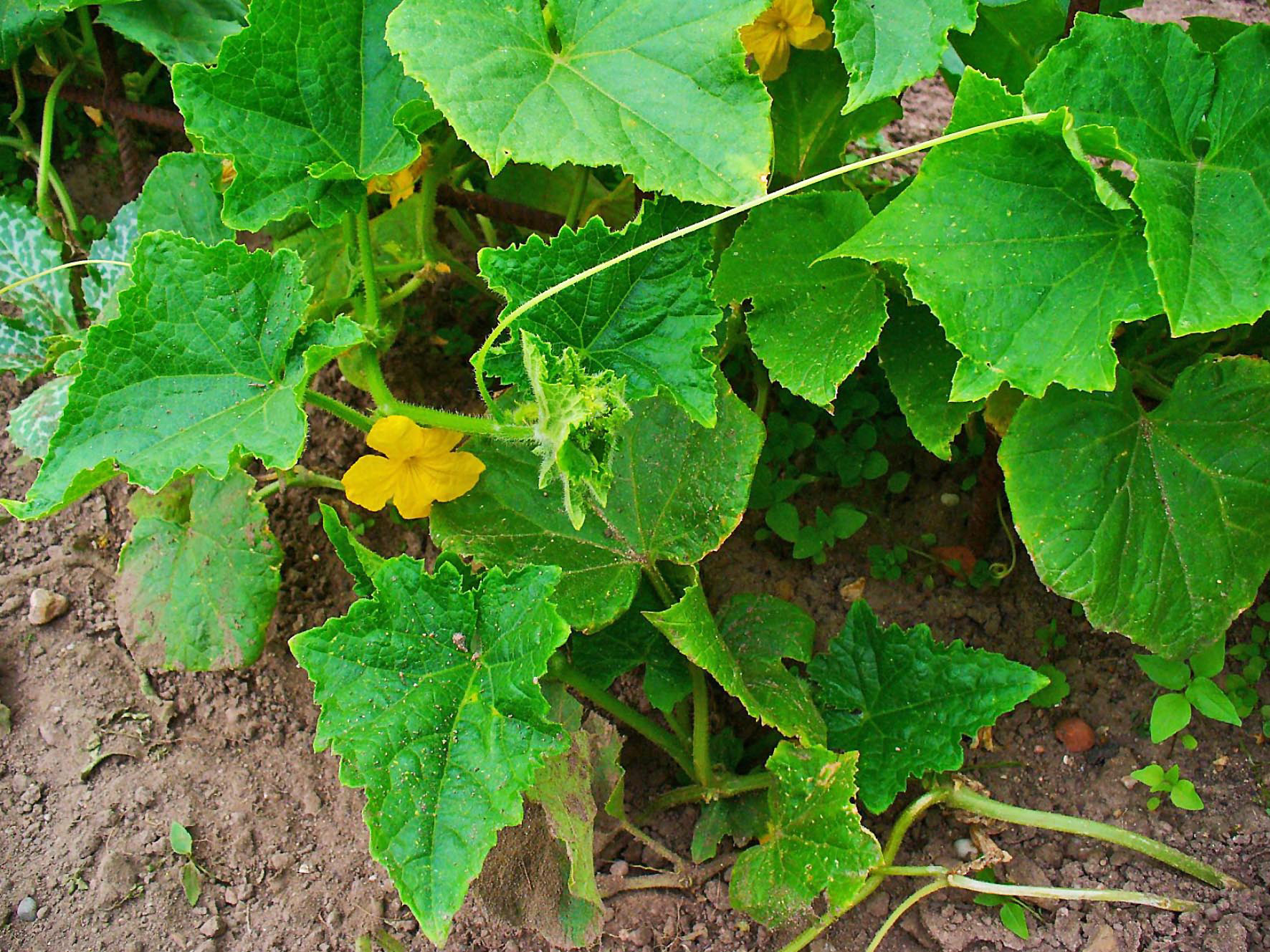
Most cucumber varieties produce separate male and female flowers on the same plant and rely on bees and other pollinators to move pollen between them — female flowers are easy to spot by the tiny embryonic cucumber behind the bloom. Planting flowers nearby and avoiding pesticide sprays during the day helps keep pollinators active in the garden. If fruit is forming but shriveling or aborting, poor pollination is often the cause; hand-pollinating with a small brush can help in gardens with low bee activity.
Common Problems
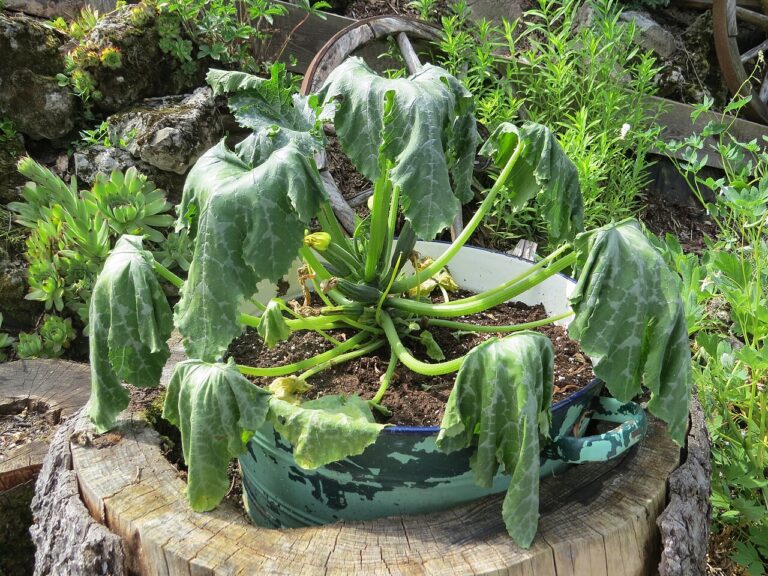
Powdery mildew, a white dusty coating on the leaves, is the most common late-season issue and is worsened by crowded, poorly ventilated plants — trellising and adequate spacing are the best defense. Cucumber beetles, small yellow-and-black striped or spotted insects, chew leaves and can spread bacterial wilt, a disease that causes vines to collapse suddenly; row covers over young plants (removed once flowering begins to allow pollination) are the most effective control.
Harvesting
Pick cucumbers while they’re still young and glossy — most slicing varieties are best around 6 to 8 inches long, and pickling types at 2 to 4 inches. Fruit left too long on the vine turns dull, develops tough skin and large seeds, and grows bitter, while also signaling the plant to slow down further production. Check plants every day or two during peak season, as cucumbers can grow from small to oversized in as little as 24 hours, and harvest by cutting rather than pulling to avoid damaging the vine.