Echeveria Care – Rosette Magic for Succulent Lovers
Echeveria – Rosette Magic for Succulent Lovers
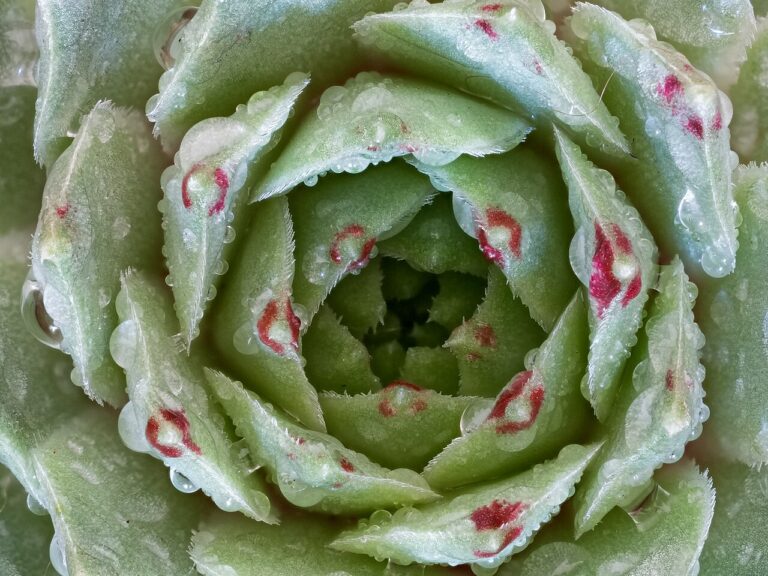
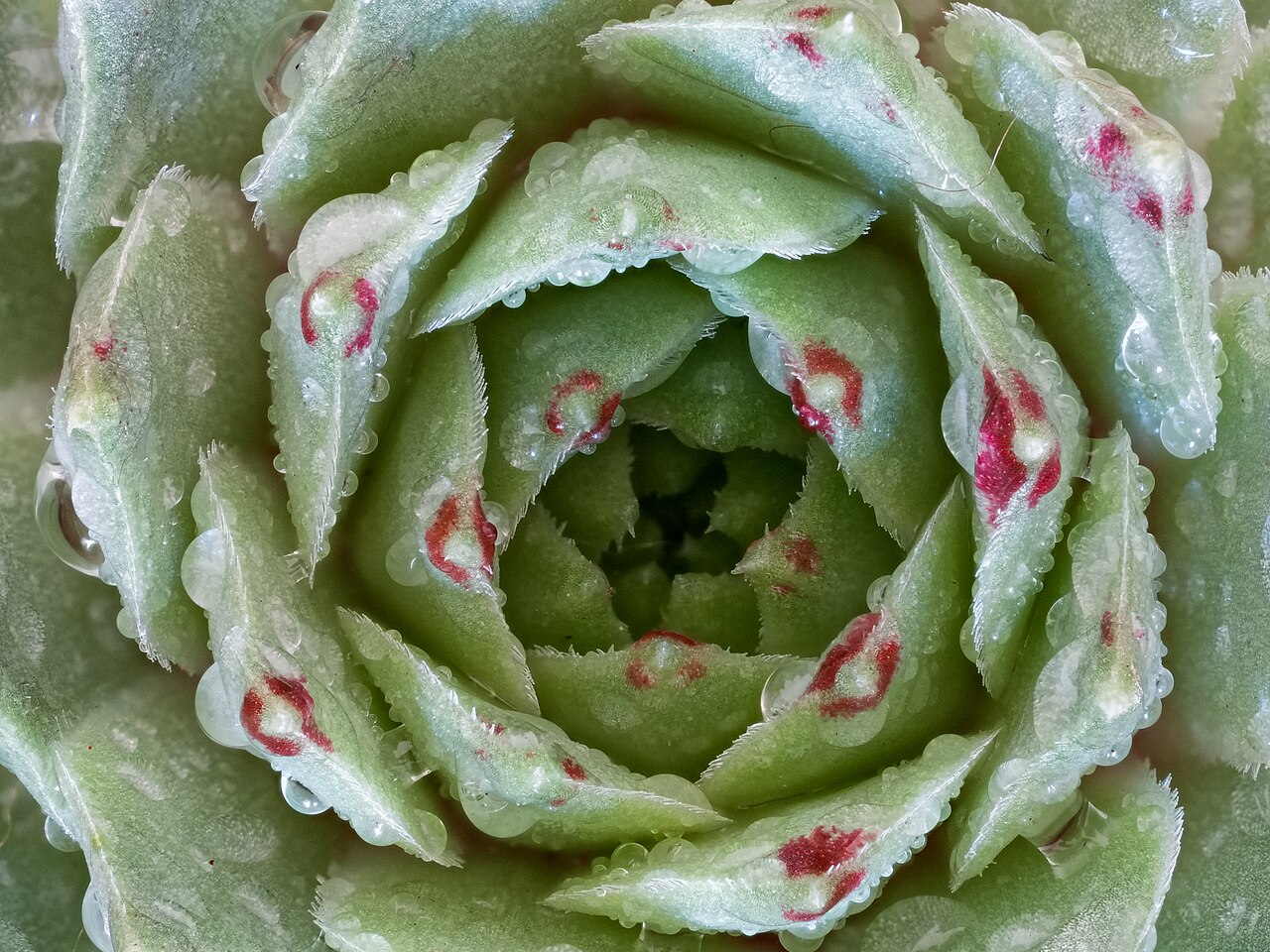
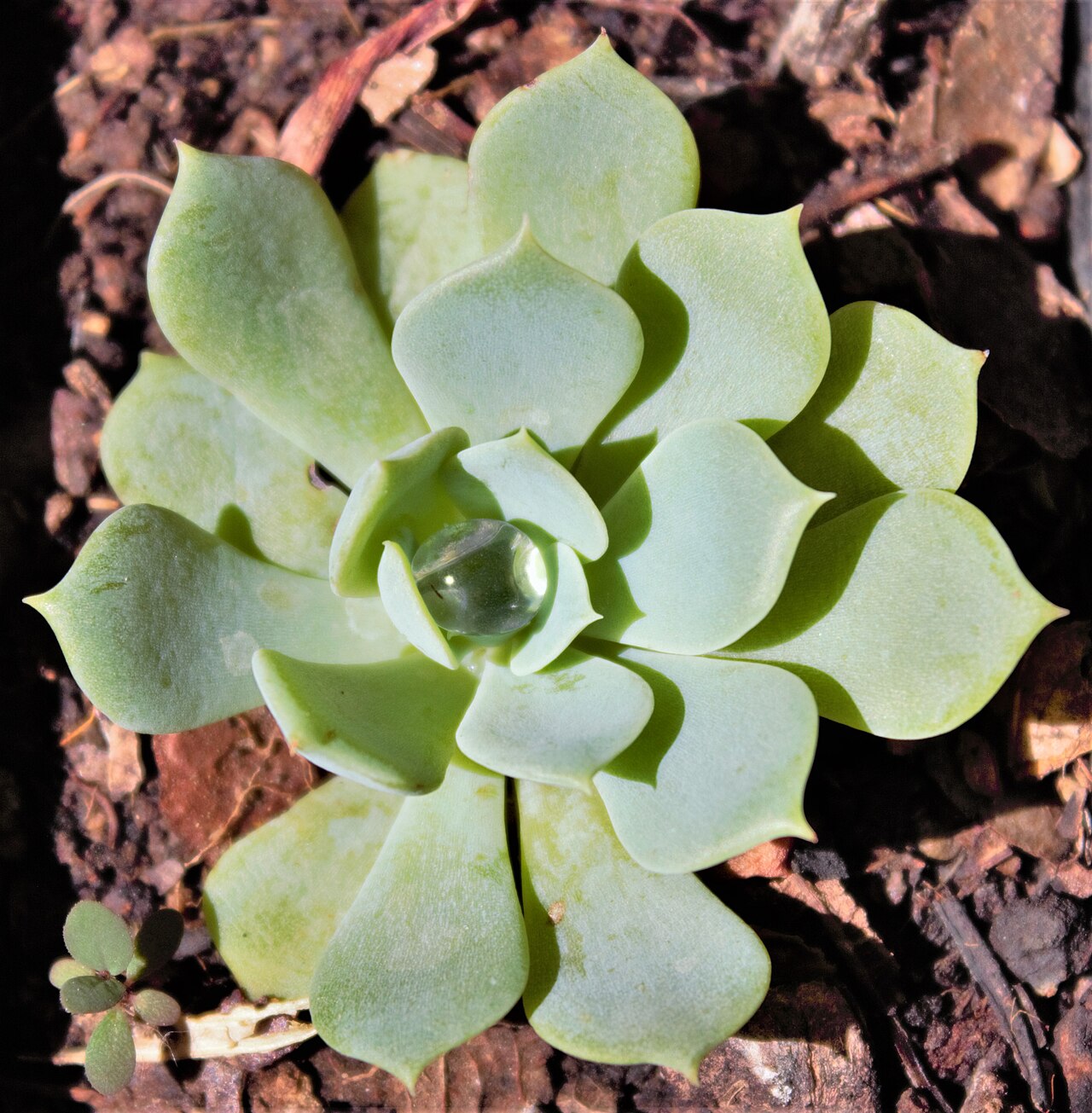
The Echeveria is the undisputed star among decorative succulents. Its perfectly symmetrical leaf rosettes resemble intricate stone flowers or delicate water lilies — and its botanical name is no coincidence: named after the Mexican botanist Atanasio Echeverría, the genus includes more than 150 species in fascinating colors ranging from silvery gray and light green to pink and deep purple. Echeverias are especially popular in succulent arrangements, miniature gardens, and as standalone plants in decorative pots. With the right care, they develop a beauty that is hard to match.
The Ideal Location: Sun Is a Must
Echeverias are absolute sun worshippers. They come from the semi-desert regions of Mexico and Central America, where they grow in full sun on barren, rocky ground. A south-facing window with at least six hours of direct sunlight a day is ideal. Without enough light, the plants become “leggy”: the stem stretches unnaturally, the leaves spread apart instead of forming a compact rosette, and the colors fade.
In summer, Echeverias can also be placed on a balcony or patio, where they benefit from intense sunlight and natural temperature swings. However, protect them from prolonged rain, since waterlogging combined with cold nights can be fatal. In winter, Echeverias prefer a cool, bright spot at 5–12°C (41–54°F) — this winter rest period encourages flowering the following spring.
Watering: Dryness as a Principle
The golden rule for Echeverias is: better too dry than too wet. The substrate should dry out completely between waterings. In summer, watering every 10–14 days is enough; in winter, watering is almost stopped altogether — a small sip of water once a month is sufficient. Always water directly onto the soil and make absolutely sure water doesn’t collect in the leaf rosette. The delicate, often powdery leaves are extremely sensitive to moisture and rot on direct contact with water.
A handy indicator: the lower leaves of the Echeveria start to shrivel when the plant needs water. This is completely normal and no cause for concern — they plump back up quickly after watering.
Substrate and Fertilizing
Echeverias need an extremely well-draining, mineral-rich substrate. Ordinary potting soil is completely unsuitable — it retains too much water and is too nutrient-rich. An ideal mix consists of 50% cactus soil, 25% coarse sand, and 25% fine gravel or pumice. A drainage layer at the bottom of the pot is essential. Shallow planting bowls work particularly well thanks to the plant’s shallow root system.
Fertilizing should be done extremely sparingly. A single application of cactus fertilizer in spring, at the start of the growing season, is entirely sufficient. Alternatively, a general-purpose liquid plant fertilizer can be used in a heavily diluted form (a quarter of the normal dose). Too much fertilizer leads to soft leaves and makes the plant more susceptible to disease.
Flowering and Leaf Care
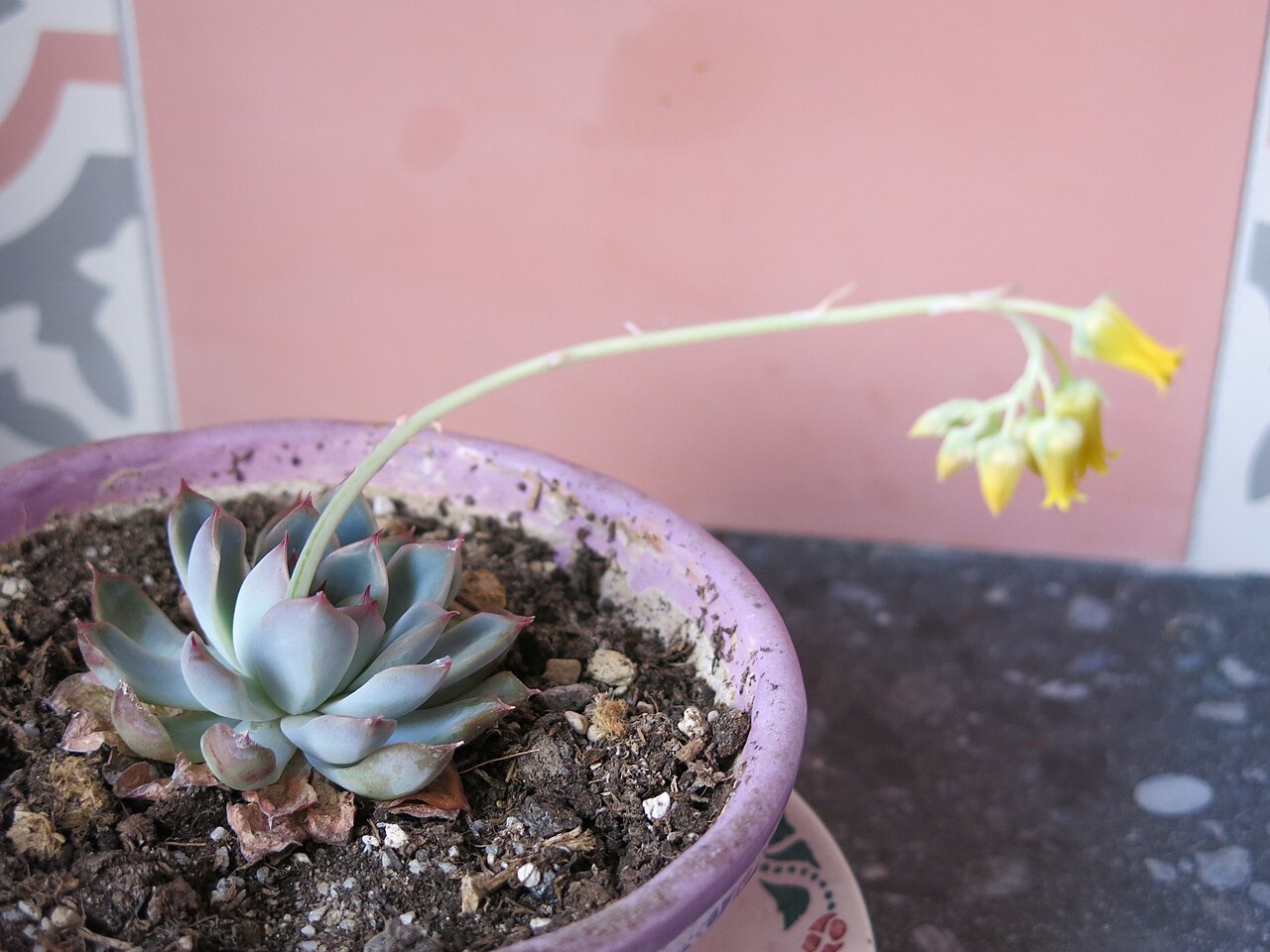
With good care and an adequate winter rest, Echeverias produce spectacular flower spikes in spring or summer. The bell-shaped flowers in red, orange, or yellow sit on long, arching stems and last for several weeks. Once flowering is over, you can cut the flower stalk off close to the base.
The leaves of many Echeveria species are covered in a fine, powdery wax coating (farina) that protects them from intense sunlight and water loss. Avoid touching the leaves with your fingers whenever possible — every fingerprint leaves a permanent mark on this protective layer. Dust should be removed carefully with a soft brush.
Propagation: Simple and Fascinating
Propagating Echeverias is a fascinating process and can be done in three ways. The simplest method is leaf propagation: carefully detach a healthy leaf from the mother plant and place it on moist cactus soil. Within a few weeks, tiny roots and a new mini-rosette will form at the base of the leaf. The original leaf serves as a food source and eventually withers away on its own. Alternatively, Echeverias can be propagated from offsets or stem cuttings.
The Most Popular Echeveria Species
| Species | Color | Special Feature |
|---|---|---|
| Echeveria elegans | Silvery blue | Classic rosette shape; very hardy |
| Echeveria agavoides | Green with red tips | Agave-like leaf shape |
| Echeveria “Perle von Nürnberg” | Purple-pink with a grayish sheen | One of the most beautiful hybrids |
| Echeveria pulidonis | Blue-green with red edges | Compact growth; bright yellow flowers |
| Echeveria “Black Prince” | Dark purple to nearly black | Dramatic color; a real eye-catcher |
Conclusion: Living Works of Art on the Windowsill
Echeverias are true works of natural art and remarkably easy to care for — as long as you meet their basic needs: maximum sun, minimal water, and a cool winter rest. For light spring feeding, a general-purpose liquid plant fertilizer used in a heavily diluted form works well. Once you start collecting them, it’s easy to become hooked on the sheer variety within this fascinating genus.
This article may contain affiliate links. If you purchase a product through one of these links, Plantgecko may earn a commission at no extra cost to you. This never influences our editorial independence or which products we recommend.