Monstera Deliciosa Care – The Complete Swiss Cheese Plant Guide
Monstera Deliciosa – The Swiss Cheese Plant as a Trend Plant
Monstera deliciosa, known in German as the “Fensterblatt” (window leaf) and often called the Swiss cheese plant, is arguably the trend houseplant of our time. With its striking, deeply slit leaves and tropical flair, it has transformed from a grandma’s houseplant into an Instagram star. Originally native to the rainforests of Mexico and Panama, Monstera can climb up to 20 meters tall in the wild. As a houseplant, it still reaches an impressive two to three meters — all while being relatively easy to care for. In this comprehensive guide, you’ll learn everything about location, care, and propagation of this beloved foliage plant.
The Perfect Location for Your Monstera
Monstera loves bright, indirect light. A spot near an east- or west-facing window is ideal. Direct midday sun, especially at south-facing windows, can scorch the large leaves and cause unsightly brown spots. On the other hand, a location that’s too dark leads to small leaves without the characteristic holes and splits the plant is so well known for.
The temperature should ideally be between 18 and 25°C. Monstera is sensitive to cold drafts and temperatures below 15°C. In winter, make sure the plant isn’t placed too close to cold windowpanes. Another important factor: Monstera loves high humidity. Regularly misting the leaves and occasionally wiping them with a damp cloth keeps the plant healthy and glossy.
Watering and Fertilizing
Monstera prefers a consistently moist but not waterlogged root ball. Water when the top 2–3 cm of soil have dried out. In summer that’s roughly once or twice a week; less often in winter. Use room-temperature, low-lime water. Waterlogging quickly leads to root rot, so make sure the pot has adequate drainage holes and add a drainage layer of expanded clay pellets or gravel.
During the growth phase from April to September, Monstera needs fertilizer every two weeks. A balanced liquid fertilizer for foliage plants is ideal for vigorous leaf growth and rich green coloring. In winter, reduce feeding to once a month or stop altogether.
Climbing Support and Aerial Roots
In its natural habitat, Monstera climbs up trees, forming aerial roots as it goes. Never cut these off! They help the plant absorb nutrients and provide stability. It’s best to gently guide the aerial roots into the soil or into a separate pot filled with substrate — this way they supply the plant with additional nutrients.
For controlled growth and an attractive shape, a moss pole or other climbing support is recommended. Gently tie the main stems to the pole with soft raffia or plant ties. Your Monstera will reward you with larger leaves and a more upright growth habit. Without climbing support, it tends to sprawl outward and can look somewhat untidy over time.
Repotting and Substrate
Young Monsteras grow quickly and should be repotted every year; older plants every two to three years. The best time is spring, before the growth phase begins. Use high-quality, loose potting soil with good drainage. A mix of potting soil, a bit of orchid substrate, and perlite provides the aeration the root zone needs.
If you’re looking for a new Monstera, garden centers and specialty nurseries offer high-quality young plants. When buying, look for sturdy, dark green leaves free of brown spots and a compact growth habit.
Propagation by Cuttings
Monstera propagates excellently from tip cuttings. In spring, cut off a shoot with at least two leaves and one aerial root. Place the cutting in a glass of room-temperature water — new roots will form after about two to three weeks. Once these are roughly 5 cm long, you can plant the young plant in soil. During the first few weeks, keep the soil consistently moist.
Common Problems and How to Fix Them
| Symptom | Cause | Remedy |
|---|---|---|
| Brown leaf tips | Air too dry or lack of water | Mist more often; water more |
| Yellow leaves | Overwatering or nutrient deficiency | Water less; check fertilizing routine |
| Leaves without holes | Insufficient light or plant too young | Choose a brighter spot; be patient |
| Drooping leaves | Lack of water or cold | Water; move to a warmer spot |
| Black spots | Cold damage or sunburn | Protect from cold; reduce direct light |
Warning: Toxic to Pets
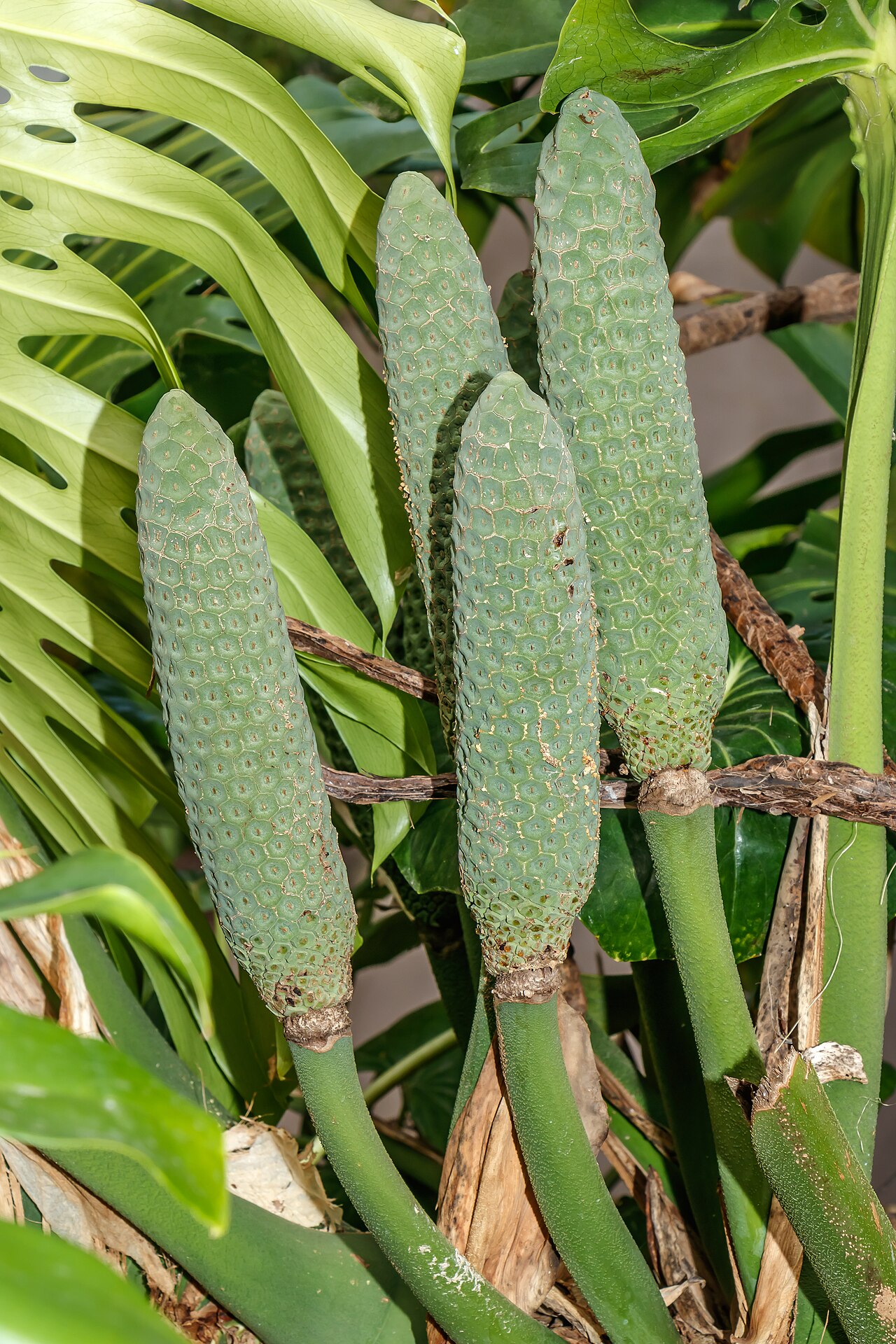
Monstera deliciosa contains calcium oxalate crystals, which can cause severe irritation to mucous membranes if ingested. Keep the plant out of reach of pets and small children. The fruit, which is rarely produced by older plants grown indoors, should also not be eaten.
Conclusion: The Perfect Statement Plant
Monstera deliciosa is more than just a houseplant — it’s a living work of art that grows more impressive with age. With the right care, plenty of light, and regular fertilizing, your Monstera will become a true eye-catcher. Anyone looking for a new plant can find a high-quality young Monstera at a good garden center, ready to take over your home.
This article may contain affiliate links. If you purchase a product through one of these links, Plantgecko may earn a commission at no extra cost to you. This never influences our editorial independence or which products we recommend.