Companion Planting for Container Vegetables: What Grows Well Together in Pots and Raised Beds
Companion planting in containers works by the same general principles as in-ground gardening, but with one added constraint that matters more than anything else: shared, limited root space. A pairing that works fine in an open garden bed can still fail in a container if both plants are aggressive root competitors that end up starving each other in a confined volume of soil.
The container-specific rule: pair different root depths and growth habits
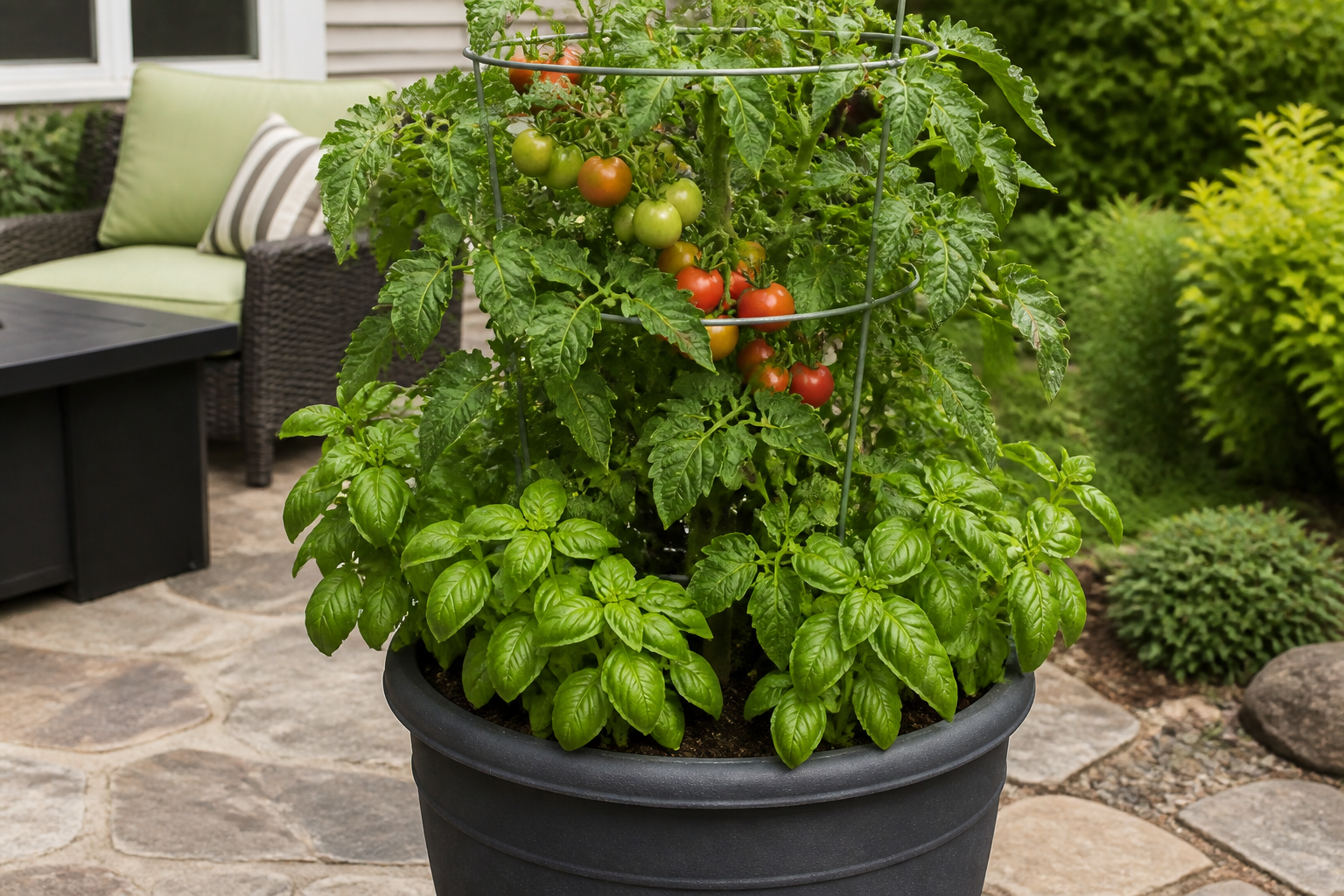
The most reliable container companion pairings combine a deep-rooted or upright plant with a shallow-rooted or low-spreading one, so the two aren’t directly competing for the same soil zone. A tall tomato plant with a shallow-rooted herb like basil tucked around its base works well because the two occupy different root depths and different vertical space. Two aggressive, similarly-rooted feeders — like two tomato plants — crowded into one mid-size container will typically both underperform compared to being grown separately.
Pairings that consistently work well in pots
- Tomatoes + basil: classic pairing that works especially well in containers — basil’s shallow roots and lower height complement a tomato’s deeper roots and vertical growth, and basil benefits from the light shade a mature tomato plant provides in hot climates.
- Carrots + onions or chives: onions and chives have a scent some gardeners find helps deter certain pests from root vegetables, and their narrow, upright growth habit doesn’t compete for canopy space with carrots’ low foliage.
- Lettuce or leafy greens + taller upright vegetables: shallow-rooted lettuce grown at the base of a taller plant like peppers makes efficient use of a container’s full vertical space without root competition.
- Nasturtiums as a container border: low-growing and shallow-rooted, nasturtiums are commonly used along the edge of a mixed container as a trap crop that draws aphids away from more valuable vegetables nearby.
Pairings to avoid in a shared container
- Two heavy feeders together (such as two tomato or two squash plants) in a single mid-size pot — both plants compete intensely for the same limited nutrients and water, and both typically produce less than if grown in separate containers.
- Fennel with almost anything else — fennel releases compounds that can inhibit the growth of many neighboring vegetables, and this effect is more concentrated in a container’s confined soil volume than in open ground.
- Mint with other herbs or vegetables in the same pot — mint’s aggressive, spreading root system will outcompete nearly any container neighbor for root space; mint does best given its own dedicated container.
Sizing the container for the pairing, not just the plants individually
A companion pairing that would work fine in a large raised bed can still fail in an undersized pot, because container volume — not just plant compatibility — determines whether both plants have enough root room to thrive together. A general guide: if either plant individually would need at least a 5-gallon container on its own, a shared container for both should be sized closer to double that, not just slightly larger.
Timing matters as much as pairing
Even a well-matched companion pairing can underperform if both plants are started at the same time and reach their peak resource demand simultaneously. Staggering planting slightly — for example, letting a tomato seedling establish for a couple of weeks before tucking basil in around its base — gives the slower-growing companion a head start rather than forcing both to compete for resources from day one. This is a subtle adjustment, but it matters more in the fixed, limited volume of a container than it does in an open garden bed where roots can spread further to find uncontested space.
Choosing the right container for a companion planting
Because container size and drainage directly determine whether a companion pairing succeeds or fails, choosing the right pot matters as much as choosing the right plant pairing. The Planters Guide breaks down sizing and material considerations that are especially relevant when a container needs to comfortably support two companion plants rather than one.