Pothos (Epipremnum aureum): The Air-Purifying Classic
Pothos (Epipremnum aureum) is often recommended as the ideal first houseplant, and for good reason: its trailing, heart-shaped leaves tolerate a wide range of light conditions, forgive inconsistent watering, and grow readily whether trained to climb a support or left to cascade from a hanging basket.
Light Requirements
Pothos tolerates low light better than almost any other common houseplant, though it grows more slowly and produces smaller leaves in dim corners. Variegated varieties, such as golden pothos or marble queen, need brighter, indirect light to maintain their cream and yellow leaf patterning – in low light, variegated leaves tend to revert to solid green.
Watering
Allow the top few centimetres of soil to dry out between waterings, then water thoroughly. Pothos shows its thirst clearly through slightly drooping leaves that perk back up quickly after watering, making it fairly easy to read. It is more tolerant of occasional under-watering than of consistently soggy soil, which leads to yellowing leaves and root rot.
Soil and Potting
A general-purpose, well-draining potting mix works fine. Pothos is not fussy about pot size and tolerates being somewhat root-bound, so repotting every one to two years, sizing up gradually, is plenty.
Climbing or Trailing
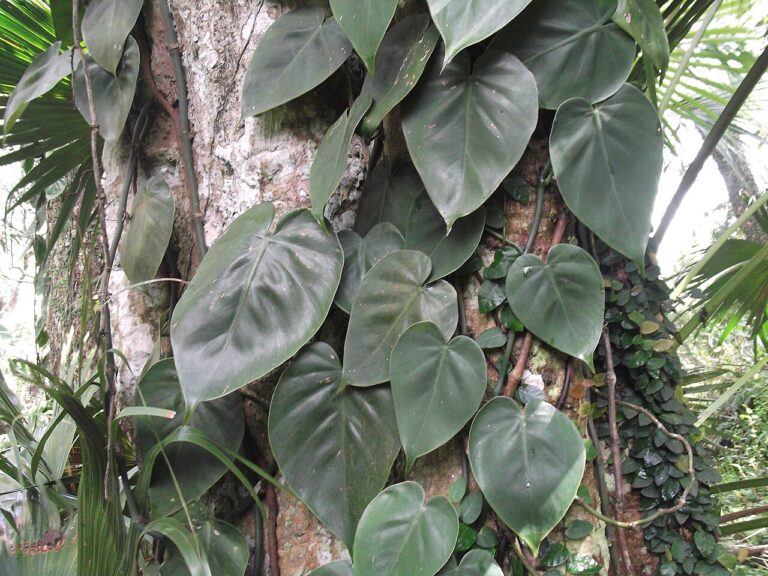
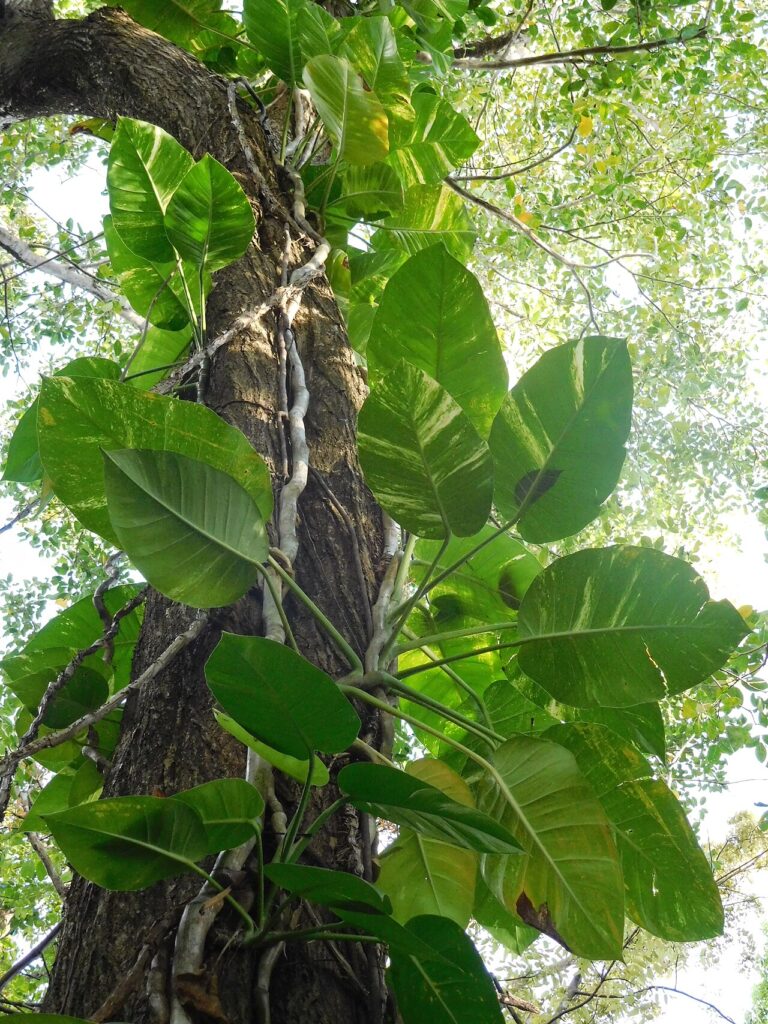
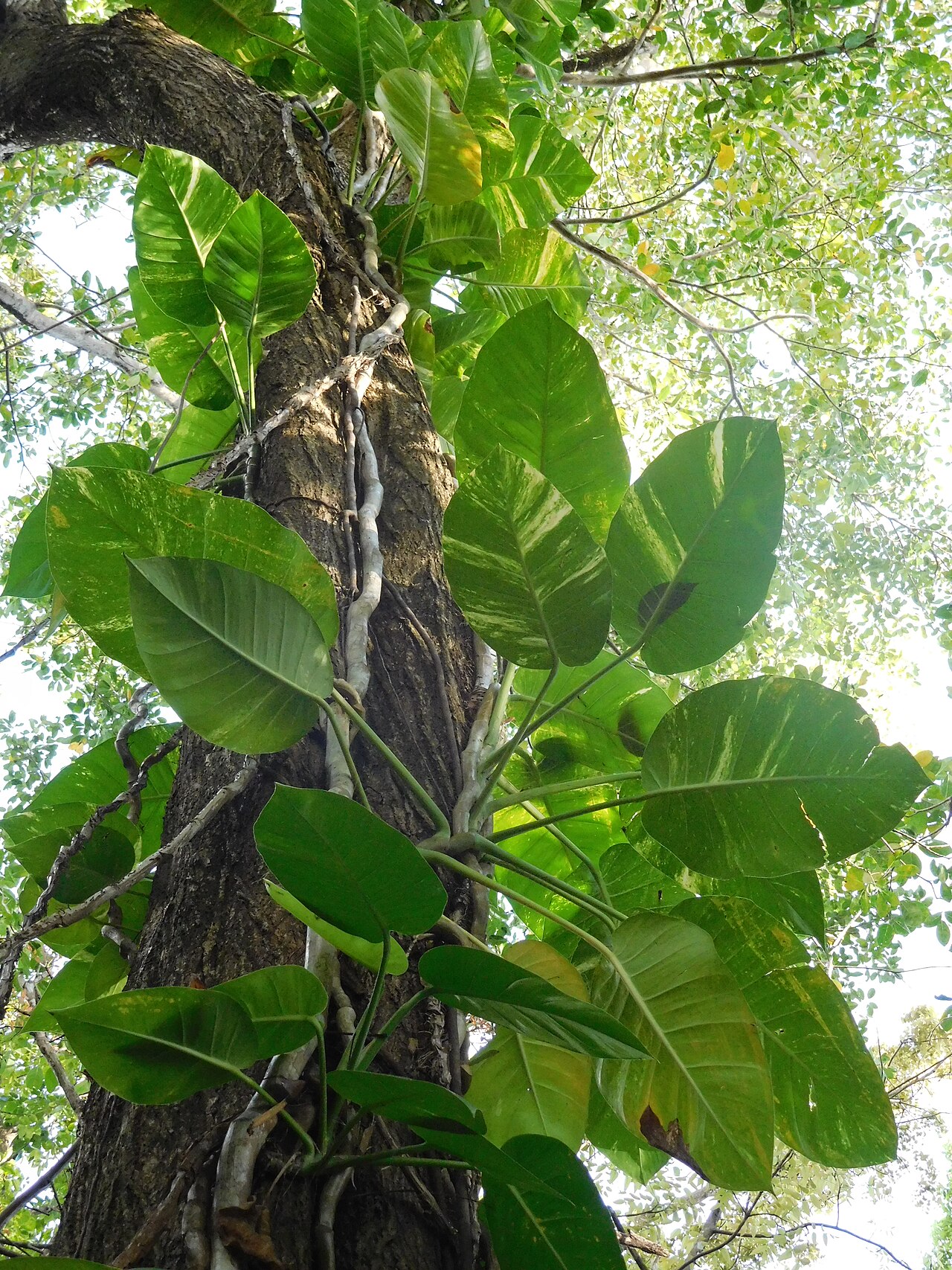
In the wild, pothos climbs tree trunks using aerial roots, developing larger, more mature leaves when allowed to climb a support such as a moss pole. Left to trail, as in a hanging basket or on a shelf, it produces the smaller, more familiar leaf size most people associate with the plant – both growth habits are attractive and simply reflect different care choices.
Pruning
Regular pinching or trimming of trailing stems, just above a leaf node, encourages fuller, bushier growth rather than a few long, sparse vines. Trimmed sections need not go to waste, since they root very easily as new cuttings.
Feeding
Feed with a balanced liquid fertilizer diluted to half strength every four to six weeks during spring and summer, pausing over winter when growth slows.
Propagation
Pothos is famously easy to propagate: cut a stem section just below a node (the small bump where aerial roots often already appear), place it in a glass of water, and roots typically develop within one to two weeks. Once roots are a few centimetres long, pot the cutting into soil, or simply leave it growing in water indefinitely.
A Note on Safety and Air Quality
Pothos is toxic to cats and dogs if chewed, causing oral irritation, so keep it out of reach of curious pets. Like several other common foliage plants, it was included in NASA’s Clean Air Study for its ability to help filter certain indoor air pollutants, adding a modest additional benefit to its ease of care.
Seasonal Growth Changes
Pothos growth noticeably speeds up in spring and summer with longer daylight hours, making this the best season for feeding, pruning to encourage bushiness, and propagating new cuttings, which root fastest in warm conditions. Growth slows in autumn and winter, so reduce watering frequency to match the slower uptake and hold off on feeding until spring returns. Pothos kept in a spot that gets noticeably less natural light in winter, such as a room with strong seasonal light changes, may show slower growth and smaller new leaves during these months, which is a normal seasonal response rather than a sign of a problem, and growth typically picks back up as light levels rise again in spring.
Supporting Climbing Growth
Growers who want pothos to develop its larger, more mature leaf form rather than staying in its smaller trailing habit can train it up a moss pole, which provides both physical support and the humidity the plant’s aerial roots use to cling and absorb moisture, closely mimicking how it grows up tree trunks in its native habitat.
Frequently Asked Questions
Can pothos live in water permanently instead of soil?
Yes, pothos can live indefinitely in water alone as long as the water is refreshed regularly and a small amount of liquid fertilizer is added occasionally, since it will otherwise slowly deplete available nutrients in the water.
Why does my pothos have all-green leaves instead of variegated ones?
This reversion usually happens when a variegated pothos doesn’t get enough light to sustain the energy-expensive white or yellow patterned sections; moving the plant to a brighter spot can help new growth regain some variegation, though fully green leaves rarely repattern.
How do I make my pothos bushier instead of just trailing longer?
Regularly pinching or cutting the growing tips of trailing stems, just above a leaf node, forces the plant to branch out from multiple points rather than continuing to extend a single long vine.
Is pothos really that hard to kill?
It’s one of the most forgiving common houseplants, tolerating irregular watering, low light, and general neglect better than most, though it can still be killed by prolonged, severe overwatering and consistently soggy soil.
This article may contain affiliate links. If you purchase a product through one of these links, Plantgecko may earn a commission at no extra cost to you. This never influences our editorial independence or which products we recommend.