Best Indoor Plants for Low Light: 5 Species That Thrive in Dim Spaces
Understanding Low Light for Houseplants
When plant enthusiasts talk about low light, they do not mean a windowless bathroom or a dark corner of a basement. In botanical terms, low light means an area where the plant never receives direct sunlight and may be several feet away from the nearest window. A room with a north-facing window or a spot across the room from an east- or west-facing window qualifies as low light. If you can comfortably read a newspaper in the space during the middle of the day without turning on a lamp, a low-light plant can grow there.
The good news is that many houseplants have evolved in the dim understory of tropical forests, where they thrive in conditions that would starve most sun-loving plants. These species are remarkably adaptable and often grow more reliably indoors than their light-hungry counterparts, precisely because they do not demand prime real estate directly in front of a window. Below are five outstanding indoor plants that genuinely perform well in low-light conditions, along with detailed care instructions for each.
1. Snake Plant (Sansevieria trifasciata / Dracaena trifasciata)
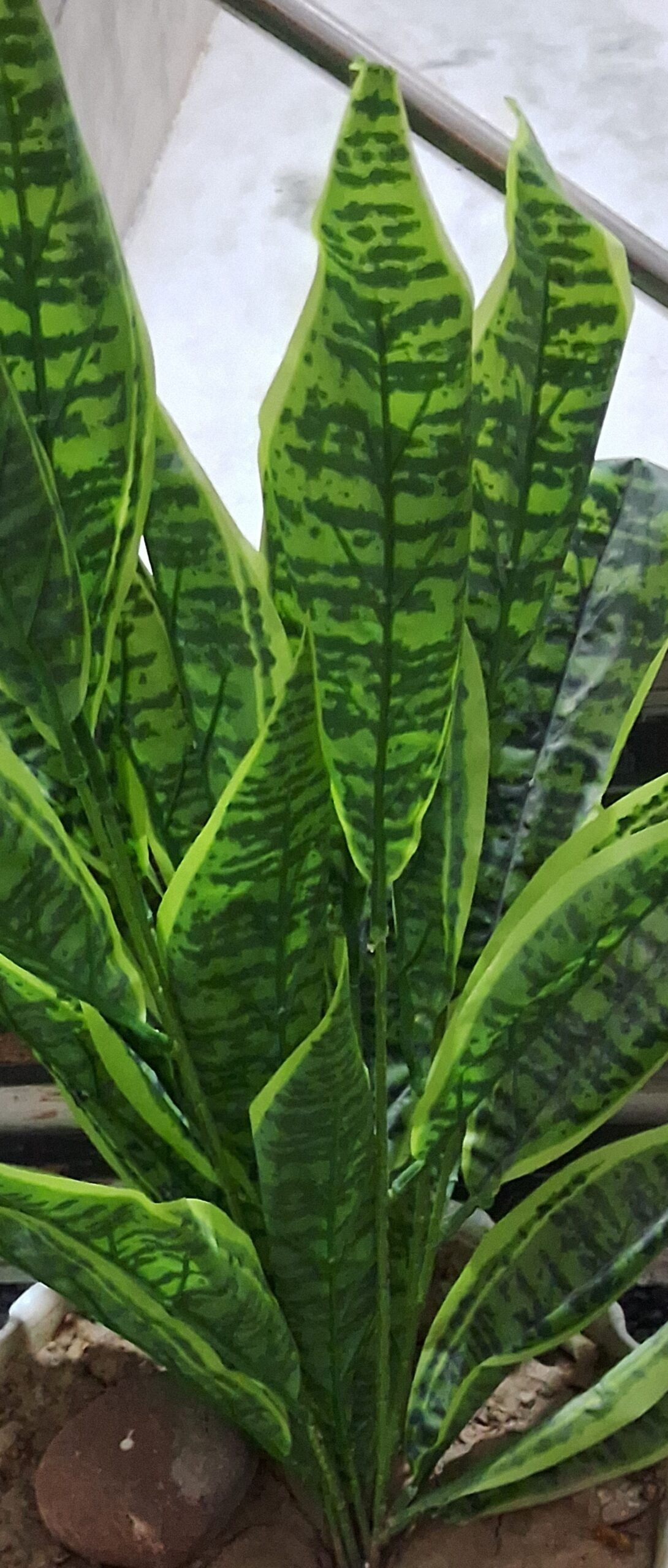
The snake plant, also known as mother-in-law’s tongue, is arguably the most indestructible houseplant in existence. Its upright, sword-like leaves with distinctive yellow margins and horizontal banding make a strong architectural statement, and it tolerates neglect to a degree that borders on the absurd. Snake plants convert carbon dioxide to oxygen at night via crassulacean acid metabolism (CAM photosynthesis), making them a popular bedroom plant.
Light and Placement
Snake plants will grow happily in everything from bright indirect light to deep shade. In low light, growth slows considerably, which is actually an advantage: the plant stays compact and requires even less maintenance. Avoid placing them in pitch-black rooms with zero natural light; even a snake plant has its limits. A north-facing room or a spot 3 to 5 meters from any window works perfectly.
Watering
This is where most snake plant owners go wrong. Water sparingly, allowing the soil to dry completely between waterings. In a low-light environment, this might mean watering once every 4 to 6 weeks. During winter, you can stretch to 8 weeks or more. The thick, fleshy leaves store water, and the plant is far more likely to die from root rot caused by overwatering than from drought. When the leaf edges start to wrinkle slightly, that is your signal to water.
Soil and Potting
Use a fast-draining cactus or succulent mix. Standard potting soil holds too much moisture for too long. Terracotta pots are ideal because they wick away excess moisture. Whatever pot you choose, drainage holes are non-negotiable; snake plant roots sitting in soggy soil will rot within weeks.
2. ZZ Plant (Zamioculcas zamiifolia)
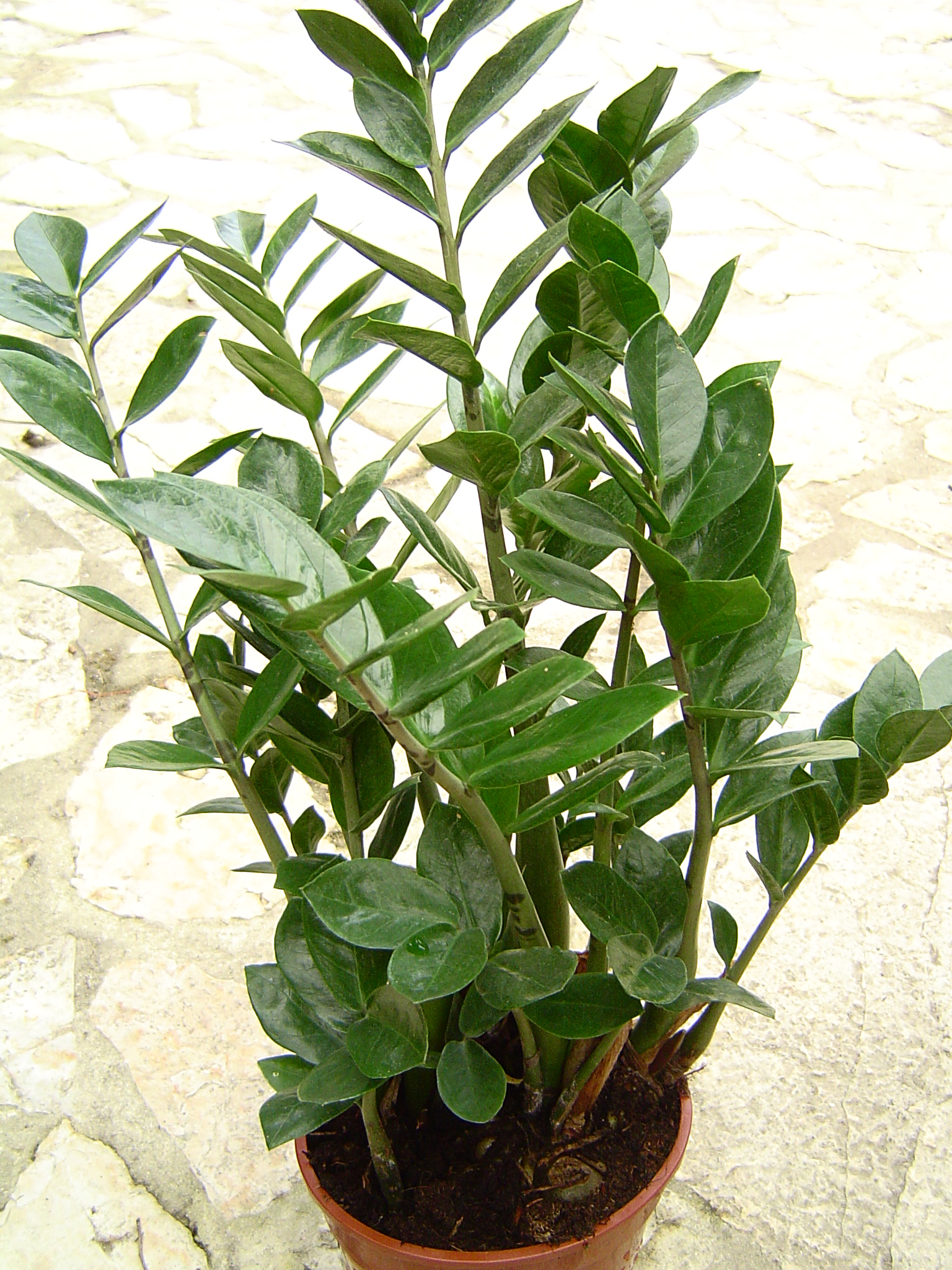
The ZZ plant has earned a reputation as the ultimate low-light champion, and for good reason. Its glossy, dark green leaflets grow along arching stems that emerge directly from potato-like rhizomes beneath the soil. These rhizomes store water and nutrients, allowing the plant to survive extended periods of drought and darkness with remarkable composure. The ZZ plant is native to eastern Africa, where it endures long dry seasons in the shade of larger vegetation.
Light and Placement
ZZ plants can survive in fluorescent-lit offices with no natural light at all, though they grow faster with some ambient daylight. A north-facing window, an interior hallway with a skylight, or a spot 4 to 6 meters from the nearest window will keep a ZZ plant healthy. Direct sunlight will scorch the leaves, causing pale, bleached patches that do not recover.
Watering
Like the snake plant, the ZZ plant wants its soil to dry out completely between waterings. Water deeply until water runs from the drainage holes, then do not water again until the top 5 to 8 centimeters of soil are bone dry. This usually means watering every 3 to 4 weeks in low light, and potentially every 6 to 8 weeks in winter. If you are unsure whether to water, wait another week. You will harm a ZZ plant far more by watering too often than too little.
Important Safety Note
All parts of the ZZ plant contain calcium oxalate crystals, which can irritate skin and are toxic if ingested. Wear gloves when handling cut stems, and keep the plant out of reach of pets and small children who might chew on the leaves.
3. Pothos (Epipremnum aureum)
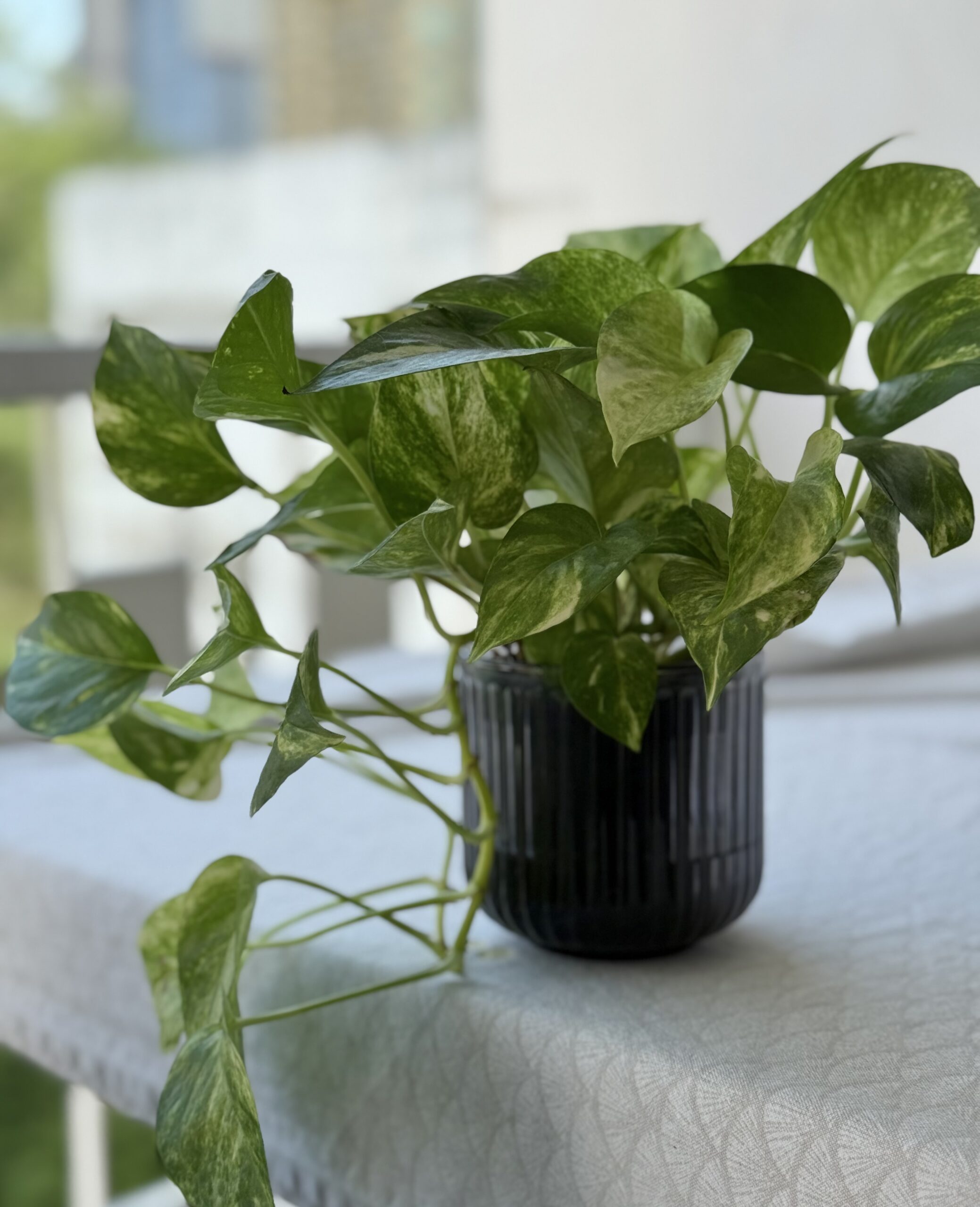
Pothos, also called devil’s ivy, is the quintessential trailing houseplant. Its heart-shaped leaves, often variegated with cream, gold, or white markings, cascade gracefully from shelves, bookcases, and hanging baskets. Pothos is one of the fastest-growing low-light plants and is exceptionally easy to propagate, making it a favorite for beginners and experienced plant keepers alike.
Light and Placement
Pothos tolerates low light remarkably well, though variegated varieties may lose some of their variegation and revert to solid green in very dim conditions. If you want to preserve the marbled or golden patterns, provide bright indirect light. For a solid green jade pothos, a north-facing room or a shelf several meters from a window works fine. In extremely low light, growth slows and leaves may become smaller, but the plant remains healthy.
Watering
Water pothos when the top 2 to 3 centimeters of soil feel dry to the touch. The leaves will visibly droop and look slightly limp when the plant is thirsty, which is a helpful visual cue. Water thoroughly until it runs from the drainage holes, then allow the soil to partially dry before the next watering. In low-light conditions, this typically translates to watering every 10 to 14 days.
Propagation Bonus
Pothos is absurdly easy to propagate. Snip a stem just below a node, remove the bottom leaf, and place the cutting in a glass of water. Roots will appear within 1 to 2 weeks. Once roots are a few centimeters long, pot the cutting in soil, or simply leave it in water indefinitely—pothos grows happily in water for years if you change the water every couple of weeks and add a drop of liquid fertilizer occasionally.
4. Peace Lily (Spathiphyllum)
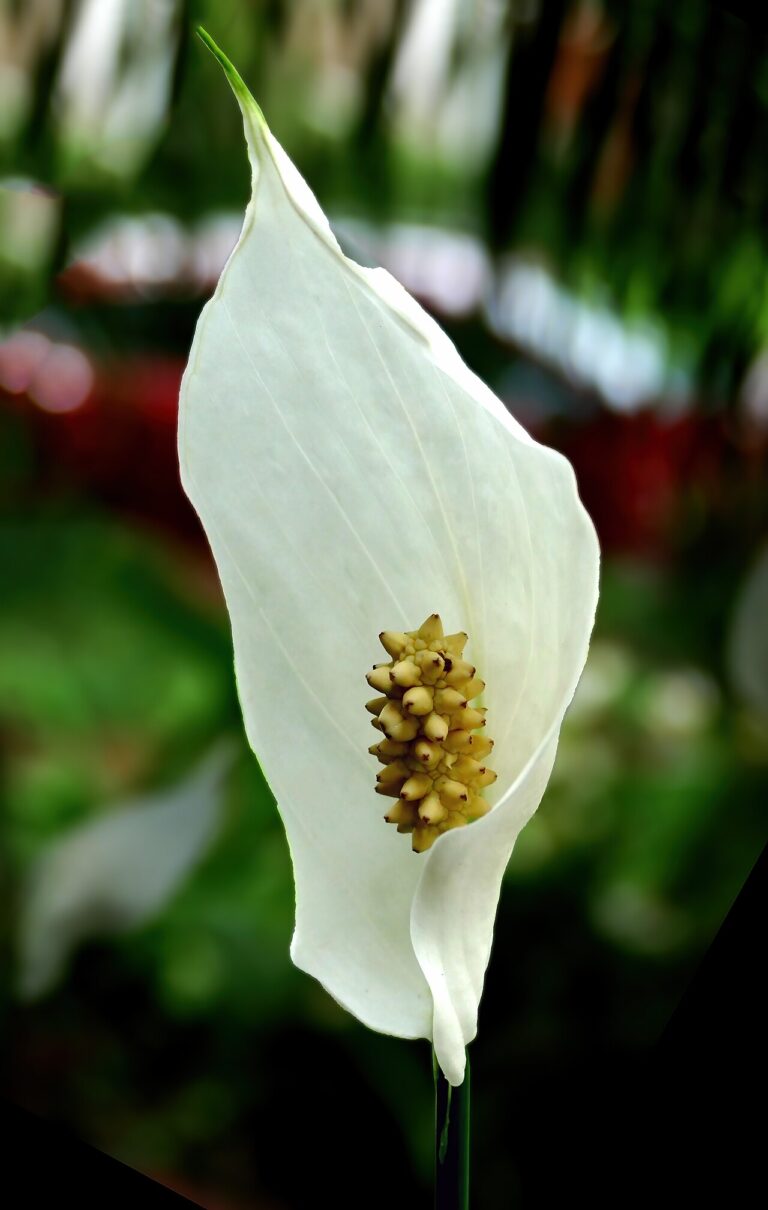
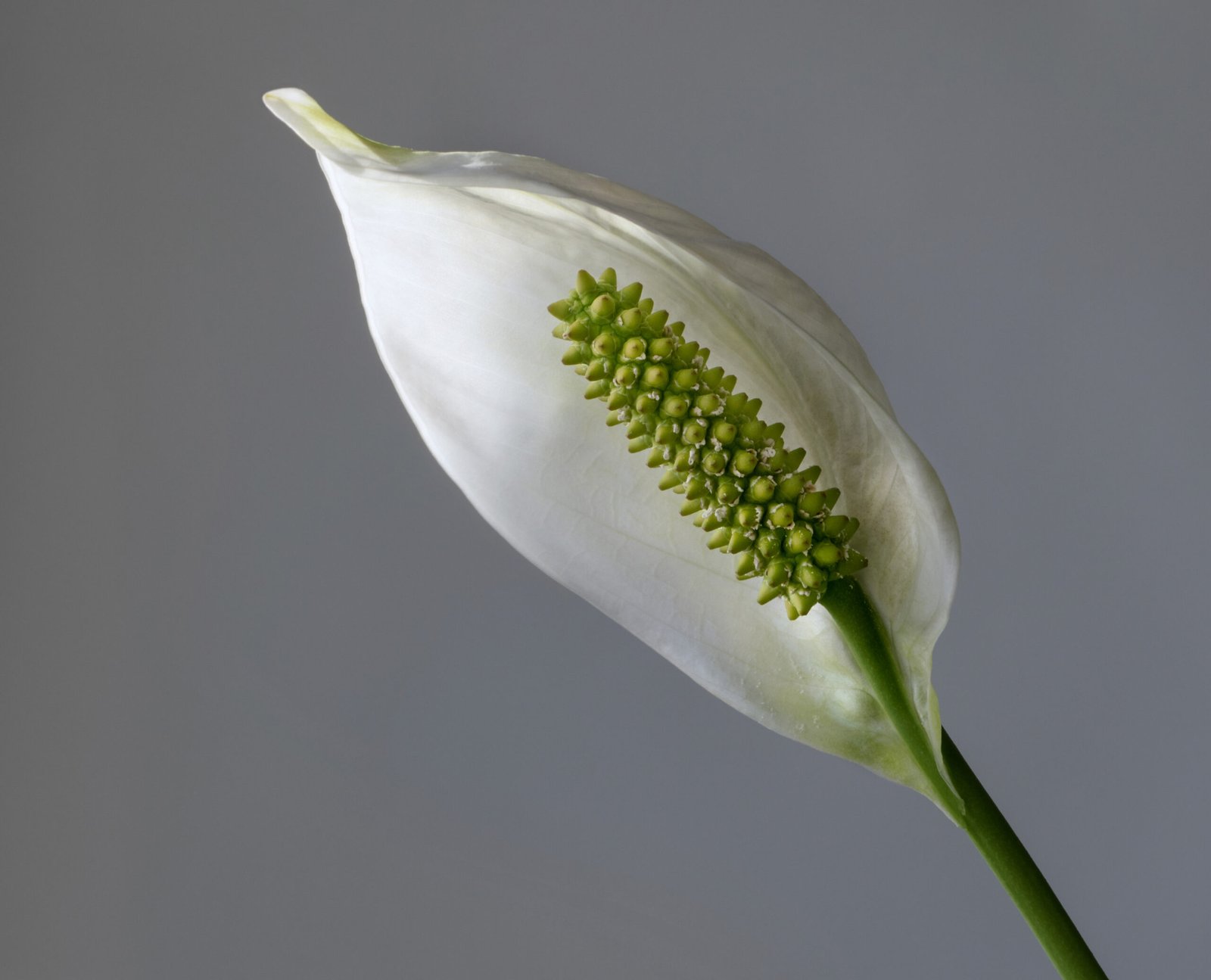
The peace lily stands out from other low-light plants because, in addition to its glossy, deep green foliage, it produces elegant white spathes (the leaf-like bracts that surround the actual flower spike) throughout the year. It is also one of the few low-light plants that visibly communicates when it needs water: the leaves and stems dramatically droop, then perk back up within hours of being watered.
Light and Placement
Peace lilies thrive in low to medium indirect light. A north-facing window or a spot several feet from an east- or west-facing window is ideal. They can survive in dimmer conditions but will produce fewer flowers. Direct sunlight burns the leaves, causing brown, crispy patches.
Watering
Peace lilies prefer consistently moist but not soggy soil. Wait until the plant begins to droop slightly, then water thoroughly. This visual signal removes the guesswork entirely. In low light, this may be every 7 to 10 days. Use filtered or distilled water if possible, because peace lilies are sensitive to fluoride and chlorine in tap water, which can cause brown leaf tips over time.
Humidity
Peace lilies appreciate higher humidity. If your home is dry, mist the leaves every few days or place the pot on a pebble tray filled with water. Brown leaf tips are often a sign of low humidity or sensitivity to tap water chemicals rather than a watering problem.
Toxicity Note
Like the ZZ plant, peace lilies contain calcium oxalate crystals. They are toxic to pets and humans if ingested, so keep them in a location that cats and dogs cannot access.
5. Cast Iron Plant (Aspidistra elatior)
The cast iron plant lives up to its name. Native to the forest floors of Japan and Taiwan, Aspidistra elatior earned its common name during the Victorian era, when it was one of the few plants that could survive in the gas-lit, poorly ventilated parlors of the time. It features long, dark green, lance-shaped leaves that grow directly from the soil in a slow but steady fountain pattern.
Light and Placement
Cast iron plants are genuinely shade-tolerant in a way few other houseplants can match. They thrive in north-facing rooms, interior spaces with only reflected light, and hallways that receive little direct daylight. The one thing they cannot tolerate is direct sun, which will bleach and burn the foliage. If you have a truly dim corner where nothing else survives, try a cast iron plant.
Watering
Water when the top 3 to 5 centimeters of soil are dry. Cast iron plants do not like to sit in soggy soil, but they are less prone to root rot than snake plants or ZZ plants. In low light, watering every 2 to 3 weeks is typical. The key is consistency: do not let the soil stay bone dry for weeks on end, but also do not keep it perpetually wet.
Maintenance
Cast iron plants are slow growers, and individual leaves can last for years. Wipe the leaves with a damp cloth periodically to remove dust. Brown leaf tips can be trimmed with sharp scissors, cutting just above the damaged tissue. The plant rarely needs repotting; every 3 to 4 years is sufficient.
General Tips for Low-Light Plant Care
Plants in low light grow slowly, which means they use less water, need less fertilizer, and are more susceptible to overwatering. Here are a few universal rules for managing low-light houseplants:
- Water less often than you think. The number one cause of death for low-light plants is root rot from watering too frequently. Soil in dim conditions dries out much more slowly than soil in bright light.
- Fertilize sparingly. Apply a diluted liquid houseplant fertilizer once every 2 to 3 months during the growing season, and skip fertilizing entirely in winter. Slow growth means low nutrient demand.
- Rotate the pot. Turn your plant a quarter turn every few weeks so that all sides receive equal light exposure. This prevents the plant from leaning toward the light source and developing a lopsided shape.
- Clean the leaves. Dust accumulates faster than you would expect and reduces the already limited photosynthesis happening in low light. Wipe leaves with a damp cloth monthly.
- Watch for etiolation. If stems become long and spindly with unusually large gaps between leaves, the plant is reaching for more light and needs to be moved closer to a window.
Recommended Low-Light Plant Supplies
- Cactus & Succulent Mix: A fast-draining cactus mix is perfect for snake plants and ZZ plants that need excellent drainage.
- Watering Can with Narrow Spout: A watering can with a long, narrow spout lets you direct water precisely to the soil without splashing the leaves.
- Moisture Meter: A soil moisture meter takes the guesswork out of watering, especially for plants in low-light conditions where the soil dries slowly.
- Microfiber Cloths: Soft microfiber cloths are ideal for gently cleaning dust from plant leaves without scratching them.
- Pebble Tray: A humidity tray with pebbles increases local humidity for moisture-loving plants like peace lilies.
Comparison: Best Low-Light Plants to Buy
How the four toughest picks from above compare if you’re buying rather than propagating.
| Product | Price Tier | Key Differentiator | Best For |
|---|---|---|---|
| Snake Plant | $ | Stores water in its leaves; waters every 4-6 weeks | Truly forgetful waterers |
| ZZ Plant | $$ | Underground rhizomes survive near-windowless rooms | Offices or rooms with almost no natural light |
| Pothos | $ | Fastest grower of the group; easiest to propagate | Beginners wanting quick, visible results |
| Cast Iron Plant | $$$ | Slowest growing but toughest of all; tolerates deep shade | Truly dim corners nothing else survives |