Drip Irrigation vs. Sprinklers vs. Soaker Hoses: Which Watering Method Fits Your Garden?
Before you shop for a specific irrigation product, it’s worth settling a more basic question: which watering method actually fits your garden? Drip irrigation, sprinklers, and soaker hoses all get water to your plants, but they do it in very different ways — and picking the wrong one for your layout means wasted water, uneven growth, or a system you end up not using. Here’s how the three methods actually compare, so you know what to look for before you buy.
Drip Irrigation: Precision, Plant by Plant
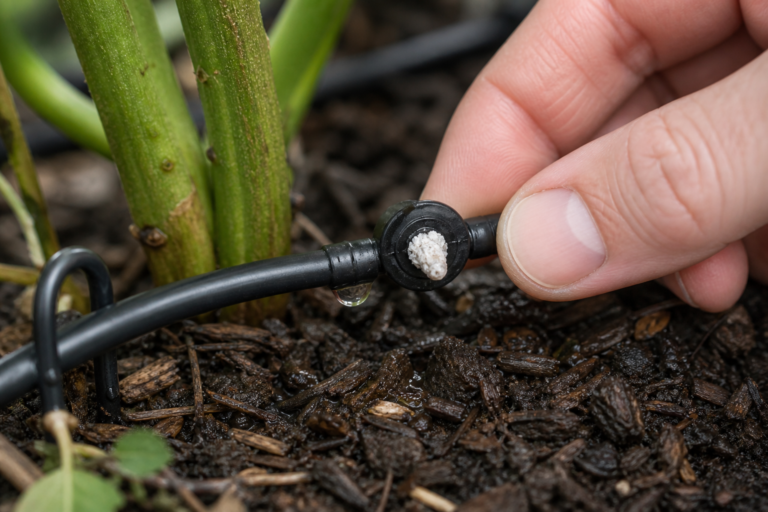
Drip irrigation uses a network of tubing with small emitters placed at the base of individual plants, delivering water slowly and directly to the root zone. Because water goes exactly where it’s needed instead of being sprayed across the whole bed, drip systems tend to waste very little to evaporation or runoff, and they keep foliage dry, which helps reduce the fungal problems that come with wet leaves.
The trade-off is setup effort: a drip system needs to be planned around your actual plant spacing, and it works best for defined rows, raised beds, or container groupings rather than an open lawn. It’s also less forgiving if plants move around from season to season, since the emitters are placed for a specific layout.
Sprinklers: Broad Coverage, Less Precision
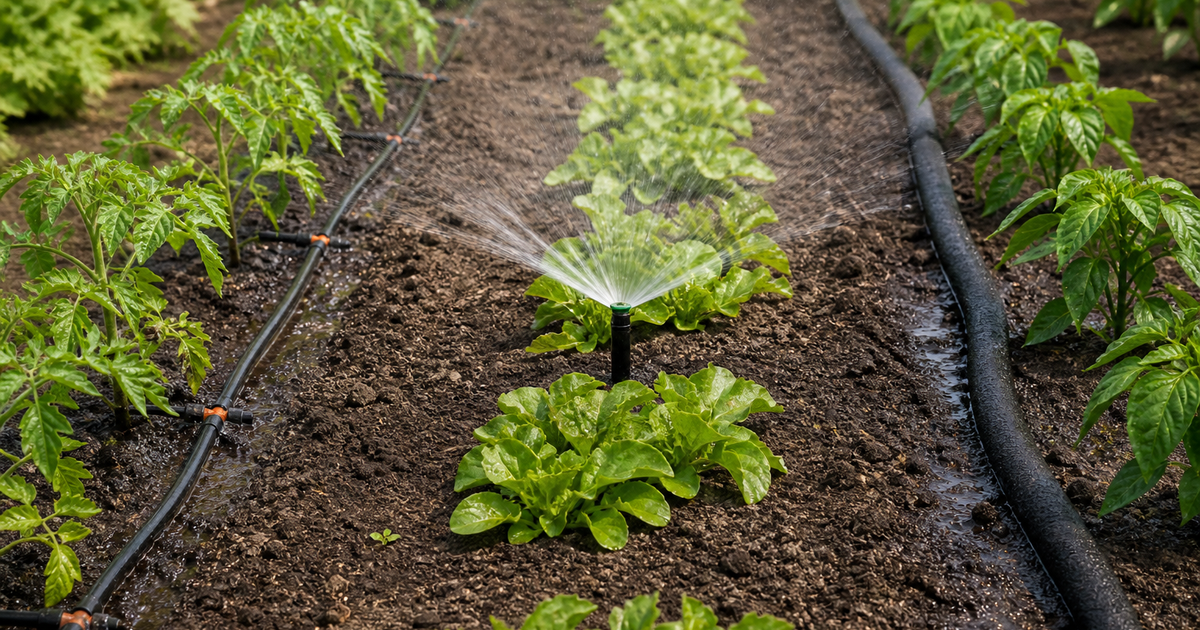
Sprinklers spray water over a wide area, which makes them the natural choice for lawns and larger open spaces where you want even coverage rather than targeting individual plants. Setup is usually simpler than drip irrigation — connect, position, and go — but that broad coverage comes at a cost: a meaningful amount of water is lost to evaporation and wind drift, especially if you run sprinklers during the heat of the day, and foliage gets wet, which can encourage the same fungal issues drip irrigation avoids.
Soaker Hoses: A Low-Cost Middle Ground
A soaker hose is a porous hose that weeps water slowly along its entire length, laid directly on the soil near your plants. It shares drip irrigation’s advantage of keeping foliage dry and delivering water close to the root zone, but with a simpler, cheaper setup — no individual emitters to place, just lay the hose along a row or bed. The trade-off is less precision: water seeps out along the whole length rather than being targeted to specific plants, so it works best for fairly evenly spaced rows rather than a mixed bed with plants of very different water needs.
Quick Comparison
| Method | Water Efficiency | Setup Effort | Best For |
|---|---|---|---|
| Drip irrigation | Highest | Higher (per-plant planning) | Raised beds, rows, containers with varied plants |
| Sprinklers | Lowest | Low | Lawns and large open areas |
| Soaker hose | High | Low | Evenly spaced rows and beds |
Which One Fits Your Garden?
If most of what you’re watering is lawn, sprinklers are still the practical choice — there’s no efficient way to drip-irrigate open turf. If you’re working with a vegetable patch, raised beds, or a mix of container plants with different water needs, drip irrigation’s precision is worth the extra setup time. And if you have a straightforward row of similarly spaced plants — a border of shrubs, a line of tomatoes — a soaker hose often gets you most of drip irrigation’s water savings without the planning overhead. Many gardens end up using more than one method side by side: sprinklers for the lawn, drip or soaker hoses for the beds.
A Common Mistake Worth Avoiding
The most common misstep isn’t picking the “wrong” method outright — it’s using one system for an entire garden that actually has two different watering needs. A single sprinkler zone covering both lawn and a vegetable bed, for example, usually overwaters the lawn or underwaters the vegetables, since the two need different schedules and amounts. Matching the method to each specific area, rather than one setup for the whole yard, is what actually saves water in practice.
Ready to Choose a System?
Once you know which method fits which part of your garden, our guide to automatic irrigation systems compares specific products across different budgets and garden sizes. If you’re leaning toward drip irrigation specifically, our piece on drip irrigation in the garden goes deeper into setting one up to save water and time.