Growing Your Own Peppers – Sweet and Aromatic, Straight from the Garden
Few vegetables reward a home gardener as generously as peppers. Whether you are growing sweet bell peppers for salads and stir-fries or aromatic varieties for roasting, a single healthy plant can produce dozens of fruits over a season, and the flavor of a sun-ripened, homegrown pepper is far superior to anything from a supermarket shelf.
Starting from Seed
Peppers need a long, warm growing season, so most gardeners start seeds indoors 8 to 10 weeks before the last expected frost. Germination is temperature-dependent: seeds sprout fastest at a consistent 24 to 29°C (75 to 85°F), so a seedling heat mat makes a real difference in germination speed and success rate, especially in cooler climates.
Transplanting Outdoors
Wait until all danger of frost has passed and nighttime temperatures reliably stay above 12°C (55°F) before moving seedlings outside; peppers are true warm-season plants and will sulk or stall in cold soil. Harden off seedlings over a week by gradually increasing their outdoor exposure before planting them in their final position.
Sun, Soil, and Spacing
Peppers need six to eight hours of full sun daily to fruit well. They prefer fertile, well-drained soil with a pH between 6.0 and 6.8. Space plants 45 to 60 cm (18 to 24 inches) apart to allow good airflow, which helps prevent fungal disease and makes harvesting easier.
Watering Consistency
Consistent moisture is more important than the total amount of water. Irregular watering – long dry spells followed by heavy soaking – is a leading cause of blossom end rot, a calcium-related disorder that shows up as a sunken, dark patch on the bottom of developing fruit. A layer of mulch helps even out soil moisture and reduces watering frequency.
Feeding for Fruit, Not Just Foliage
Early on, a balanced fertilizer supports healthy leaf and root development. Once flowering begins, switch to a fertilizer lower in nitrogen and higher in phosphorus and potassium; too much nitrogen at this stage produces lush green plants with few peppers, as the plant channels its energy into leaves rather than fruit.
Staking and Support
Many pepper varieties, especially heavily fruiting ones, benefit from a stake or small cage to prevent branches from snapping under the weight of the fruit, particularly in windy or exposed balcony positions.
Pests and Problems
Aphids, spider mites, and hornworms are the most common pests. Regularly check the undersides of leaves, and treat outbreaks early with insecticidal soap or by hand-picking larger pests. Blossom drop can occur in extreme heat above 32°C (90°F), when the plant temporarily halts fruit set to conserve resources.
Harvesting
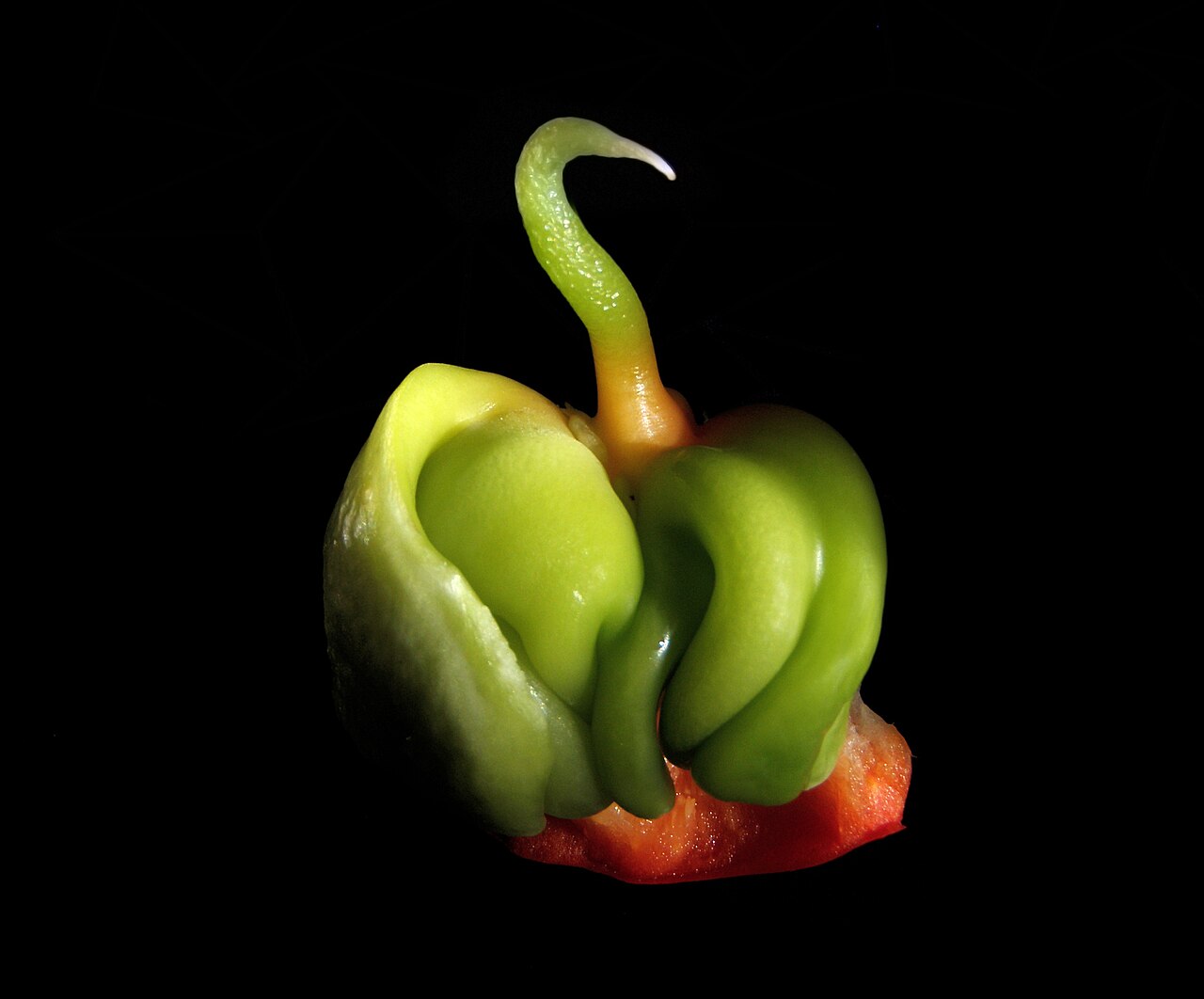
Sweet peppers can be picked green or left on the plant to ripen fully to red, orange, or yellow, which develops a sweeter flavor and higher vitamin content. Use scissors or pruners rather than pulling by hand to avoid damaging brittle stems, and regular harvesting encourages the plant to keep producing new fruit.
Season-by-Season Pepper Care
Early season focus should be on steady warmth and consistent moisture as seedlings establish; a floating row cover can protect young transplants from unexpected cool snaps without excluding pollinators once flowers appear. As plants move into their peak summer fruiting phase, watch soil moisture closely, since this is when inconsistency most often triggers blossom end rot, and continue the lower-nitrogen fruiting fertilizer regimen. In late summer, as the season winds down, consider pinching off new flowers a few weeks before your expected first frost date, redirecting the plant’s remaining energy into ripening existing fruit rather than starting new ones that won’t have time to mature. Potted pepper plants in mild climates can sometimes be brought indoors to a bright window to overwinter as short-lived perennials, though yields the following year are typically lower than from a fresh season’s planting.
Frequently Asked Questions
Why are my pepper plants flowering but not setting fruit?
This is often caused by extreme heat above roughly 32°C (90°F), which causes temporary blossom drop, or by insufficient pollinator activity. Gently shaking flowering stems midday can help self-pollination in still, wind-free spots like balconies.
Can I grow peppers in containers?
Yes, peppers do very well in containers of at least 20 to 30 litres (5 to 8 gallons) with good drainage, making them well suited to balconies and patios as long as they get full sun.
Why is my pepper fruit developing a dark, sunken spot?
This is blossom end rot, caused by inconsistent watering disrupting calcium uptake rather than a soil calcium deficiency in most cases. Even, regular watering and mulching to retain moisture are the most effective fixes.
How long does it take peppers to ripen from green to red?
Depending on variety and growing conditions, it typically takes three to four additional weeks after a pepper reaches full size for it to ripen from green to its final red, orange, or yellow color.