LED Grow Lights for Seed Starting: A Guide to Perfect Propagation
Seedlings need far more light than a windowsill can usually provide, which is why so many indoor-started seedlings end up pale, weak, and “leggy.” LED grow lights solve this by delivering strong, consistent, energy-efficient light exactly where young plants need it, giving seedlings a sturdy start before they move outdoors or to their final containers.
Why Seedlings Need Supplemental Light
Even a bright-looking window rarely delivers enough light intensity for healthy seedling growth, particularly in late winter or early spring when days are short and sun angle is low. Without enough light, seedlings stretch upward searching for a stronger source, producing thin, weak stems that struggle to support themselves later. Supplemental LED lighting placed directly above seedlings corrects this by providing consistent, strong light from a fixed, nearby distance.
Spectrum and Intensity
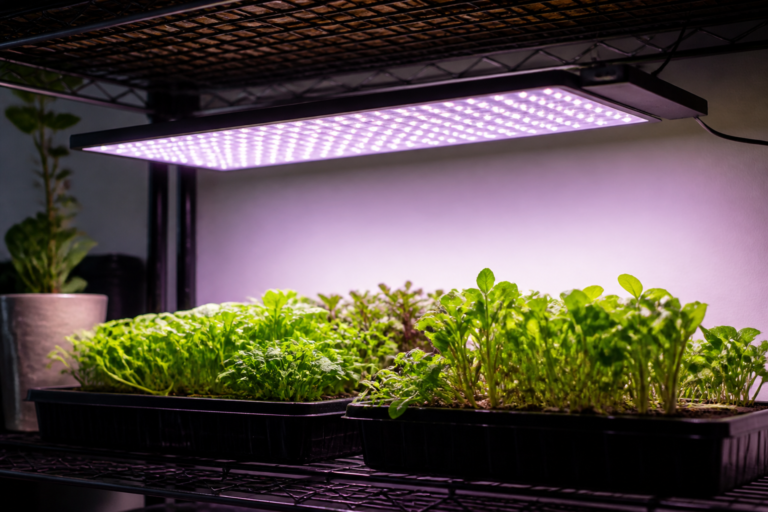
Full-spectrum LED grow lights, which include both blue and red wavelengths, work well for seed starting: blue light encourages compact, sturdy vegetative growth, while red light supports overall photosynthesis. Look for fixtures with an adequate light output for the growing area rather than focusing on wattage alone, since efficiency varies between products. Seedlings generally need lights positioned close — often just a few inches above the foliage — but always check the manufacturer’s guidance, since light intensity drops off quickly with distance.
Daily Duration
Most seedlings do well with 14-16 hours of light per day, followed by a period of darkness, which plants need for normal metabolic processes. A simple outlet timer removes the guesswork and ensures consistency, which matters more for healthy growth than most gardeners expect.
Adjusting as Seedlings Grow
Raise the light fixture (or lower the seedling tray) as plants grow taller, keeping a consistent gap between the light source and the top leaves. Rotate trays periodically if light coverage isn’t perfectly even across the growing area, and thin overcrowded seedlings so each one gets adequate light and airflow, which also helps prevent damping-off disease.
Common Mistakes
- Placing lights too far away: Leads to the same legginess supplemental lighting is meant to prevent.
- Running lights 24 hours a day: Plants need a dark period; continuous light can stress seedlings rather than speed growth.
- Ignoring heat: Even LEDs generate some heat; keep adequate clearance and monitor soil moisture, which can dry out faster under direct lighting.
- Starting too early: Seedlings kept too long under lights before transplanting can become rootbound or stressed; time seed starting to your local transplant date.
This article may contain affiliate links. If you purchase a product through one of these links, Plantgecko may earn a commission at no extra cost to you. This never influences our editorial independence or which products we recommend.